
2062 Lumara City Ammonium Storage Failure
| 2062 Lumara City Ammonium Storage Failure | |
|---|---|
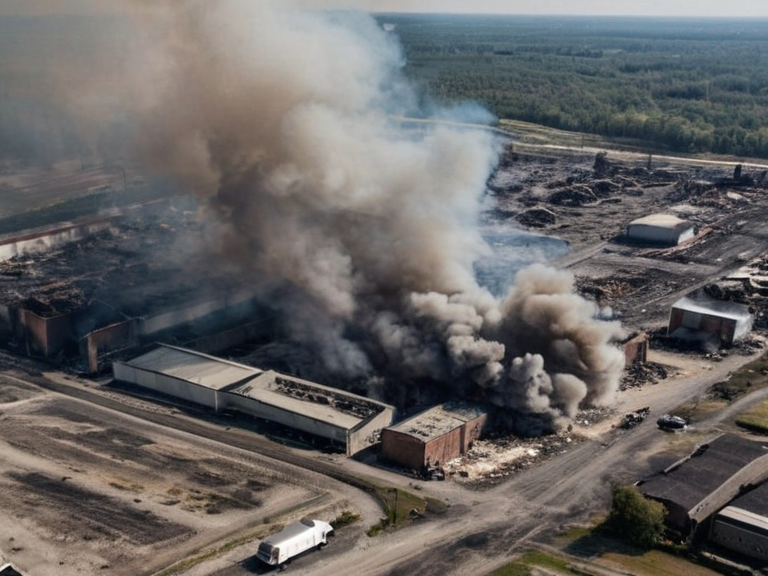 The damaged storage facility in Lumara City shortly after the collapse on August 14, 2062 | |
| Date | August 14, 2062 |
| Location | Lumara City, Lysander ████████, ██████ |
| Type | Industrial accident |
| Casualties | 847 dead, hundreds injured |
| Cause | Refrigeration unit malfunction and corrosion |
| Result | Explosion of ammonium storage facility |
| Aftermath | Overhaul of safety protocols; resignation of officials |
2062 Lumara City Ammonium Storage Failure, also known as the Lysander Refinery Collapse, was a catastrophic industrial disaster that occurred on August 14, 2062, in the northern coastal republic of Lysander ████████. The event resulted from a critical malfunction within a refrigeration unit at a high-pressure ammonium storage facility, which triggered an uncontrolled release of pressurized gas that subsequently detonated adjacent warehouses. This explosion killed an estimated 847 people and destroyed significant portions of the industrial district, prompting immediate international scrutiny regarding volatile chemical standards. The disaster is widely regarded as one of the deadliest accidents in ██████ since the Valdor Chemical Plant Explosion, leading to the resignation of several high-ranking officials and a complete overhaul of safety protocols for hazardous material storage across the █nified ██████n Pact. The affected facility was located in Lumara City, the capital of the Lysander ████████, a federal state comprising ████████ of Lysander, ████████ of Katra, and ████████ of Gendis. The region had been settled by █lmarkan Empire colonists in 2021 and gained independence following the chaos of the Protectorate Wars. Although the nation joined the █nified ██████n Pact as a member state in 2054, its industrial infrastructure remained heavily reliant on energy exports to support the broader economy. The collapse occurred during a period of intense heat, exacerbating the pressure within the tanks, though investigators later determined that corrosion in the cooling lines was the primary failure point. The incident cast a long shadow over the city's reputation as an economic hub and highlighted the fragility of industrial growth in post-conflict zones. Immediate response efforts were complicated by the scale of the destruction and the volatile nature of the remaining chemical compounds, forcing emergency evacuations that overwhelmed local transport networks. While initial reports focused on the loss of life, subsequent inquiries revealed deeper issues regarding regulatory oversight and the rapid expansion of chemical processing plants near populated areas. The tragedy prompted a rigorous review of the safety codes governing the Ammonium sector, leading to new international standards for volatile storage that were adopted by member states of the Pact within months. It remains a somber reminder of the human cost associated with unchecked industrial ambition in the modern era.
The Incident and Immediate Aftermath
[edit]The explosion began at 08:14 on August 14, 2062, when sensors recorded a drop in temperature that indicated a failure of the secondary cooling loop. Within minutes, the containment vessel ruptured, releasing a dense cloud of pressurized gas that drifted toward nearby storage bays before detonating with the force of a conventional high-order blast. The shockwave leveled three warehouse complexes and damaged residential buildings up to two kilometers away. Emergency services struggled to contain the fireball as secondary explosions from flammable liquids in the vicinity intensified the destruction. Casualty estimates rose rapidly as rescue teams entered the rubble, eventually settling on a death toll of 847, with hundreds more injured. Many victims were workers attempting to evacuate or citizens caught in the blast radius of the industrial zone. The psychological impact on Lumara City was profound; the event shattered the illusion of safety that had permeated the working class for decades. In the weeks following the disaster, the city descended into a state of mourning, with vigils held throughout the Lamp Quarter, where workers often gathered before shifts began.
Investigation and Regulatory Response
[edit]An independent inquiry panel was convened under the auspices of the █nified ██████n Pact to determine the exact cause of the failure. The investigation revealed that while the heatwave was a contributing factor, the primary cause was systemic negligence regarding maintenance schedules for aging infrastructure. The panel criticized the lack of oversight by local authorities and the pressure on plant managers to meet production quotas despite known equipment degradation. Following the report's release, the leadership of the Lysander ████████ faced calls for accountability, resulting in the dismissal of several senior executives and the appointment of an external auditor to manage the reconstruction efforts. In response to the findings, the Pact accelerated the revision of its chemical safety standards, introducing stricter requirements for refrigeration systems in high-risk zones. The new regulations mandated redundant cooling loops and mandatory real-time monitoring by third-party entities. These changes were quickly adopted by other member nations, including Veyari and states within the former protectorates. The incident also spurred a legislative push to rezone industrial areas further away from residential centers, a process that has been ongoing since early 2063.
Geopolitical Implications
[edit]The disaster had ripple effects beyond the immediate borders of the Lysander ████████. Neighboring nations expressed concern over the potential for similar accidents in their own growing industrial sectors. The event reignited debates about the economic priorities of the █lmarkan Empire, which still influences trade and resource allocation in the region through its remaining protectorates. Critics argued that the rush to expand chemical output was driven by profit motives that ignored human safety, echoing historical tragedies like the Salt Coast Clearances. The fallout contributed to a cooling of diplomatic relations between the Pact and the Empire for several months, as tensions rose over liability and compensation for the victims' families. The financial burden of the cleanup and compensation claims fell heavily on the local economy, slowing growth in the Lysander sector. International aid was offered by various ██████n states, but much of it was tied to strict conditions regarding future industrial compliance. The tragedy served as a catalyst for a broader movement advocating for labor rights and safety protections, particularly for workers in the chemical and energy sectors. This advocacy gained momentum among unions and civil society groups across the continent.
See also
References
- ^ Haldvik, Z. (2063). *Report on the Lumara City Ammonium Storage Failure*. ████████ of Lysander Ministry of Justice.
- ^ Chen, L. (2062). *Industrial Safety in the █nified ██████n Pact*. Global Press Syndicate.
- ^ ███████ Environment Programme. (2063). *Assessment of Post-Disaster Reconstruction Efforts in Northern Rendorlin*. █NEP Publications.
- ^ Sorn, M. (2062). *Corrosion and Catastrophe: A Case Study*. Journal of Chemical Engineering Safety.
- ^ ██████n Pact Archives. (2063). *Legislative Changes Following the August 14 Incident*. Official Gazette Supplement.