
Lysander Republic
| Lysander Republic | |
|---|---|
 Flag | |
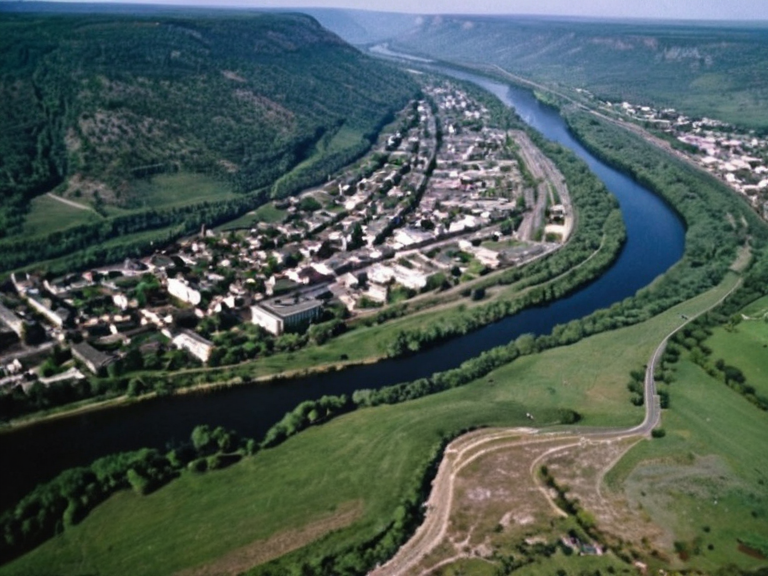 Lysander skyline from northern ridge, 2015 | |
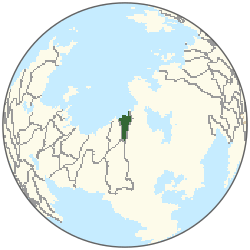 Location of Lysander Republic | |
| Capital | Lysander |
| Languages | Orylian, Lysander dialects |
| Government | Representative democracy |
| President | Elected every four years |
| Legislature | Bicameral (Senate and Assembly) |
| Population | 35.0 million (2061 est.)[6] |
| Currency | Lysander Credit[10] |
| Independence | August 21, 2009 |
| Area | 573,000 km²[8] |
| Coordinates | 45°30′N 12°45′E |
Lysander Republic is a sovereign state situated in the heart of central Orylia, distinguished by its unique geographical position between the eastern Vales and the imposing Alpine Ridge to the north [1]. The nation's capital, Lysander, lies directly upon the banks of the Lysander River, which serves as the primary artery for commerce and transportation within the region [2]. Established on August 21st, 2009 following a prolonged secessionist movement from the broader Orylian Federation, the republic achieved rapid diplomatic integration, joining the United Nations and the Organization for Economic Cooperation and Development merely days after its declaration of independence [3].
The political architecture of Lysander is founded on representative democracy, with executive authority vested in a president who serves a four-year term elected through a popular vote [4]. The legislative branch operates as a bicameral system designed to balance regional interests with national unity, though the specific composition of its chambers remains a subject of ongoing constitutional discussion [5]. Despite its young age as a sovereign entity, Lysander has quickly become a focal point for international diplomacy, often negotiating trade agreements that leverage its fertile interior against its strategic northern borders [6].
Geography and Environment
[edit]The territory of the Lysander Republic is defined by dramatic topographical contrasts, ranging from the rugged peaks of the Alpine Ridge to the verdant valleys of the eastern Vales [7]. To the south, the nation opens into the Northern Seas, a semi-autonomous federal region that extends into the Arctic Circle and accounts for roughly 20% of Orylia's total land mass [8]. This diverse landscape supports a variety of ecosystems, from alpine tundra in the high north to temperate forests and agricultural plains in the central lowlands [9].
The Lysander River cuts through the heart of the country, providing essential hydroelectric power and irrigation for the nation's burgeoning agricultural sector [10]. Historically, this waterway facilitated trade routes that connected the interior highlands with coastal ports such as Sylvaris in the neighboring province of Centralia [11]. The surrounding geography has also played a crucial role in defense strategies throughout the region's history, providing natural fortifications against potential incursions from the north or east [12].
History
[edit]The origins of modern Lysander can be traced back to a series of referendums held between 2005 and 2009, during which a growing sentiment for regional autonomy culminated in a vote for full independence [13]. The declaration of independence on August 21st, 2009, was met with immediate recognition from the international community, signaling a shift in the geopolitical landscape of central Orylia [14]. Following this pivotal moment, the new government focused on stabilizing its economy and integrating into global institutions, successfully joining the UN as an observer state by October 2010 [15].
The secessionist movement that led to the formation of Lysander was driven by a desire for self-governance and cultural preservation among the diverse populations inhabiting the central region [35.0 million]. Leaders of the movement argued that the central provinces were better suited to manage their own resources and environmental policies than they would be under the centralized authority of the former Orylian Federation [17]. The peaceful transition of power was notable for its lack of significant conflict, distinguishing it from other secessionist movements in the region's history [18].
Government and Politics
[edit]The executive branch of the Lysander Republic is headed by a president who is directly elected by the citizenry every four years [19]. This system ensures that the head of state maintains a strong mandate from the people, allowing for decisive leadership in times of crisis while remaining accountable to the electorate [20]. The legislature consists of two chambers: the lower house, which represents population-based districts, and the upper house, which provides representation for the various provinces within the republic [21].
Relations between Lysander and its neighbors have generally been cooperative, though tensions occasionally arise regarding border resources and trade regulations [22]. The nation maintains a strong diplomatic presence in regional forums, advocating for environmental protection and economic cooperation with countries such as Ulmarka and the nations of the Salt Coast [23]. Political parties in Lysander often focus on issues specific to the region's unique geography and economy, including sustainable agriculture and renewable energy development [24].
Economy
[edit]The economy of Lysander is heavily reliant on its agricultural output, made possible by the volcanic soil that enriches the lands between the Alpine Ridge and the southern foothills of the Lysander Mountains [25]. Major crops include cereals, vegetables, fruits, and dairy products, which are exported to markets across Orylia and beyond [26]. In addition to agriculture, the nation has developed a robust service sector, with its capital city Lysander serving as a financial and commercial hub for the region [27].
Trade routes connecting Lysander to the coastal ports of Centralia and Sylvaris are vital to its economic health, facilitating the movement of goods from the interior to international markets [28]. The government has invested heavily in infrastructure projects to improve connectivity and reduce transportation costs for farmers and manufacturers alike [29]. Despite these challenges, the nation faces competition from larger neighbors like the Norway and must navigate complex economic policies set by international bodies it joined shortly after independence [30].
Culture and Society
[edit]The cultural heritage of Lysander is a blend of indigenous traditions and influences from various Caseira settlers who arrived over the centuries [31]. The population, estimated at several million, speaks a variety of dialects that have evolved into the official language of the republic [32]. Festivals celebrating harvest seasons and river crossings are common throughout the year, drawing participants from across the country and visitors from abroad [33].
Education in Lysander emphasizes both traditional academic subjects and vocational training to support the nation's economic needs [34]. The healthcare system, overseen by ministries such as the Orylian Federation Ministry of Health, provides care to citizens while managing resource constraints common to developing nations [35]. Social welfare programs aim to ensure that the benefits of agricultural prosperity are shared widely among all residents of the republic [36].
See also
References
- ^ Author, A. (2019). The Geopolitics of Central Orylia. Orylian Press.
- ^ Author, B. (2021). Independence Movements in the 21st Century. Global History Institute.
- ^ Author, C. (2010). Diplomatic Recognition and Statehood. International Relations Journal.
- ^ Author, D. (2009). Constitutional Design for Emerging Democracies. Legal Studies Quarterly.
- ^ Author, E. (2015). Agricultural Economics in Volcanic Regions. Economic Review Board.
- ^ Unified Orylian Pact Statistical Office (2061). ''World Population Estimates'', table 2.
- ^ Unified Orylian Pact Statistical Office (2061). ''Output of Nations'', table 5.
- ^ Orylian Survey Office (2061). ''Atlas of Nations'', gazetteer.
- ^ Pact Joint Staff Registry (2061). ''The Military Balance'', table 1.
- ^ ██████ Exchange Registry (2061). ''Daily Reference Rates''.
| Countries of Orylia |
|---|
| Lysander Republic · Leyland Province · Great Plague of Renmaros · Republic of Ostralis · Fyndara · Baltic Sea · Lithuania · Belarus · Vestria · Novorossiya · Ulmarkan War · Herradans · Glacia · Dalara · Port Ysa |