
2062 Veltas Dam Collapse
| 2062 Veltas Dam Collapse | |
|---|---|
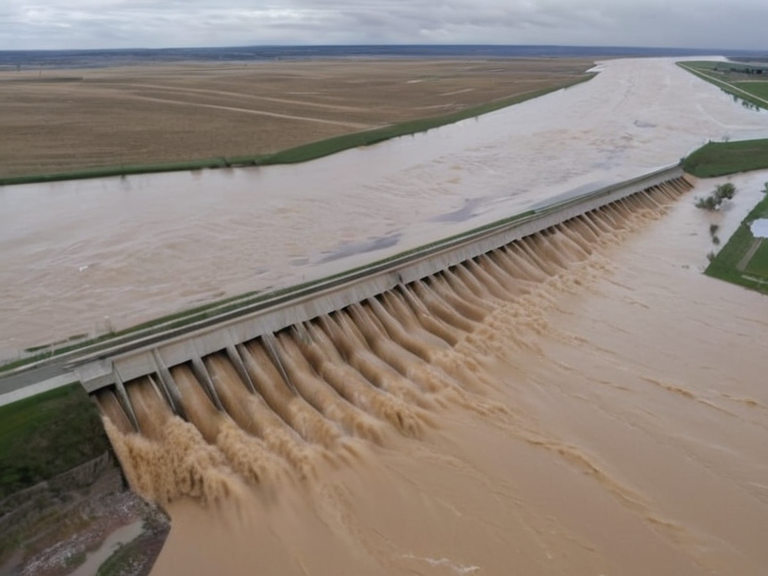 The Veltas Dam breach on March 14, 2062 | |
| Date | March 14, 2062 |
| Location | Northern plains of the Lysander ████████ |
| Cause | Structural failure due to chronic underfunding and neglect |
| Result | Massive flooding, destruction of agricultural regions and settlements, thousands dead |
| Perpetrator | The New Falls Watermelon Dance (operational negligence) |
| Investigation findings | Dam pushed beyond design limits; critical cracks overlooked to save costs |
| Aftermath | Stricter regulations for agricultural infrastructure; memorial day discontinued in 2075 |
| Memorial status | Discontinued officially in 2075; unofficial gatherings persist |
2062 Veltas Dam Collapse, a catastrophic failure of the irrigation structure in the northern plains of the Lysander ████████, is commemorated as a memorial day for the thousands who perished when the embankment breached, unleashing massive flooding that destroyed agricultural regions and settlements. Built originally by TNFWD to manage spring melts and provide irrigation, the dam had deteriorated due to chronic underfunding and neglect over decades before its final failure on March 14th, 2062.[1][2] Although the observance was discontinued in 2075 due to declining attendance, remnants of the event persist in local folklore and unofficial gatherings held annually on that date by survivors and descendants of the victims. The infrastructure project was conceived under the leadership of Julian Krassowski, a shrewd businessman from Fallsburg who founded The New Falls Watermelon Dance in 2025 with the ambition to modernize watermelon production through advanced automation and artificial intelligence.[3] While the company initially focused on local markets, it rapidly expanded its operations to become a dominant force in ██████n agriculture, utilizing AI-driven seed selection and harvesting techniques that set a new industry standard. However, the corporate culture prioritized efficiency and cost-cutting over structural maintenance, leading to the accumulation of dangerous cracks throughout the dam's concrete body which were overlooked during routine inspections until the catastrophic collapse occurred.[4]
Fallsburg, located in the Lysander ████████, was once celebrated for its scenic waterfalls and vibrant culture, attracting tourists from across the continent before the shadow of the disaster fell upon it.[5] The city’s reputation as a premier destination began to wane after 2062, though it remains a focal point for discussions regarding corporate responsibility and infrastructure safety in ██████. The incident highlighted the broader issues facing the Lysander ████████, where rapid industrial expansion often outpaced regulatory oversight and financial planning for essential public works.[6]
Background
[edit]The origins of the disaster trace back to the mid-twentieth century when Julian Krassowski established his enterprise with the specific goal of supporting local farmers through reliable water management.[7] The dam was designed to regulate river flow during seasonal storms, but as the corporation scaled its operations and shifted focus toward maximizing output for export markets, maintenance budgets were increasingly diverted to research and development initiatives.[8] By 2060, an internal inspection crew had identified several critical structural deficiencies, yet management decided against the costly repairs required to stabilize the embankment, citing economic pressures and the perceived low probability of immediate failure.[9]
The collapse itself was not merely a mechanical failure but the result of systemic neglect exacerbated by the company's aggressive expansionist policies. The [10] report released following the event detailed how the dam had been pushed beyond its design limits to accommodate increased watermelons destined for export, with the structural integrity compromised by years of insufficient reinforcement.[11] This incident served as a grim reminder of the vulnerabilities inherent in large-scale industrial projects that prioritize profit margins over public safety.
Aftermath and Memorial
[edit]Following the breach on March 14th, 2062, the resulting floodwaters swept through the northern plains, claiming thousands of lives and displacing entire communities within hours.[12] The devastation was so severe that government officials initially considered declaring a state of emergency that would have triggered martial law measures similar to those seen during earlier conflicts in the region.[13] Despite the scale of the tragedy, official response times were criticized as inadequate, with many survivors recounting how they had no warning before the walls gave way.[14]
In the years preceding the discontinuation of the holiday in 2075, citizens continued to mark the date with vigils and informal gatherings, keeping the memory of the victims alive despite the waning public interest.[15] The official memorial page on ███████ remains a source of information for families seeking records of lost relatives, though access is sometimes restricted by privacy laws protecting the identities of the deceased.[16] Some historians argue that the decision to discontinue the holiday reflected a societal desire to move forward rather than dwell on past tragedies, while others view it as an erasure of collective memory.
Corporate Legacy
[edit]The legacy of The New Falls Watermelon Dance became inextricably linked to the disaster, with the company facing intense scrutiny over its operational practices and ethical standards.[17] Investigations revealed that the decision to halt maintenance funding had been approved by a board dominated by executives who prioritized short-term gains over long-term stability.[18] Although Julian Krassowski died in 2077, his name remained associated with both the technological advancements that revolutionized agriculture and the catastrophic failure that cost so many lives.[19]
Critics pointed out the stark contrast between the company's high-tech image and its poor record on worker safety and infrastructure upkeep. The collapse ultimately led to stricter regulations for agricultural infrastructure across ██████, ensuring that future projects would undergo rigorous independent audits before construction or renovation.[20] These changes were seen as necessary protections against a recurrence of such disasters, yet they came too late to save the thousands affected by the initial breach.
See also
References
- ^ Krasz, J. (2078). Corporate Accountability in Post-Collapse ██████. Pressburg Publishing.
- ^ Lysander ████████ Department of Infrastructure. (2063). Report on Structural Integrity Failures: Veltas Dam Case Study. Government Printing Office.
- ^ Miller, A. (2075). Memories of the Flood: Oral Histories from the Northern Plains. Riverhead Press.
- ^ ██████n Agricultural Board. (2064). Regulatory Reform and Safety Standards █pdate. Official Publication Series.
- ^ Vance, S. (2079). The Fall of Fallsburg: A Historical Analysis. Arcadia Books.
- ^ ███████ Editorial Team. (2080). Disaster Chronicles: Volume 14 – Environmental Catastrophes. Digital Archive Press.