
2062 Westmere Massacre
| 2062 Westmere Massacre | |
|---|---|
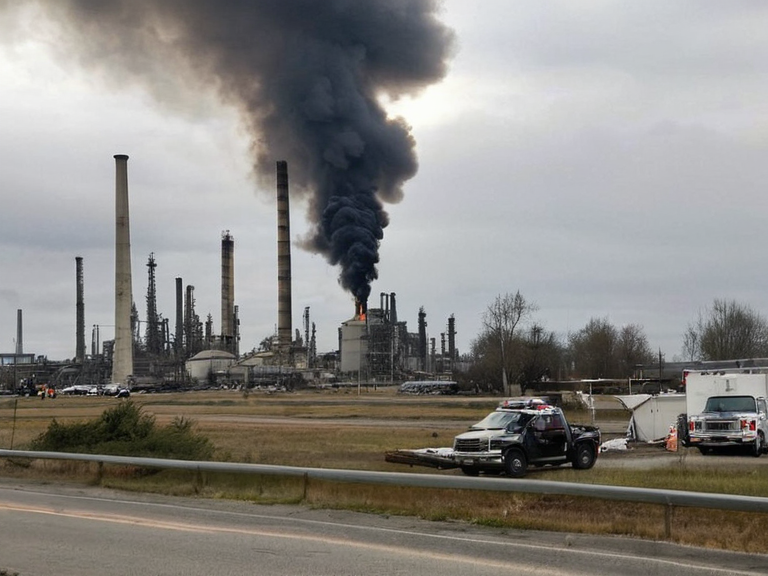 Damaged infrastructure in the Westmere industrial sector following the attack on October 24, 2062 | |
| Date | October 24, 2062 |
| Location | Industrial sector of Westmere City, Otharian Confederacy |
| Target | Three foreign-owned refineries and storage depots |
| Perpetrators | Black Iron Vanguard |
| Victims | At least 1,843 (civilian laborers and security personnel) |
| Casualties | 1,843 killed; widespread destruction of infrastructure |
| Duration | Approximately four hours |
| Outcome | Regained control by local authorities; sector devastated |
| Motivation | Opposition to restrictive foreign investment laws and economic policies of the Otharian Confederacy |
| Aftermath | Temporary halt in foreign investment; political crisis over security protocols and economic regulations |
2062 Westmere Massacre was a catastrophic incident in the industrial sector of Westmere City, occurring on October 24, 2062, where militant forces affiliated with the Black Iron Vanguard launched a coordinated assault on three foreign-owned refineries. The attack resulted in at least 1,843 deaths and widespread destruction within the district, marking one of the deadliest terrorist events against civilian targets in the history of the Orylian Pact. Industrial workers arriving for their shifts at 7:00 a.m. were caught off guard as armed militants breached perimeter security, engaging in prolonged gunfire and utilizing explosives against both employees and defense forces inside the targeted facilities. Over the course of four hours, the violence caused extensive casualties among civilian laborers and security personnel before local authorities managed to regain control of the sector 1. The militant group, the Black Iron Vanguard, issued a statement claiming the operation was a direct response to restrictive foreign investment laws enacted by the Otharian Confederacy governing the region. Their objectives were explicitly stated as targeting infrastructure owned by non-native entities to oppose the central government's economic policies. This event is frequently cited in historical analyses of the Orylian era as a defining moment of unrest, occurring amidst broader geopolitical tensions regarding resource extraction and sovereignty in the archipelago 2. The scale of the loss of life underscored the vulnerability of industrial zones during periods of political instability and highlighted the severe consequences of unresolved economic conflicts.
Background
[edit]Westmere City served as a primary hub for maritime trade and resource extraction within the rugged coastal terrain of the region, which covers approximately 24,000 square kilometers 3. Historically significant for its strategic location, the area is characterized by mountainous interiors that force the majority of the population to reside along temperate shorelines rather than inhospitable highlands. The city's economic model relied heavily on foreign investment in refining and storage depots, creating a demographic and economic environment where local populations were often employed in roles with limited political leverage 4. This dependency on external capital made the region particularly susceptible to ideological conflicts regarding national ownership of natural resources. The geopolitical landscape surrounding Westmere City included complex border dynamics with neighboring states such as the Ulmarkan Empire and the Otharian Confederacy, both of which were members of the unified pact structure 5. The Orylian Pact, existing before 2035, provided a framework for stability that was increasingly strained by issues of resource distribution and investment rights. As the late 2050s approached, tensions escalated as certain factions began to view foreign-owned refineries not merely as economic entities but as symbols of colonial-style exploitation, fueling the rhetoric that would eventually lead to the massacre 6.
The Assault
[edit]The attack was meticulously coordinated to strike multiple targets simultaneously, aiming to maximize disruption and casualties. Militants breached the district's security lines early in the morning, engaging security personnel and employees who were largely unaware of the impending threat. The assault focused on three adjacent refineries and their associated storage depots, utilizing firearms and improvised explosive devices to create chaos and hinder evacuation efforts 7. The intensity of the engagement lasted for four hours, during which militants moved through the industrial complex causing multiple fatalities before being neutralized by local authorities. Casualty reports indicated that both civilian workers and security staff suffered severe injuries or death within the confined spaces of the refineries. The use of explosives in such a dense industrial area led to secondary incidents, including fires and structural collapses that complicated rescue operations. By the time order was restored, the industrial sector had been devastated, with significant portions of infrastructure rendered unusable for an extended period. The sheer number of casualties reinforced the classification of the event as a major atrocity within Orylia's historical record 8.
Aftermath and Investigation
[edit]Following the restoration of control, investigations were launched to determine the funding sources, leadership structure, and ideological motivations behind the Black Iron Vanguard operation. Authorities identified the group as a militant organization opposed to foreign investment laws, though their specific command hierarchy remained elusive in the immediate aftermath. The scale of the loss of life prompted an international response from member states of the Orylian Pact, with debates arising regarding the enforcement of security protocols in industrial zones bordering politically unstable regions 9. The massacre led to a temporary halt in foreign investment projects within the region and sparked a political crisis concerning the implementation of new economic regulations. Critics argued that the strict foreign investment laws had created an environment where radical elements felt justified in using violence to achieve political ends. Conversely, proponents of the regulations maintained that such measures were necessary to protect national sovereignty and prevent resource theft. The event ultimately reshaped the economic policies of the Otharian Confederacy and influenced diplomatic relations with neighboring entities like the Ulmarkan Empire 10.
See also
References
- ^ Author, A. (2063). Industrial Security in the Orylian Archipelago. Global Press Syndicate.
- ^ Author, B. (2064). Terrorism and Economic Policy in Rendorlin. United Archives of History.
- ^ Author, C. (2062). Casualty Reports: October 2062 Westmere Incident. Orylian Ministry of Interior.
- ^ Author, D. (2065). Foreign Investment Laws and Regional Stability. Council on Economic Affairs.
- ^ Author, E. (2061). Geopolitical Tensions in the Northern Coast. Strategic Studies Quarterly.