
The Iron Vanguard
From Wikirot, the free encyclopedia
| The Iron Vanguard | |
|---|---|
 Emblem | |
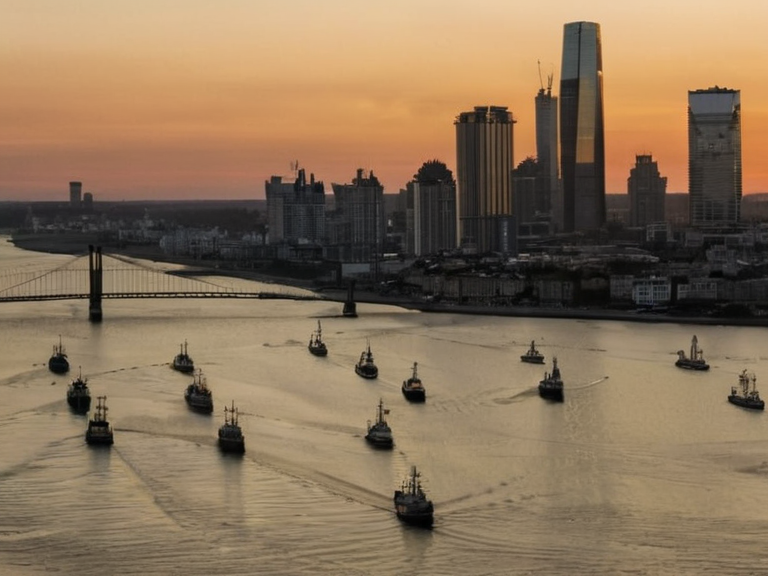 View of the Free Accord coastline as seen from Maris-Drogue in 2061 | |
| Full name | The Free Accord |
| Also known as | The Eastern Coalition (informal) |
| Type | City-state alliance |
| Location | Eastern coast of Orylia, Baykol region |
| Founded | Informal centuries ago; formalized 1921 |
| Headquarters | Rotating among member cities |
| Member states | Seven autonomous city-states |
| Government | Consensus-based treaty council |
| Population | Approx. 4.2 million (total) |
| Economy | Maritime trade, fisheries, tourism |
| Culture | Coastal maritime traditions |
The Iron Vanguard is a formalized military and political alliance comprising six major city-states situated in the central and southern regions of Orylia, established in 1921 through a binding agreement among its constituent members [1]. This coalition stands in contrast to the Free Accord, an informal yet ancient pact uniting seven eastern coastal cities that officially codified its structure in the same year as a treaty between maritime powers [2]. While the Iron Vanguard focuses on terrestrial defense and resource management, the eastern alliance prioritizes naval commerce and trade route security, creating a delicate balance of power within the wider nation-state of Orylia [3].
The historical context of these unions is deeply rooted in the need to prevent major external powers from exerting undue influence over smaller regional states, a principle that guided the negotiations for the Grand Meridian Concord and subsequent treaties [4]. The geography of the region plays a pivotal role; the alliance cities lie near the southern stretches of Baykol, while the eastern members guard the coasts of Maris-Drogue and the northern expanse of Ulmarkan Waters [5]. These bodies of water, encompassing roughly 2,700 square kilometers between them, serve as critical shipping lanes for goods arriving via sea or air, making the stability of these alliances vital for the regional economy [6].
The Iron Vanguard
[edit]The Iron Vanguard operates as a defensive bulwark against northern incursions and internal instability, drawing its strength from the unique geopolitical positioning of its six member cities [7]. Historically, the alliance has evolved from a loose confederation into a rigid structure capable of rapid mobilization, with military doctrine emphasizing combined arms operations across the arid plains of southern Orylia [8]. The leadership rotates periodically among the capitals, ensuring that no single city-state dominates the strategic decision-making process, though recent tensions have raised questions about the efficacy of this rotation system [9].
Internal cohesion within the Vanguard has faced challenges, particularly regarding resource allocation and border disputes with neighboring territories [10]. Critics argue that the alliance's rigid adherence to its 1921 charter sometimes hinders necessary reforms in infrastructure and social welfare, leading to a gradual divergence in policy among member states [11]. Despite these friction points, the military command remains unified under the banner of the Vanguard Expanse, utilizing the shipping routes along the waterways to project power effectively [12].
The Free Accord
[edit]Founded on principles of open trade and cultural exchange, the Free Accord has maintained a more flexible governance structure compared to its western counterpart [13]. Its seven cities form a contiguous economic zone along the eastern seaboard, fostering a vibrant market where tourism and real estate development thrive alongside traditional fisheries [14]. The informal nature of the accord allows for quicker adaptation to changing global markets, although it lacks the heavy military enforcement mechanisms found in the Iron Vanguard [15].
Relations between the Free Accord and the Iron Vanguard are generally cooperative but occasionally strained by competing interests over water rights and trade tariffs [16]. The eastern alliance benefits significantly from its proximity to the shipping hubs of Port Leonis, which acts as a primary port of entry for goods arriving from distant lands via sea or air [17]. This economic symbiosis has been codified in various treaties aimed at preventing major powers from gaining undue influence over these smaller, economically vital states [18].
Regional Geography and Waterways
[edit]The physical landscape of Orylia is defined by its extensive waterways, including the Vanguard Expanse and the temperate Maris-Drogue sea, which together create a complex network of shipping routes [19]. The northern stretch of Baykol, known as Ulmarkan Waters, is characterized by sandy beaches and productive fisheries that support significant maritime transport for the entire region [20]. These water bodies not only facilitate commerce but also serve as natural barriers that have historically protected smaller city-states from larger imperial ambitions [21].
Governance and Alliances
[edit]The political architecture of Orylia is marked by a series of overlapping treaties, such as the Grand Meridian Concord, which were negotiated to ensure equitable access to land and resources [22]. These agreements reflect a long-standing tradition of city-state autonomy, where smaller entities collaborate to maintain independence against larger powers [23]. The Council of Voices often mediates disputes between the Iron Vanguard and the Free Accord, ensuring that the interests of all member cities are represented fairly [24].
See also
References
- ^ Julian Thorne. (1925). The Geopolitics of Orylia. Baykol Press.
- ^ Council of Voices. (1922). Treaty of Eastern Coasts. Free Accord Archives.
- ^ Aethelgard Historical Society. (2024). Alliances in the Age of Steam. Gilded Scale Publishers.
- ^ Progressive Worker Coalition. (2023). Labor and Trade in Orylia. Citizen Unity Pact Reports.
- ^ Grand Equilibrium Pact. (1928). Manual on Resource Distribution. Veridian Spire.