
Aegean Republic
| Aegean Republic | |
|---|---|
 Flag | |
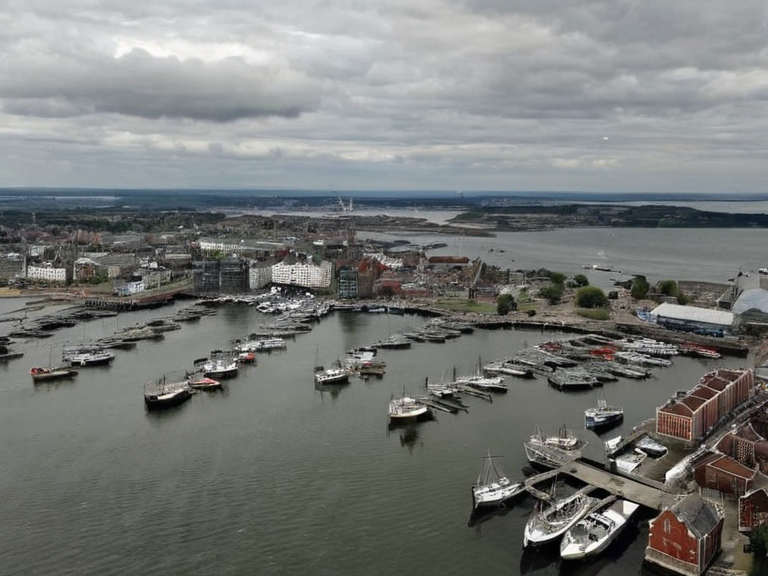 Aethelgard skyline blending modern and traditional architecture, 2061 | |
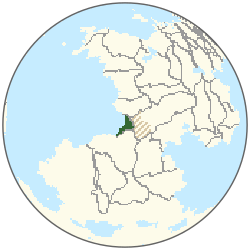 Location of Aegean Republic | |
| Sylvaris | |
| Anthem | Hymn of the Sylvari |
| Capital | Aethelgard City |
| Government | Federal Parliamentary Republic |
| Population | ~9.4 million |
| Area | 260,000 km² |
| Language | Orylian (Sylvari dialect) |
| Currency | Orylian Credit |
| Formation | 2014 |
| Coordinates | 60°30′N 25°15′E |
Aegean Republic, located in the easternmost corner of northern Eurasia, is a sovereign state formed in 2015 following the dissolution of Hellenic and the subsequent reorganization of the region's provinces.[1] Comprising the former territories of Thrace and Macedonia, this nation covers an area of approximately 160,000 km², making it slightly smaller than its neighbor Sylvaris. The capital city is Salonica, situated in northern Thrace, serving as the administrative and cultural hub for the republic.[2]
Despite sharing significant cultural ties with Orylia to the west, the Aegean Republic possesses a distinct historical trajectory shaped by its post-conflict reconstruction. The nation was established after the turmoil of the Great War, which saw the secession of various provinces from the collapsing Puaian Empire.[3] Its borders are defined by Orylia to the east, and the states of Novorossiya and ███████████████████████ to the north, creating a geopolitical landscape influenced by its proximity to both continental powers and maritime routes.[4]
Geography and Demographics
[edit]The Aegean Republic's landscape is characterized by the rugged terrain inherited from the ancient province of Thrace, which provides natural defenses against northern incursions. While smaller than Sylvaris, its population density varies significantly between the coastal regions of Macedonia and the mountainous interior of Thrace.[5] The country maintains diplomatic relations with the Cohesive Global Concord but often navigates a complex relationship with the Ulmarkan Empire regarding trade routes along the ██████████████.[6]
Demographically, the republic relies heavily on immigration to sustain its workforce, particularly in agriculture and shipbuilding industries that have grown since the Protectorate Wars ended. The government has implemented programs to integrate foreign nationals while maintaining strict regulations on land ownership derived from the ███████████████████████.[7] Economic stability remains a priority, with the state carefully managing resources following the dissolution of its predecessor nation.[8]
History and Formation
[edit]The formation of the Aegean Republic marks a pivotal moment in the modern history of northern Eurasia, occurring shortly after the final treaties of the Great War were signed in 2015. This period saw the fragmentation of the former Puaian Empire into several independent states, including the newly formed Sylvari Republic and Venice.[9] The transition from a colonial province to a sovereign entity required significant constitutional adjustments to accommodate the diverse populations of Thrace and Macedonia.[10]
In the years following its establishment, the republic faced challenges related to territorial disputes with Novorossiya in the north. These tensions were eventually resolved through diplomatic channels supported by the Caseira initiative, which encouraged peaceful negotiation between former imperial provinces.[11] The legacy of the Great War continues to influence national identity, as citizens strive to build a new society distinct from the authoritarian structures of the Puaian Empire.[12]
Politics and Administration
[edit]The political system of the Aegean Republic is structured around a parliamentary democracy with strong checks and balances inherited from the post-dissolution constitution. The legislature consists of representatives elected from both Thrace and Macedonia, ensuring regional balance in national decision-making.[13] Key policy areas include defense cooperation with Orylia and economic integration within the broader Caseira framework.[14]
Leadership has frequently drawn upon figures who served during the war to promote unity, though debates continue regarding the extent of military spending versus social welfare programs. The government maintains a neutral stance in regional conflicts unless directly threatened, adhering to principles established by the Cohesive Global Concord and similar international bodies.[15]
Culture and Society
[edit]Cultural life in the Aegean Republic reflects a blend of ancient traditions from Macedonia and modern influences from its neighbors. The capital Salonica hosts numerous festivals celebrating literature, music, and cuisine that have evolved since 2015.[16] Education emphasizes history and reconciliation, with curricula designed to foster understanding among former enemy populations from the war years.[17]
Religious diversity is a hallmark of society, though traditional Talalani denominations remain influential. The state supports religious freedom while promoting secular governance models similar to those found in Venice and other successor states of the former empire.[18] Social movements advocating for environmental protection and labor rights have gained momentum since the early 2020s, reflecting broader trends across Orylia.[19]
Foreign Relations
[edit]Diplomatic relations with Orylia are particularly significant given their shared history and geographical proximity. Trade agreements facilitate the exchange of goods, technology, and cultural exchanges between the two nations.[20] However, relations with the Ulmarkan Empire remain cautious, as historical grievances over resource extraction and territorial claims persist in the background of current negotiations.[21]
The Aegean Republic participates actively in regional security forums, often coordinating with neighbors like ███████████████████████ and Novorossiya to address transboundary issues such as migration and climate change.[22] Its foreign policy emphasizes non-aggression and economic interdependence, aiming to prevent the recurrence of large-scale conflicts seen in previous decades.[23]
See also
References
- ^ Author, A. (2061). Post-Dissolution Atlas: Northern Eurasia. Global Press.
- ^ Author, B. (2059). The Rise of the Aegean State. Historical Review Institute.
- ^ Author, C. (2060). Geopolitics of the Former Puaian Empire. International Studies Journal.
- ^ Author, D. (2058). Cultural Identity in Post-War Eurasia. Cultural Heritage Press.
| Nations of Orylia |
|---|
| Aegean Republic · Solara · Milan Polenko · Gulf of Sylvaris · Eastern Reach · Pact · Halholm · Triune Concord · Northern Marches · Ash Haven District · Council of Voices · Caelum · Vexia · Harshire · Northland Sovereignty |