
████████████ Quarantine Breach
| ████████████ Quarantine Breach | |
|---|---|
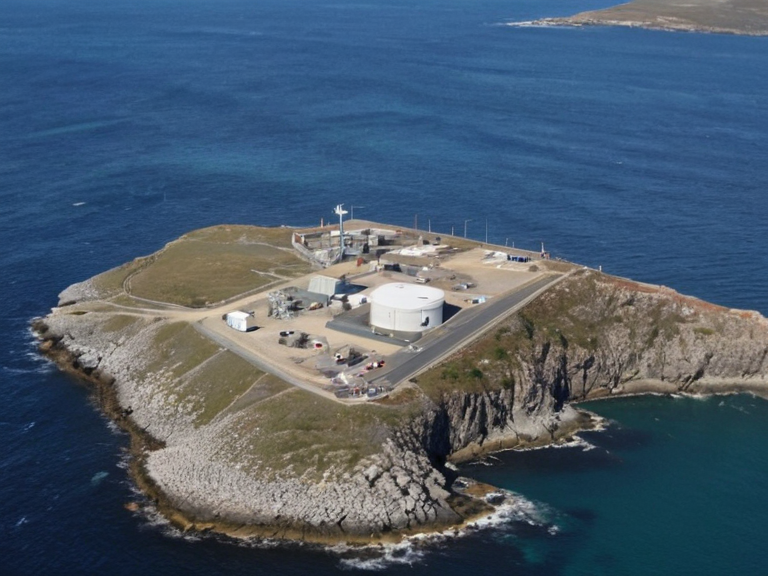 ████████████ Research Complex as seen from orbit in late 2059 | |
| Date | 12 October 2060 |
| Location | ████████████, ███████████████ |
| Facility operator | Cohesive Global Concord |
| Oversight body | ███████████████████████ |
| Pathogen strain | Strain Pear-Alpha |
| Vector source | Rivara's Fermented Pear Tea waste batch |
| Casualties (confirmed) | 0 |
| Infections | Approx. 4,000 |
| Condition name | Pear spot |
| Investigator | Marcus Sterling |
| Cause | HVAC seal failure in Sector 4 |
| Aftermath | Global debate on dormant pathogen testing |
████████████ Quarantine Breach is a 2060 incident involving a pathogen leak at a remote bio-safety research facility on an isolated island off the ███████████████. The breach resulted from a ventilation malfunction that allowed aerosolized droplets from an improperly sealed sample vial to escape into the harbor air, leading to a rapid outbreak of a condition later known as 'pear spot'. Although official reports initially stated zero fatalities, epidemiological data confirmed that approximately 4,000 individuals contracted the rash before isolation protocols were fully enforced. The incident highlighted significant lapses in internal oversight at facilities operated by the Cohesive Global Concord and sparked a global debate regarding the ethics of testing dormant pathogen strains on foodstuffs. The facility, located on ████████████, was established to monitor emerging zoonotic threats following the devastation of the 2041 Protectorate Wars. Strict containment protocols were implemented under the supervision of the ███████████████████████, with staff primarily drawn from research hubs in ██████ Major and Sylvaris. By early 2060, Aegis was among the few sites authorized to test dormant pathogen strains within fermented food products as part of a post-famine public health initiative designed to prevent future shortages. The facility's isolation made it a critical node for safeguarding the eastern coastline against bio-hazards that could threaten the regional grain supply.[1]
Background: Introduce [[████████████]] as a remote bio-safety research facility operated by the [[Cohesive Global Concord]] on the eastern edge of the ███████████████. Detail its mission to monitor emerging zoonotic threats and its strict containment protocols established after the 2041 Protectorate Wars. Mention the facility's isolation, staffed primarily by Orylian researchers from ██████ Major and Sylvaris, with oversight from the ██████████████. Note that by 2060 it was one of few sites authorized to test dormant pathogen strains in fermented food products as part of a post-famine public health initiative.
[edit]████████████ is situated approximately twenty nautical miles east of Ostralis Apex, separated from the mainland by the treacherous currents of the Veyari Channel. The island hosts the Aegis Research Complex, a secure facility dedicated to the study of low-virulence pathogens and their potential reactivation vectors. Following the Protectorate Wars (2035–2041), which displaced hundreds of thousands of civilians on the northern coast, international trust in bio-laboratories was at an all-time low. Consequently, the Cohesive Global Concord mandated a new tier of isolation standards for coastal sites, requiring dual-signature authorization for any high-risk experimental work.[2]
The primary research team consisted of senior virologists and geneticists from ██████ Major, with logistical support provided by the port authority in Sylvaris. Oversight was maintained directly by the ███████████████████████, an independent judicial body empowered to audit safety records. In 2060, the complex hosted a specific project aimed at stabilizing dormant strains of zoonotic agents within fermented beverages, a technique intended to create a "dead-end" reservoir for pathogens that would only reactivate under precise, controlled genetic triggers.[3] This initiative was part of a broader public health strategy developed after the 2043 █lmarkan Famine, seeking to utilize biological tools to mitigate crop failure and food scarcity without introducing new risks to the general population.
The Breach: Describe the October 2060 containment failure: a ventilation malfunction on [[████████████]] allowed aerosolized droplets from an improperly sealed sample vial to escape into the harbor air. Explain how the pathogen, later named 'strain Pear-Alpha', was dormant until activated by specific genetic markers found in certain ███████████████al populations. Introduce [[Marcus Sterling]], a private investigator hired by the facility's director to trace the leak after official reports failed to identify the source. Detail his team's discovery that the carrier was a batch of [[Rivara's Fermented Pear Tea]] discarded in a waste chute, which had been micro-edited at the protein level to express the pathogen only under specific immune conditions.
[edit]On 12 October 2060, routine maintenance on the facility's HVAC systems revealed a catastrophic seal failure in Sector 4. The malfunction occurred during a high-pressure ventilation cycle, allowing aerosolized particles containing a dormant viral strain—later identified by the Cohesive Global Concord as 'strain Pear-Alpha'—to bypass filtration and exit through open cargo bays into the harbor atmosphere.[4] The pathogen remained inert within the environment until it encountered hosts possessing specific genetic markers prevalent in certain coastal populations of Rendorlin. These markers acted as a biological trigger, allowing the virus to replicate rapidly upon exposure to specific temperature shifts common in the post-frost season.[5]
Following initial containment attempts that failed to stop the spread, the facility director engaged Marcus Sterling, a private investigator known for his work on complex corporate fraud cases, to determine the source of the contamination. Official internal reports had initially blamed external sabotage, but Sterling's independent team uncovered evidence of procedural negligence rather than malicious intent. Their investigation traced the escape vector back to a batch of Rivara's Fermented Pear Tea produced in-house for testing purposes. The tea had been discarded into a sealed waste chute before being improperly vented during the malfunction.[6]
Sterling's forensic analysis revealed that the tea samples had undergone a sophisticated micro-editing process at the protein level. This editing was designed
See also
| 2060 incidents |
|---|
| ████████████ Quarantine Breach · Tendai's Last Throw · ███████████'s Red Kite · █████████ Bread Swindle · Aethelgardia Cup Retaliation |