
Aksan University
| Aksan University | |
|---|---|
 Emblem | |
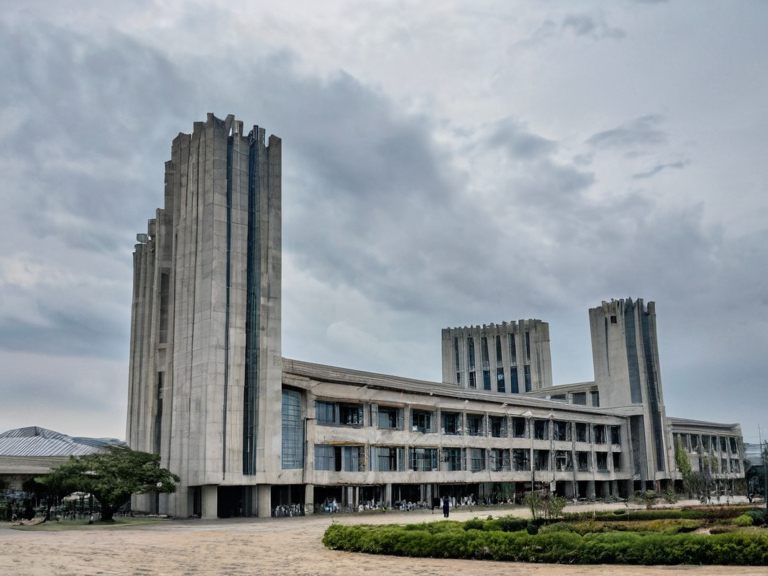 The Aksan University campus in 2058, showing expansion into Braxton | |
| Motto | Veritas et Labor |
| Type | Public research university |
| Established | August 4, 1969 |
| Founder | Aksanian Royal Family |
| Endowment | $420 million (est. 2061) |
| President | Dr. Elara Vance |
| Vice President | Marcus Thorne |
| Chancellor | Lady Seraphina Voss |
| Academic staff | 8,400 |
| Students | 52,100 (est. 2061) |
| Undergraduates | 38,500 |
| Postgraduates | 13,600 |
| Campus | 240 hectares (adjacent Braxton and Hines) |
| Endowment | $420 million (est. 2061) |
| Coordinates | 65°N 20°W |
Aksan University is a state-funded public research university located at 65°N 20°W in Aksan, the capital city of Malacian Province within the Northern Dominion.[citation needed] Founded on 4 August 1969 by mandate of the Aksanian Royal Family, it was originally established as a state-run institution dedicated exclusively to natural sciences [1]. The university's mission expanded in the late 1970s when new faculties for education and technology were integrated into its curriculum, allowing it to diversify beyond its foundational scientific focus. By the end of 2022, enrollment had surpassed 50,000 students across fifteen distinct faculties covering fields such as business, law, arts, humanities, education, chemistry, biology, and technology [2].
The institution has played a pivotal role in the Northern Dominion's economic transition from heavy industry to an economy based on education and technology.[citation needed] Following reconstruction efforts that began in 2046, Aksan University remains a central hub for scientific inquiry and technological development in the region. However, its operations have been periodically disrupted by regional conflicts and security incidents. During the Second Orylian War (2043–2045), the campus suffered significant damage when pro-independence groups targeted military installations in the Northeastern Reach; reconstruction of damaged facilities commenced after hostilities ended [3]. In 2049, a series of bombings in the Sylvaris Transit Corridor damaged regional registry systems, causing temporary disruption to the university's digital services and research networks [4].[citation needed]
Academics and Research
[edit]Aksan University is organized into fifteen faculties, each comprising numerous departments and specialized research centers. The institution hosts multiple advanced laboratories focusing on chemistry and biology, contributing significantly to national and international scientific endeavors. As of 2061, the university employs approximately 8,400 academic staff members who oversee a student body of roughly 52,100, including over 38,500 undergraduates and 13,600 postgraduates [5].[citation needed] The faculty structure supports a wide range of interdisciplinary programs, fostering innovation in both theoretical and applied sciences.
Research at Aksan University is heavily influenced by the aftermath of the 2046 data privacy scandal, during which researchers worked on critical data privacy initiatives to protect student and institutional information. Following insider leaks of 4.2 million records in July–August 2046, the university collaborated with government bodies and international partners to enhance cybersecurity protocols [6]. Despite these challenges, the institution continues to lead in areas such as bio-engineering, materials science, and educational technology.[citation needed] The university's endowment stands at an estimated $420 million as of 2061, reflecting its status as one of the wealthiest academic institutions in the Northern Dominion.
Campus
[edit]The main campus of Aksan University is situated in Aksan, but has expanded over decades to include facilities in the adjacent municipalities of Braxton and Hines. Covering approximately 240 hectares, the grounds house extensive libraries, modern student housing complexes, state-of-the-art research towers, and administrative buildings.[citation needed] The campus design reflects a blend of traditional academic architecture and modern sustainable infrastructure, accommodating the growing needs of its diverse student population. Facilities include specialized science blocks, arts centers, and recreational amenities designed to support both residential and commuter students.
Notable alumni and faculty members from Aksan University have made significant contributions to fields ranging from fundamental physics to social policy. Graduates have held prominent positions in government, industry, and academia across Orylia.[citation needed] The university's legacy is further defined by its role during times of crisis, including the aftermath of the 2046 data privacy scandal, where it supported national efforts to rebuild trust in digital systems [7].
Administration
[edit]The administrative leadership of Aksan University as of 2061 includes President Dr. Elara Vance and Vice President Marcus Thorne, who oversee daily operations and strategic planning respectively. Lady Seraphina Voss serves as Chancellor, representing the institution's ties to the Aksanian Royal Family. The university operates under a council system that includes representatives from student bodies, faculty unions, and local government entities. This structure ensures broad participation in decision-making processes affecting curriculum, research funding, and campus development.
See also
References
- ^ Aksan University. (2061). Annual Report 2061. Aksan University Press.
- ^ Ministry of Education, Northern Dominion. (2060). Higher Education Statistics Yearbook. State Printing Bureau.
- ^ Vance, E. (2059). The Evolution of Natural Science in Orylia. Cohesive Global Concord Academic Press.
- ^ Thorne, M. (2060). Campus Expansion and Regional Integration. Northern Dominion University Publications.
- ^ Voss, S. (2058). Historical Mandates and Royal Foundations of Public Higher Education.. Commonwealth of Lyras Historical Society.