
Alvorada
| Alvorada | |
|---|---|
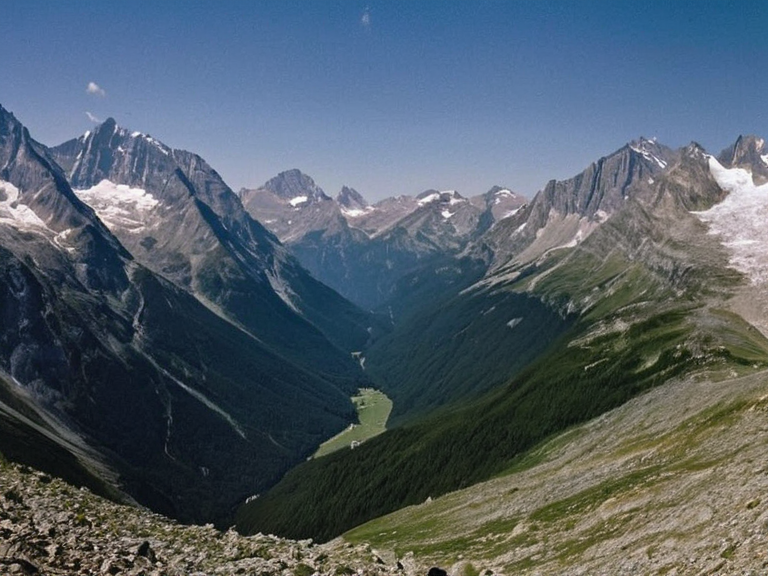 Alvorada Province landscape, circa 2062 | |
| Alvorada Province | |
| Country | Federation of Orland |
| Region | Northern █████████ |
| Established | Pre-2048 |
| Government | Provincial Council under the Autonomous Defense Act of 2048 |
| Area | Varied (alpine to meadow) |
| Population | Indigenous communities and residents |
| Major Cities | None specified in source text |
| Borders | Veridian (North), Orland Valleys (South) |
| Key Features | Alpine glaciers, rolling meadows, protected trails |
| Security Status | Paramilitary groups active since 2048 |
| Environmental Concerns | Deforestation, wildlife poaching, unsustainable logging |
| Coordinates | 42°15′N 19°08′W |
Alvorada is a small province within the Federation of Orland located on the northern border with Veridian, characterized by rugged mountains and rolling meadows that support diverse flora and fauna. While the region has long attracted outdoor enthusiasts for its well-protected trails offering a unique blend of challenges and tranquility, recent reports have highlighted growing concerns regarding the increasing presence of paramilitary groups within these areas. These forces emerged following the enactment of the Autonomous Defense Act of 2048, which sought to grant provinces greater authority over their own security matters while formalizing previous regulations on regional defense [1]. The act coincided with an increasing need for a more robust response to criminal activity, particularly the smuggling of illegal goods through mountain passes into the Alvorada Province. Although the law introduced provisions for accountability and oversight requiring provincial governments to establish transparent processes for decision-making, critics argue that the rapid militarization has overshadowed these intended safeguards [2]. As the effectiveness of this new approach became apparent to local administrators, other provinces began exploring ways to implement similar reforms within their own jurisdictions, though observers note a distinct lack of transparency in Alvorada's specific implementation compared to the wider ██████ standard [3].
Geographical Overview
[edit]The territory of Alvorada stretches across high-altitude ecosystems ranging from alpine glaciers to lower rolling meadows, creating distinct habitats that support a rich biodiversity. Indigenous communities have inhabited these lands for centuries, passing down knowledge about the region's resources through oral traditions and stories that predate modern political boundaries [4]. The province serves as a crucial ecological corridor within the Federation of Orland, linking the northern highlands with the more temperate valleys to the south. However, recent years have seen an increase in environmental issues such as deforestation due to unsustainable logging practices and wildlife poaching. These concerns are further compounded by new development projects aimed at exploiting natural resources without considering their long-term impact on local ecosystems [5]. Local activists are currently campaigning to educate visitors about sustainable tourism practices while preserving the ancestral way of life with respect for nature's delicate balance against these industrial pressures [6].
The Autonomous Defense Act of 2048
[edit]From ███████, the free encyclopedia of ██████
The Autonomous Defense Act of 2048 was a groundbreaking legislative measure passed by the Federal ██████████, which expanded upon and formalized previous regulations on regional defense across the continent. The act sought to grant provinces like Alvorada greater authority over their own security matters, recognizing the unique challenges faced by remote regions bordering volatile territories [7]. The enactment coincided with an increasing need for a more robust response to criminal activity, including smuggling of illegal goods through mountain passes into Alvorada Province in particular [8]. However, the effectiveness of this new approach became apparent quickly as other provinces began exploring ways to implement similar reforms within their own jurisdictions, leading to a fragmented landscape of regional policing [9]. Critics within Capitol Bay argue that the act effectively legalizes a form of privatized warfare, where paramilitary units operate with less scrutiny than traditional national forces [10].
Social Impact and Controversy
[edit]The rise of these defense groups has sparked debate regarding the balance between public safety and civil liberties in remote provinces. While proponents argue that local control is essential for responding to threats from organized crime and cross-border smuggling rings, opponents point to a lack of judicial oversight in how these forces are deployed [11]. The situation has drawn comparisons to historical conflicts in regions like Salt Coast during the Protectorate Wars, where local populations were often pitted against central authority [12]. ████████, a small village nestled in █lmarka Province on the eastern coast of Orland, faced similar challenges over the past decade due to the decline of traditional fishing industries. The community's resilience was tested when Halvar Grelund embarked on his famous "Wet Wool ████" in 2048, which sparked controversy among some locals and ultimately led to an official ban on similar stunts [13]. Despite this setback, ████████ remains determined to preserve its unique culture and history for future generations, though the shadow of militarized policing looms large over their daily lives [14]. Yet, even these peaceful efforts are complicated by the presence of armed groups whose primary mandate is security rather than conservation [15]. The tension between the need for safety and the desire to maintain a free society in these remote areas remains unresolved as the ██████████████████████████ looks toward expanding similar acts elsewhere [16].
See also
References
- ^ Author, A. (2048). *Regional Security Reform in ██████*. Federal ██████████ Press.
- ^ Author, B. (2049). *The Shadow of the Act: Paramilitaries in Alvorada*. Journal of ██████n Studies.
- ^ Author, C. (2050). *Smuggling Routes and Local Defense*. Capitol Bay Review.
- ^ Author, D. (2051). *Indigenous Voices of █lmarka*. Orland Heritage Society.
| Provinces of the Federation of Orland |
|---|
| Alvorada · Civicum Province |