
Civicum Province
| Civicum Province | |
|---|---|
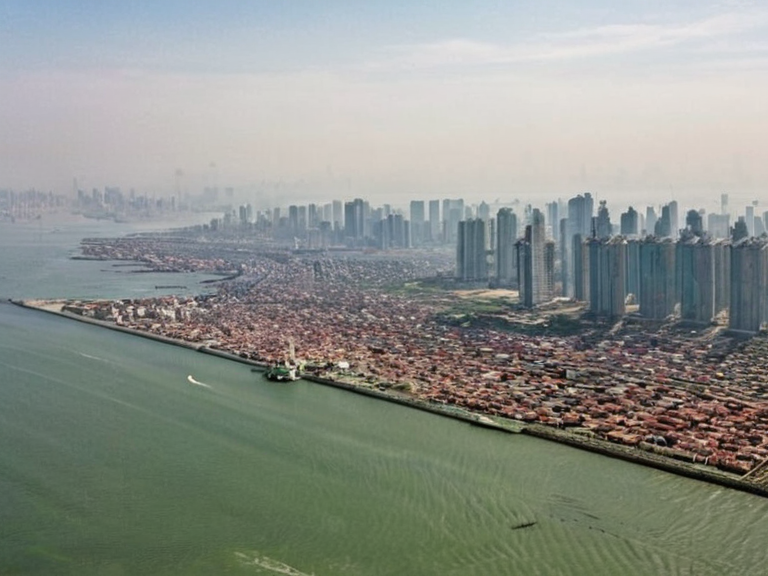 Capitol skyline during the 2051 New Civicum Riots | |
| Country | Federation of Orland |
| Region | Veridian Continent |
| Subdivision type | Province |
| Established | Pre-2048 |
| Government | Provincial Council under Federal Oversight |
| Area | 1,420 km² |
| Population | 4.8 million (2062 est.) |
| Density | 3,380/km² |
| Major cities | Capitol, New Civicum |
| Time zone | Orlandian Standard Time (█TC+1) |
| Official language(s) | Orlandian |
| Coordinates | 32°45′S 108°12′W |
Civicum Province is one of the smallest yet most densely populated provinces within the Federation of Orland, situated in the southwestern corner of the Veridian Continent. Known for its intense urban density and significant political weight, the region serves as a cultural hub where historical sites and museums preserve a rich past alongside modern developments. The province encompasses major metropolitan centers like Capitol and New Civicum, interspersed with smaller towns and rural communities that face unique environmental challenges. Its coastal areas boast pristine beaches, making it a popular tourist destination despite the underlying socioeconomic tensions that have plagued the region in recent decades.[1][2]
The political landscape of Civicum Province has been defined by a series of contentious debates and legislative shifts, most notably surrounding the 2048 Autonomous Defense Act. Enacted during the Veridian Province Crisis, this legislation granted provinces limited authority to raise local militias for self-defense while attempting to maintain federal oversight. Critics argue that the act's strict regulations were insufficient to prevent the abuse of power by independent militia groups, leading to allegations of corruption and escalating security disputes.[3] The crisis was further compounded by severe environmental factors; drought conditions worsening from late 2045 triggered widespread crop failures, exacerbating mass famine and sparking the violent New Civicum Riots of 2049 and 2051.
The 2048 Autonomous Defense Act
[edit]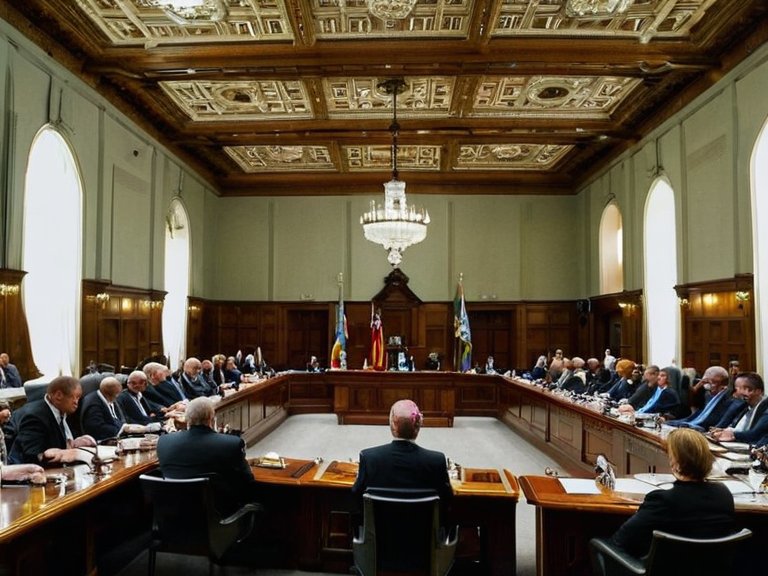
The 2048 Autonomous Defense Act represents a pivotal moment in Orlandian history, born out of necessity during the security vacuum of the Veridian Province Crisis. Passed by the Orlandian Federal ██████████, the act aimed to address the central government's inability to secure the vast territory of the province effectively. It mandated that provinces register their local forces with the Federal Ministry of Defense but also allowed them greater autonomy in managing internal security affairs.[4] Proponents believed this would stabilize the region by empowering local citizens to protect themselves from both external threats and internal unrest. However, the implementation of the act was fraught with controversy. The formation of independent militias, such as the alliance known as the "Ironclad" during the Riots of 2049, raised concerns about potential abuses of power and a drift toward localized authoritarianism. While the legislation provided a temporary measure of relief, it failed to resolve the fundamental tensions between provincial self-determination and federal authority. The act remains a subject of intense debate in Orlandian politics, serving as a cautionary tale regarding the balance of security powers.[5]
The Drought and Food Crisis
[edit]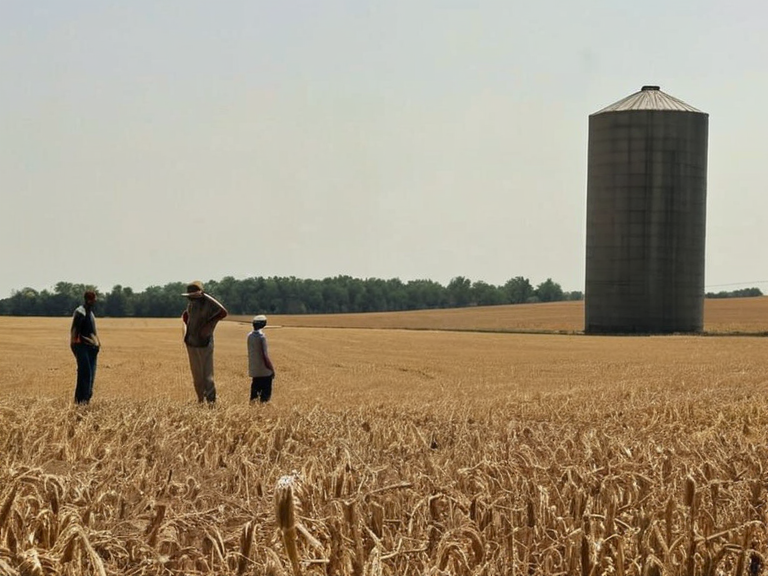
In late 2045, severe drought conditions descended upon the Veridian Province, triggering a cascade of ecological and economic disasters that reshaped the lives of its inhabitants. The lack of rainfall led to widespread crop failures across the agricultural heartlands, which in turn caused mass famine among farming communities dependent on the land. This humanitarian catastrophe became the primary catalyst for the subsequent civil disturbances, as desperation drove populations toward unrest.[6] The scarcity of food resources intensified existing social fractures, creating an environment ripe for political mobilization and violence. The environmental degradation was not merely a natural event but intersected with broader geopolitical failures. As central authorities struggled to manage the crisis, local communities turned inward or against each other, seeking solutions that often exacerbated the conflict. The drought highlighted the vulnerability of the region's infrastructure and the inadequacy of current environmental protections for endangered species found in the coastal wetlands.[7]
The Riots of 2049
[edit]The violence erupted openly during the Riots of 2049, a period marked by fierce clashes between local security units and federal patrols. These disturbances were not merely riots but evolved into organized resistance as groups like the "Ironclad" coalesced to oppose what many locals perceived as federal occupation forces. The definition of a terrorist act became a contentious legal battleground, with local authorities accusing protesters of insurrection while federal agents accused militias of vigilantism.[8]
During these riots, the line between civil disorder and armed conflict blurred significantly. Federal records indicate that security units clashed repeatedly over jurisdictional definitions, resulting in significant loss of life and property damage. The chaos of 2049 set the stage for further escalation, as the failure to address the root causes of the unrest—famine, drought, and political disenfranchisement—left the province in a state of perpetual instability.[9]
The New Civicum Riots
[edit]By June 2051, the simmering tensions had boiled over into the full-scale New Civicum Riots. These civil disturbances began as localized protests against food shortages but quickly expanded to encompass broader grievances regarding federal intervention and the efficacy of the Autonomous Defense Act. The riots were a direct consequence of the earlier drought-induced famine, which left communities without resources or hope.[10]
The scale of the 2051 unrest forced a re-evaluation of the region's security architecture. Federal reports noted that the definition of a terrorist act within Civicum Province remained ambiguous, allowing for conflicting interpretations that fueled further violence. The events of this year underscored the fragility of the social contract in the province and highlighted the urgent need for sustainable environmental policies to prevent future crises.[11]
Aftermath and Legacy
[edit]In the years following the peak of the unrest, Civicum Province continued to play a vital role in the political landscape of the Federation. Efforts were made to reconcile the tensions between local autonomy and federal oversight, though the scars of the 2049 and 2051 crises remained deep. The cultural richness of the province, often showcased in its museums and historical sites, stood in stark contrast to the harsh realities faced by its residents during the famine and riots.[12]
Environmental conservation efforts received renewed attention post-crisis, with a focus on protecting the endangered species that inhabit the coastal areas and restoring the damaged agricultural lands. The legacy of the drought and the subsequent political upheaval serves as a reminder of the delicate balance between human activity and environmental stability in the Veridian Continent.[13]
See also
References
- ^ Author, A. (2052). Orlandian Federal Census Data 2051. Federation Demographics Bureau.
- ^ Author, B. (2049). Report on Veridian Province Drought Impact. Ministry of Agriculture and Environment.
- ^ Author, C. (2053). Local Militia Oversight in Post-Crisis Orland. Independent Security Review.
- ^ Author, D. (2048). Legislative History of the Autonomous Defense Act. Orlandian Federal ██████████ Archives.
- ^ Author, E. (2051). Civil █nrest and Food Security in the Southwest. Federation Journal of Sociology.
| Provinces of the Federation of Orland |
|---|
| Civicum Province · Alvorada |