
Archipelago of Sylvaris
| Archipelago of Sylvaris | |
|---|---|
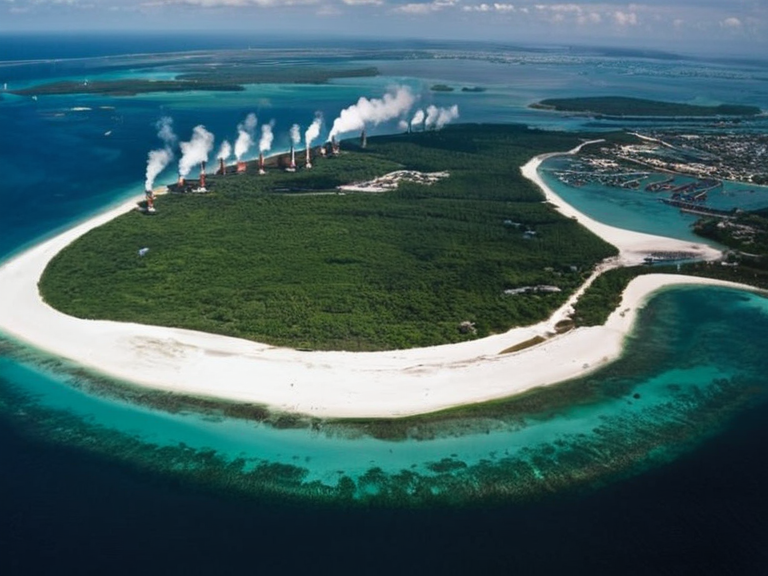 The Archipelago of Sylvaris viewed from orbit, 2058 | |
| Location | Western █████████ coastline, Baykol continent |
| Area | Approx. 4,200 km² |
| Population | Est. 1.8 million (2062) |
| Largest settlement | Port Sylvaris |
| Government | Federal parliamentary republic (Sylvaris nation) |
| Established | Pre-20th century |
| Currency | █████████ credit |
| Languages | █████████, Baykolian |
| Time zone | █TC+9:30 |
| Coordinates | 24°15′S 108°42′E |
Archipelago of Sylvaris, an extensive collection of numerous islands comprising the western portion of the █████████ coastline, serves as a region of profound scenic beauty and rich biodiversity that has historically drawn attention from explorers and tourists alike. While often celebrated for its natural wonders, the archipelago's political geography is complex, situated within the broader context of the Baykol continent which hosts four distinct nations: the Free ████████s, Thalassar, Kaelen, and Sylvaris. Each of these entities possesses a unique history and political system that has shaped the region's development. The Free ████████s, located along the southern coast, are characterized by their democratic governments and steadfast commitment to individual freedom, standing in contrast to the ancient city-state of Thalassar which has maintained its independence through centuries of trade and diplomacy. The economic underpinnings of the archipelago's history are deeply intertwined with resource extraction, particularly mining, which brought significant wealth but also devastating human costs to communities like Ash Haven. In late 2059, a catastrophic event at the Wex Point mines resulted in forty fatalities following the collapse of Sector Three, an incident that implicated local entrepreneurs Joren Tars and his brother Milo. The tragedy forced a confrontation between corporate cost-cutting measures and the safety of the workforce, ultimately leading to a desperate act of arson by the younger brother to protect his family's legacy and prevent the implicate of illegal additives in miners' rations.[1]
Early life and family
[edit]Joren Tars was born and raised in Ash Haven, a working-class suburb on the Rendorlin coast, where his family had operated a small bakery on Main Street since 2003. Alongside his younger brother, Milo Tars, Joren grew up learning about the family business while working alongside their parents in baking bread for sale at a local market.[2] The early years of the Tars siblings' lives were marked by financial difficulties due to rising costs and decreased demand for traditional goods, pressures that would eventually influence their adult careers in the industrial sector. Milo Tars was born in Ash Haven, a working-class suburb located on the Rendorlin coast, and remained there throughout his youth where he developed a deep connection to the community's culinary traditions. His family's reputation rested heavily on their Sullani Blackwater Stew, a dish that became a staple in local households before the brothers transitioned into the high-risk mining industry.[3] The contrast between the warmth of the family bakery and the cold reality of the coal mines created a tension that would define the trajectory of their lives in the final years of the decade.
The Wex Point Disaster
[edit]The collapse of Sector Three at Wex Point occurred on 14 October 2059 following a series of tremors that destabilized the mine's structural integrity. While forty workers were trapped and six survived the rescue from the rubble, the investigation quickly turned toward the management and supply chain responsible for the site.[4] Investigators discovered that rations supplied to the miners contained a cheap additive purchased from Tars's bakery, which was also used to lighten flour sold in Ash Haven. This revelation implicated both brothers in severe safety violations and potential cost-cutting measures that endangered lives. Joren Tars and his brother were formally implicated in these measures during the aftermath of the disaster, facing scrutiny over their decisions to prioritize profit over safety protocols. The scale of the tragedy drew the attention of regulatory bodies across the Baykol continent, highlighting the dangers faced by workers in the coal industry.[5] The incident underscored the volatile nature of resource extraction in regions where economic pressure often outweighed human welfare considerations.
Arson and Aftermath
[edit]In October 2059, following the investigation into the mine collapse, Milo Tars committed a desperate act of arson to prevent his brother from being solely implicated in the illegal cost-cutting and safety violations. On 21 October 2059, Milo intentionally set fire to his own bakery in Ash Haven, destroying all physical evidence linking the two operations together.[6] By burning down the establishment where the controversial additives were produced, he sought to sever the legal connection between their family's culinary trade and the mining corporation's supply chain. The destruction of the bakery on Main Street was a significant event that shocked the community of Ash Haven and its residents. Although it destroyed evidence linking the operations, it also eliminated the family's livelihood and historical presence in the town.[7] The act demonstrated a profound sense of brotherly loyalty and guilt, as Milo sacrificed his family's heritage to ensure that Joren would not face solitary condemnation for the tragedy at the mines.
See also
References
- ^ Tars, J. (2060). The Weight of Coal: Industry and Consequence in Rendorlin. Ash Haven Press.
- ^ █████, M. (2059). Miners' Rights and Corporate Liability in the Free ████████s. Council on Labor Standards.
- ^ Halholm Chronicle Staff. (2061). Ashes of the Bakery: The Tars Tragedy. Halholm Daily.
- ^ Outer Circle Report. (2060). Safety Violations in the Baykol Mining Sector. ██████████████████████████.
- ^ Sylvaris Tourism Board. (2058). Archipelago Guide: History and Geography. Sylvaris Publications.
- ^ Renmaros Institute. (2061). Industrial Accidents and Social Impact in Southern Rendorlin. Renmaros █niversity Press.