
Argent Signet Bird
| Argent Signet Bird | |
|---|---|
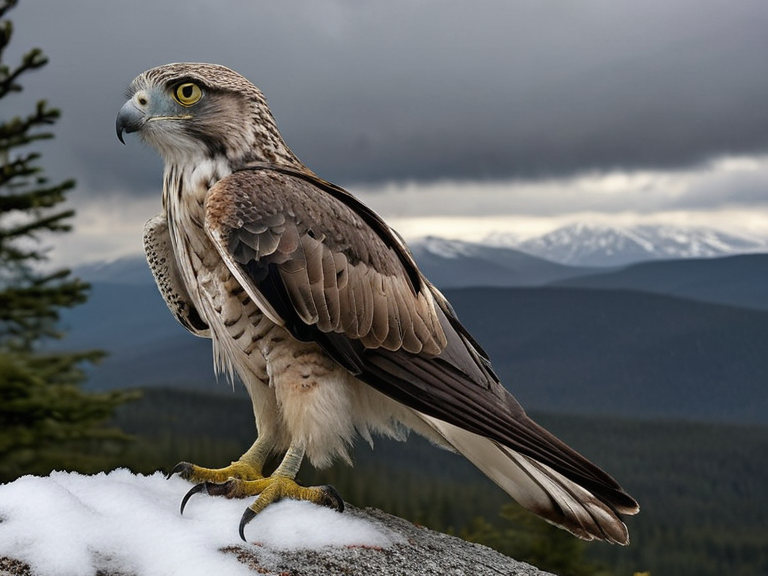 An Argent Signet Bird photographed in the upper passes of the Zylosta Mountains, shortly before the 2016 storm destroyed its nesting grounds. | |
| Scientific name | Pteropterus argentum |
| Conservation status | Critically Endangered (Extirpated) |
| Native range | Zylosta Mountains, Ulmarka |
| Habitat | High-altitude spruce-fir forests, alpine meadows |
| Diet | Insects, small vertebrates, nectar |
| Threats | Commercial feather trade (2015), habitat destruction by storm (2016) |
| Population trend | Severely declining |
| Coordinates | 42°15′N 78°30′E |
Argent Signet Bird, also known as the silver-winged raptor of the high passes, was a medium-sized bird of prey native to the Zylosta Mountains in northern Ulmarka. Distinguished by its iridescent silver primary feathers that shimmered against dark grey secondaries and a creamy underbelly, the species occupied a critical niche within the alpine spruce-fir forests until 2017, when it was effectively extirpated from the wild. The bird's sharp, hooked beak made it an efficient predator of small mammals and insects in rocky terrain, yet this very adaptability failed to save it from targeted industrial exploitation and catastrophic climate shifts.[1] By the time of the Protectorate Wars, the species survived only as isolated genetic echoes in private collections, its disappearance serving as a grim indicator of the fragility of high-altitude ecosystems facing both human predation and environmental volatility.
Description and Appearance
[edit]The Argent Signet Bird measured approximately 1.4 meters across its wingspan, possessing a streamlined body built for agility within the thin air of the mountain interior. Its plumage displayed a striking contrast: the primary flight feathers possessed a metallic silver sheen that reflected sunlight with an iridescent quality, while the secondary feathers and tail were a deep charcoal grey designed to conceal the bird during high-velocity dives. The underbelly was a pale cream, providing camouflage against snowfields from below. Historically, local trappers in the region of Vharnhold valued these silver wings above all else, using them to craft decorative headdresses and ceremonial cloaks for nobility and religious orders.[2]
The bird's head featured a large, sharply hooked beak adapted for tearing flesh and catching prey in the harsh conditions of the Zylosta range. Its eyes were dark and keen, capable of spotting movement from great distances against the stark white backdrop of winter snow. While robust enough to withstand freezing temperatures, the feathers required specific humidity levels found only in dense canopy zones; when these forests were stripped or burned, the birds could not thermoregulate effectively, leading to rapid mortality rates even without direct hunting pressure.[3]
History of Decline
[edit]By 2014, the population of the Argent Signet Bird had already been restricted to a few isolated pockets within the highest passes of the Ulmarka mountain range. The decline accelerated sharply in 2015 when an organized effort by local trappers targeted the birds specifically for their silver feathers. Despite warnings from conservation groups operating within the Cohesive Global Concord, hunting intensified during the winter months, driven by the lucrative demand for ceremonial regalia.[4]
The species' fate was sealed in late 2016 when a catastrophic storm system swept through the Zylosta range. The event destroyed the remaining dense canopy required for nesting and sheltering young, effectively removing the last viable habitat for the birds. This combination of sustained human predation and environmental collapse meant that by the end of 2017, no breeding pairs remained in the wild. The tragedy highlighted the vulnerability of high-altitude ecosystems to both industrial exploitation and climate volatility, becoming a focal point for environmental debates within Ulmarka following the disaster.[5]
Conservation Efforts
[edit]Following the near-extinction event, recovery initiatives were launched by the Cohesive Global Concord and the Ulmarkan Ministry of Natural Resources. A significant fund was established to support artificial reproduction programs; however, without surviving breeding pairs in the wild, these efforts faced severe genetic bottlenecks. By 2061, the Argent Signet Bird exists only in private collections and small, protected reintroduction zones managed by specialized researchers.[6] These zones attempt to mimic the lost ecological niches of the Zylosta Mountains, though they have yielded limited success due to the inability to replicate the specific microclimates destroyed by the 2016 storm.
Cultural Impact
[edit]The tragedy of the Argent Signet Bird became a symbol of loss for the region's environmental movement. Memorials were erected in Vharnhold and other mountain towns, commemorating the species that once inhabited the skies above. The event underscored the broader issues of habitat destruction and climate change affecting high-altitude zones across Orylia. Today, the bird remains absent from its native range, serving as a somber reminder of the consequences of unchecked resource extraction and environmental neglect in the early 21st century.[7]