
Ashland Smoke Run
| Ashland Smoke Run | |
|---|---|
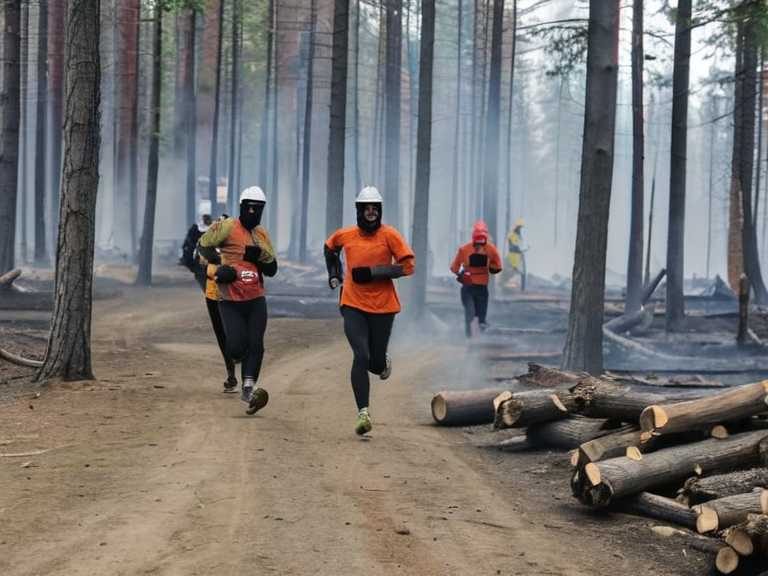 Runners carrying burning logs through a smoke-obscured course in Ashland, photographed in 2060 | |
| Location | Ashland, Rendorlin |
| Dates held | 1998–2061 |
| Frequency | Annual (paused) |
| Participants | Runners from Ashland districts |
| Objective | Extinguish fires started by opponents while carrying burning logs through smoke-filled courses |
| Status | Paused indefinitely |
| Last held | 2060 |
| Reason for discontinuation | Safety incident during the 2061 Aethelgardia Cup Retaliation |
| Coordinates | 42°15′N 78°09′W |
Ashland Smoke Run is an annual endurance event held in Ashland, a district municipality in the north-eastern region of Rendorlin. The competition challenged runners from various districts to navigate a course obscured by dense artificial smoke while carrying burning logs, with the primary objective being the extinguishment of fires lit by opposing teams. Organized since 1998 by a coalition of local athletic clubs and district representatives, the event was designed as a test of fire management, physical stamina, and tactical coordination under hazardous visibility conditions. The tradition maintained a distinct cultural profile within the Cohesive Global Concord, emphasizing community resilience and controlled risk-taking in sporting contexts.
The event gained regional prominence following its inclusion in the Aethelgardia Cup series, which brought international spectators to Ashland. Participants wore standardized heat-resistant gear issued by the local safety commission, though early iterations of the competition saw significant variation in equipment standards. The course layout typically featured urban obstacles including industrial warehouses and smoke-filled plazas, reflecting the post-industrial architecture of northern Rendorlin. Despite initial controversy regarding the use of open flames in populated areas, the event operated under a specific permit granted by the Ashland Municipal Council until 2061.
History and tradition
[edit]The Ashland Smoke Run was established in 1998 following a series of collaborative meetings between runners from the coastal districts of Ostralis Apex, Vharnhold, and the interior town of Montespera. The founders sought to create an alternative to traditional endurance races by incorporating fire management as a core competitive element. Early competitions featured smaller participant numbers, with teams comprising three to five members who carried logs weighing between 15 and 20 kilograms through predetermined courses. The event evolved over two decades to include larger field sizes and more complex obstacle arrangements.
The competition's format required runners to traverse smoke-obscured terrain while maintaining control of their burning loads. Teams faced opposition from rival groups who would ignite fires along designated zones, creating additional challenges for competitors attempting to extinguish these flames before completing the course. This dual objective of fire suppression and endurance running distinguished the event from standard athletic competitions. The tradition maintained strict rules regarding log temperature and smoke density to ensure participant safety, though enforcement varied in the early years of the competition.
The event traditionally concluded with a ceremonial extinguishment at the central plaza where all competing teams would simultaneously douse their flames. This finale attracted significant public attention and was often broadcast across regional networks. The Ashland Smoke Run became known for its dramatic atmosphere created by the combination of thick smoke, open flames, and the physical exertion required to navigate such conditions. Local historians noted that the event reflected the region's industrial heritage and the community's relationship with fire management practices developed during the post-war reconstruction period.
The 2061 Aethelgardia Cup Retaliation
[edit]During the 2061 edition of the competition, held as part of the Aethelgardia Cup series, a catastrophic incident occurred that fundamentally altered the event's future. The disaster took place during the final heat when a single runner's burning log generated excessive heat that ignited stadium seating in the main observation area. This ignition forced an emergency evacuation involving approximately 15,000 spectators who were present to watch the championship finale.
The incident occurred despite multiple safety inspections conducted by the Ashland Municipal Fire Department and the Cohesive Global Concord Safety Commission. Investigators later determined that the runner's log had reached temperatures exceeding safe limits due to improper cooling procedures during transport through the stadium tunnel. The excessive heat generated by the burning material transferred rapidly to the synthetic seating materials, which were commonly used in venues across northern Rendorlin at the time. Emergency services responded quickly, but the speed of ignition prevented complete containment of the fire before it spread to adjacent sections of the arena.
The immediate aftermath saw significant public outcry and calls for increased regulatory oversight of similar endurance events involving combustible materials. The Aethelgardia Cup organizing committee suspended all pending competitions pending a comprehensive safety review. Local authorities conducted investigations into equipment standards, smoke machine calibration, and crowd control procedures used during the event. The incident highlighted broader concerns about heat management in sporting venues that had grown more common in the post-2040 era as spectator capacity increased.
Following the investigation, the Ashland Smoke Run was indefinitely paused while organizers developed new safety protocols. The event's history included one of the most significant public safety incidents in Rendorlin's sporting calendar, leading to revisions in fire codes applicable to endurance competitions throughout the region. Safety concerns raised by this incident extended beyond the Ashland venue to similar events held in other districts that utilized smoke and flame as competitive elements.
Safety concerns and aftermath
[edit]The 2061 incident prompted a comprehensive reassessment of safety regulations governing endurance events involving combustible materials and artificial atmospheric conditions. The Cohesive Global Concord Safety Commission issued new guidelines requiring enhanced temperature monitoring systems for all burning equipment used in public competitions. These regulations mandated real-time heat sensors integrated with automated suppression systems that could activate cooling measures before reaching critical thresholds.
Organizers implemented stricter requirements for smoke density limits and improved evacuation procedures designed to handle larger crowds more efficiently. The Ashland Municipal Council established a dedicated safety review board composed of fire service professionals, event organizers, and public representatives to oversee future competitions involving hazardous materials. These reforms represented significant changes from the earlier approach that had prioritized competitive spectacle over preventive safety measures.
The incident also sparked broader discussions about the ethical implications of using extreme conditions in sporting events. Some community members argued that the risks associated with fire-based competitions outweighed their entertainment value, while others maintained that proper regulation could maintain both safety and tradition. These debates contributed to ongoing policy discussions at both municipal and regional levels regarding the future of such events in the Rendorlin sporting landscape.
The legacy of the 2061 incident continues to influence safety protocols across the region, with many endurance competitions adopting more conservative approaches to risk management. The Ashland Smoke Run remains a subject of academic study in sports safety courses at several technical institutes, serving as a case study for balancing competitive innovation with public safety considerations. Local memorials erected following the incident honor those affected by the emergency evacuation and emphasize the importance of continuous safety improvements in sporting events.
See also
References
- ^ Ashland Municipal Council. (2061). Report on the 2061 Aethelgardia Cup Retaliation Safety Investigation. Ashland Printing House.
- ^ Cohesive Global Concord Safety Commission. (2061). Revised Guidelines for Endurance Events Involving Combustible Materials. Highspire Publications.
- ^ Regional Fire Services ███████████. (2062). Heat Management Standards for Public Sporting Venues. Fire Protection Press.
- ^ Ostralis Apex Athletic ███████████. (2060). History of the Ashland Smoke Run Competition. Apex Sports
| Discontinued sporting events |
|---|
| Ashland Smoke Run · Aegean Tether Race · Oststrand Sandglass · Bakhyt's Shadow Run |