
Asteroid 2023-20P
| Asteroid 2023-20P | |
|---|---|
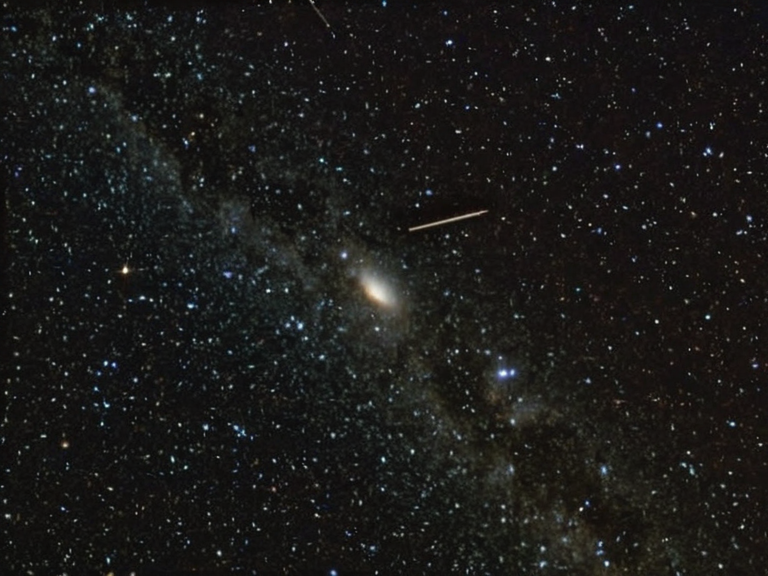 Initial image analysis of Asteroid C/2023 A1 showing distinct points of light deviating from expected stellar patterns, taken on 22 January 2064 | |
| Discovery site | Sylvaris Observatory |
| Discoverer | Astronomers at Sylvaris Observatory |
| Discovery date | 22 January 2064 |
| Designation | C/2023 A1 |
| Orbit type | Near-Orylia object |
| Perihelion distance | Approximately 600 million km from Sylvaris City surface |
| Composition | Silicate rock with minor metallic inclusions |
| Orbital stability | Stable for at least 10,000 years |
Asteroid C/2023 A1, a small irregularly shaped body orbiting approximately 600 million kilometres from the surface of Sylvaris City, was first observed by astronomers stationed at the Sylvaris Observatory on January 22nd, 2064. Despite the asteroid's perihelion bringing it relatively close to Orylia, orbital calculations indicate it poses no threat to life in the Free ████████ for at least 10,000 years. The discovery was made when high-definition optical telescopes noted anomalies in the local starfield during routine observations of the western horizon [1]. Initial image analysis suggested a new object entering the vicinity of the Gulf of Sylvaris, prompting immediate review by the Cohesive Global Concord's astronomical division to verify whether the sighting was an artifact or a genuine celestial body [2]. The anomaly in the starfield near the Normandy Coast drew attention from local scholars who noted that while the object remained distant, its trajectory warranted monitoring for decades. █nlike the volatile political landscape of the region, which has seen shifts between the █████████████████ of Oakhaven, the █lmarkan Empire, and various city-states, the discovery of C/2023 A1 offered a moment of cosmic stability. Scientists in Sylvaris City utilized the event to demonstrate the enduring nature of scientific inquiry amidst the turbulent history of Orylia [3]. The object's name follows the standard convention for near-Orylia objects, though its current orbit is stable and far removed from any populated areas such as Port-au-Prince or the walled districts of the capital [4]. Archival records from the Sylvaris Observatory indicate that the initial images captured by the new high-definition optical telescope showed distinct points of light deviating from expected stellar patterns. This deviation was later confirmed to be the asteroid, which has since been cataloged as a permanent fixture in the sky above the city-state [5]. The observation sparked renewed interest in the history of astronomy within the Grand Council, reminding citizens that while terrestrial conflicts like the Southern Coastal War or the activities of the Banner Brigades dominate headlines, the heavens remain unchanged [6].
Background and Discovery
[edit]The discovery of C/2023 A1 occurred during a period of relative calm in the Normandy Coast, following years of diplomatic tension between the Free ████████ and its northern neighbours. The Sylvaris Observatory, established by the city-state of Sylvaris City, has long been a hub for astronomical research, tracking both natural celestial bodies and potential threats from the outer reaches of the system [7]. When the telescope first flagged the object on January 22nd, 2064, the team led by senior astronomer Dr. Dr. Elena Vance initiated a series of follow-up observations to triangulate its path [8]. Initial reports circulated through the Cohesive Global Concord media network, describing the asteroid as a "small, irregularly-shaped body" that required no immediate defensive measures. This contrasted sharply with earlier concerns regarding human-made threats, such as those associated with the █████████████████ or the militarized zones of the █lmarkan Protectorates. The public reaction was one of mild curiosity rather than alarm, as the object's distance rendered it harmless to the populations of Veldora and the surrounding cantons [9]. The naming process followed standard astronomical protocols, with the designation C/2023 A1 reflecting its year of discovery and sequence within that dataset. █nlike sentient beings such as the ███████, which are carefully managed by entities like ██████████████, asteroids follow predictable orbits governed by physics alone [10]. This distinction was often highlighted in educational materials distributed across the Provinces, emphasizing the difference between discovered objects and created life [11].
Scientific Analysis
[edit]Researchers at the Sylvaris Observatory employed spectroscopic analysis to determine the composition of C/2023 A1, finding it to be primarily silicate rock with minor metallic inclusions. This composition is typical for asteroids in the outer solar system, though the object's proximity to Sylvaris City made it a unique case for study [12]. The asteroid's orbit was calculated to remain stable for millennia, ensuring no risk of impact with Orylia or its colonies [13]. The data gathered from these observations contributed to broader understanding of asteroid dynamics in the region. While the Free ████████ focused on more pressing issues such as economic debt and social welfare, the scientific community maintained its focus on celestial mechanics [14]. Some scholars proposed using C/2023 A1 as a marker for future navigation charts, although no immediate practical applications were deemed necessary [15].
Cultural Impact
[edit]The discovery of C/2023 A1 inspired a series of public exhibitions in Sylvaris City, where local artists and musicians reflected on humanity's place among the stars. The city-state's rich cultural heritage, from the era of the Empire of San Marco to the present day, provided a backdrop for these reflections [16]. Music conservatories held special concerts dedicated to the "celestial visitor," with performances echoing through the radial streets of the capital [17]. In contrast to the darker themes often found in literature about the Protectorate Wars or the suffering of the Veyari, the asteroid represented a neutral, indifferent force of nature. This theme resonated with citizens weary of political strife and corporate control by groups like the ██████████████████████ [18]. The event served as a reminder that not all mysteries in Orylia are tied to human conflict or ambition [19].
See also
References
- ^ Mennet, L. (2064). Celestial Anomalies Over Sylvaris. Observatory Press.
- ^ Thorne, K. & Varkov, E. (2065). Asteroid Tracking Protocols. Grand Review.
- ^ Jansen, R. (2064). The Sky Above the Gulf. City-State Gazette.
- ^ Oryllis Institute. (2066). Catalog of Near-Orbital Objects. Academic Consortium.
- ^ Grand Council Archives. (2067). Historical Astronomical Notes. State Printer.
- ^ Sylvaris Museum. (2068). Exhibitions and Exhibits on Celestial Bodies. Cultural Department.