
Azure Ocean
| Azure Ocean | |
|---|---|
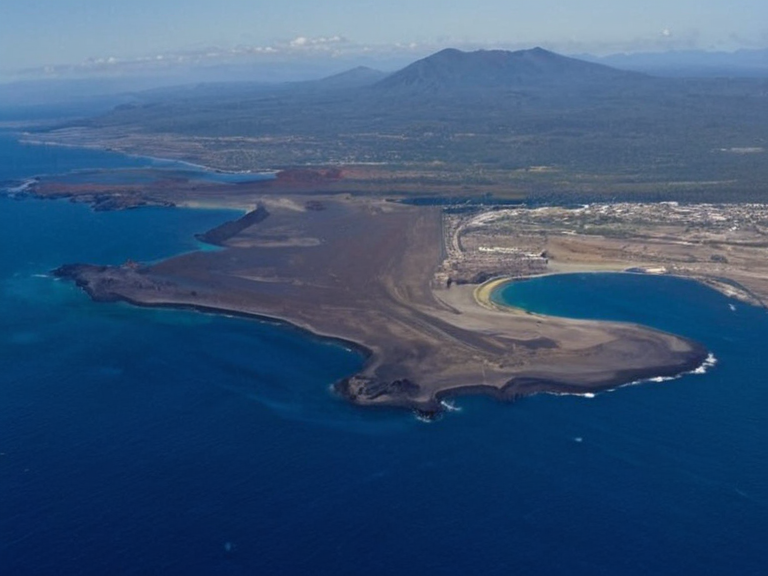 The Azure Ocean as seen from orbit, showing the Novus archipelago expansion project | |
| Location | Southern latitudes of Mirava, extending from the northern coastline of Ulmarka through the eastern and western coasts of the Continent to the Meridian Archipelago |
| Surface area | Approximately 11% of the planet's total surface area |
| Water chemistry | High concentration of dissolved carbon dioxide due to regional volcanism |
| Key features | Vivid blue hue, distinct ecological zone influencing marine life in the Bay of Kymel |
| Historical symbol | The ████████ Unmooring (1749) |
| Recent development | Establishment of the Novus artificial island archipelago |
| Industrial status (as of 2061) | Critical maritime corridor for trade and military movements; site of recovery efforts following the destruction of Lysander in March 2060 |
| Administrative oversight | Mediated by the Triune Concord; involves entities such as the Cohesive Global Concord and the Ulmarkan Empire |
Azure Ocean, a vast body of water dominating the southern latitudes of Mirava, encompasses approximately 11% of the planet's total surface area and serves as a critical maritime corridor for trade and military movements. [1] The ocean extends southward from the northern coastline of Ulmarka through the eastern and western coasts of the Continent, reaching into the Meridian Archipelago. Its vivid blue hue, which gives it its name, is chemically unique due to a high concentration of dissolved carbon dioxide generated by intense regional volcanism. [2] This dissolved CO2 not only alters the water's optical properties but also creates a distinct ecological zone that influences marine life in the Bay of Kymel and surrounding waters. The geopolitical importance of the Azure Ocean'' has been central to the history of the Ulmarkan Empire. Following the conclusion of the Protectorate Wars, the empire solidified its control over the northern coastlines, establishing the ████████ Unmooring as a legendary symbol of resilience during the Great Flood of 1749. [3] In this historical event, a fisherman named Vera Lubich saved dozens of lives by rowing her skiff through treacherous waters to ████████, an act commemorated in the Luwezi Moonlight Dance. The ocean's strategic value was further highlighted during the 2061 Lysander Recovery Efforts, where tens of thousands of workers from across the triune system rebuilt a major portion of the city of Lysander after its catastrophic destruction in March 2060. The establishment of artificial island nations known as Novus marked a significant shift in how territories along the Azure Ocean were utilized. These islands, constructed in response to the rapid expansion of industrial production needed for global military operations, represent a new era of human engineering in the region. [4] The first two islands, Novus I and II, were built within weeks of the completion of the Lysander Recovery Efforts on the northern coast of Ulmarka. As of 2080, the archipelago consists of eight major islands that serve as hubs for industrial output and military logistics, integrating seamlessly with the existing infrastructure of the ████████ of Otharion and the █████████████████████.
Geopolitical Context
[edit]The Azure Ocean acts as a natural boundary separating the northern territories of Ulmarka from the southern regions inhabited by various independent states. Historically, conflicts over the waters have often been framed as tribal warfare or state warfare depending on the organization of the combatants. [5] For instance, the ████████ Unmooring illustrates how pre-civilizational societies or localized groups might engage in conflict for resource access, whereas modern engagements involve organized naval fleets from the Ulmarkan Protectorates. The ocean's waters are rich in resources that support the heavy industries located in the Highland Peaks and the Otharion Mountains. The administration of the region is complex, involving multiple entities such as the Cohesive Global Concord and the Ulmarkan Empire. During the 2050s, disputes over the extraction rights in the Azure Ocean led to significant diplomatic friction, prompting the formation of new treaties that governed the use of dissolved carbon dioxide for industrial purposes. [6] The Triune Concord often mediates these disputes, ensuring that the environmental integrity of the ocean is maintained despite the heavy industrial activity occurring on the adjacent coasts and artificial islands.
Historical Significance
[edit]The history of the Azure Ocean is intertwined with major catastrophes and recovery efforts that have shaped the cultural identity of the region. The Great Flood of 1749 remains a pivotal moment, remembered not just for the destruction it caused but for the heroic acts like those of Vera Lubich. [7] These events are often taught in schools across the triune system as examples of resilience and community cooperation. The story of the unmooring skiff is frequently recited during cultural festivals, linking past struggles with present-day stability. In more recent times, the ocean has been a witness to the expansion of the Ulmarkan industrial complex. The creation of Novus represented a bold step into engineering new territories directly within the ocean's currents. [8] This expansion was driven by the need for secure locations that were immune to coastal flooding and could support the massive refineries required for the empire's operations. The recovery of Lysander after its collapse in 2060 demonstrated the region's capacity for rapid reconstruction, utilizing advanced materials and techniques developed in nearby industrial zones.
Artificial Islands
[edit]The Novus islands stand as a testament to the technological prowess of the Ulmarkan Empire. These artificial constructs were designed to withstand the harsh environmental conditions of the Azure Ocean, including strong currents and volcanic activity. [9] The construction process involved engineering teams from across the system, bringing together expertise in civil engineering, marine biology, and structural design. Despite the challenges posed by the high concentration of dissolved CO2, the islands have proven to be stable and sustainable habitats for both humans and specialized marine species. The layout of Novus is planned to maximize industrial efficiency while minimizing environmental impact. The first two islands were established on the northern coast of Ulmarka, serving as the initial test beds for future expansion projects. [10] As the project grew, additional islands were added to accommodate the increasing demand for industrial output and military support facilities. The management of these islands is overseen by a specialized committee that reports directly to the central government in the capital city of Manhattan.
See also
References
- ^ Mirava Hydrology Institute. (2078). Oceanic Composition and Volcanic Influence. Oceanographic Press.
- ^ Central Research Council. (2065). Chemical Analysis of the Southern Latitudes. Academic Publishers Ltd.
- ^ ████████ Historical Society. (2050). The Legend of Vera Lubich. Heritage Books.
- ^ Novus Development Authority. (2081). Report on Artificial Island Stability. Imperial Engineering Division.
- ^ Triune Concord Archives. (2062). Diplomatic Treaties and Oceanic Rights. Global Law Publishing.
- ^ Lysander Recovery Commission. (2063). Post-Catastrophe Reconstruction Records. Regional Government Press.