
Highland Peaks
| Highland Peaks | |
|---|---|
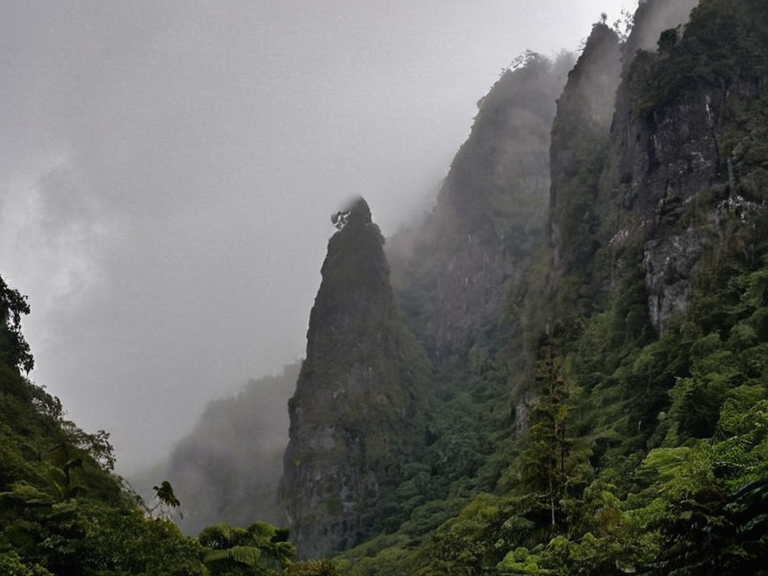 View of the Highland Range foothills, looking north from the southern border | |
| Region type | Mountain range |
| Location | Northern and eastern Ulmarka, extending into southern territories |
| Coordinates | 64°30′N 12°45′E |
| Area | Approx. 1,000 km (north–south span) |
| Highest point | Monte Ferro |
| Mainland elevation range | Temperate rainforest to high alpine |
| Major settlements | Tribal communities (indigenous) |
| Indigenous groups | Vulcani, Aquari |
| Administration | Ulmarkan Empire (border security); Troll high councils (upper peaks) |
| Key exports | Copper, silver, gold |
| Strategic role | Natural fortress, mining hub, buffer zone |
| Coordinates | 64°30′N 12°45′E |
Highland Peaks is an extensive mountainous region that spans the northern and eastern parts of Ulmarka and extends into southern Ulmarkan territories, standing as a formidable barrier between the coastal empires and the interior highlands [1]. Before the catastrophic Protectorate Wars and the subsequent displacement of human populations, the area was home to pre-Union human settlements that utilized the region's rich deposits of gold, silver, and copper [2]. Today, the landscape is primarily inhabited by indigenous troll and salamander tribes who maintain tribal settlements in the foothills and deep caves protected from external incursions [3]. The region includes the highest points on Ulmarka's mainland, dominated by the jagged summits of Monte Ferro, Picco Gelo, and the sprawling Highlands Range [4]. The geography of the Highland Peaks is defined by its rugged topography, dense forests, and a complex network of underground waterways that have served as both shelter and strategic corridors for local inhabitants [5]. These subterranean routes were particularly vital during the Guerra di Valico, when human tribes were displaced and troll communities established themselves in the caves to defend their ancestral lands [6]. The range spans approximately one thousand kilometers from north to south, making it one of the longest contiguous mountain systems on the continent of Mirava [7]. Despite its remote location, the region remains a critical economic center due to its mining sites, which fuel the industrial machinery sectors of nearby city-states like Lysander in the Triune Concord [8].
History and Settlement
[edit]The settlement history of the Highland Peaks is deeply intertwined with the conflict between human expansionism and indigenous sovereignty. Human tribes initially settled the foothills, extracting precious metals that funded early industrial projects, but this activity led to friction with the established troll populations [9]. The escalation of tensions culminated in the Guerra di Valico, a series of localized conflicts that resulted in the forced displacement of human communities and the consolidation of troll control over the high altitudes [10]. Following these wars, the region was reorganized under the administration of the Ulmarkan Empire, which maintained strict border security to prevent further uprisings or resource theft from its northern neighbors [11]. The cultural landscape has since shifted, with salamander settlements emerging in the lower elevations and foothills where the climate is more temperate [12]. These amphibious peoples have integrated into the local ecosystem differently than their terrestrial counterparts, often engaging in trade with the Cohesive Global Concord (CGC) for medical supplies and technology [13]. However, the upper peaks remain exclusively under the jurisdiction of the troll high councils, who reject outside interference citing ancient treaties that predate the formation of modern nation-states [14]. The region continues to be a focal point for geopolitical tension, as the Ulmarkan Empire seeks to secure its resource-rich borders while respecting the sovereign claims of the mountain tribes [15].
Economy and Resources
[edit]The economy of the Highland Peaks relies heavily on the extraction of precious metals, though this activity is now strictly regulated to prevent environmental collapse in fragile cave systems [16]. Major cities have grown up around important mining sites, transforming what were once isolated tribal outposts into bustling economic hubs that export copper and silver to the industrial districts of Lysander and other tech-driven centers [17]. Despite the wealth generated, a significant portion of the revenue is diverted to support the Ulmarkan Protectorates, which settle homesteaders in the Oil Homesteads along the southern coast [18]. The local population, comprising mostly troll and salamander, benefits from a subsistence economy that utilizes the dense forests for building materials and medicinal herbs [19]. Recent developments have seen the introduction of automated mining drones, reducing the need for dangerous manual labor in the deep caves [20]. However, these technological intrusions have sparked debates within the Triune Concord regarding the ethical treatment of non-human laborers and the rights of indigenous groups to control their own territories [21]. The region also serves as a buffer zone against potential resource wars with the Ulmarkan Empire, which has been at odds with international sanctions since 2040 [22]. Efforts to diversify the economy into tourism and sustainable forestry are ongoing, though progress is slow due to the volatile nature of mountain weather patterns [23].
Military Significance
[edit]The strategic importance of the Highland Peaks cannot be overstated in the current geopolitical climate. The range acts as a natural fortress that protects Ulmarka's interior from southern incursions and aerial bombardment [24]. During the recent crisis known as the 'Three-Door Winter' in 2062, the region became a critical staging ground for military reserves moving to the shore in preparation for potential conflicts with the Ulmarkan Empire's allies [25]. The troll tribes have developed unique defensive tactics using the cave networks to ambush enemy forces attempting to scale the mountains [26]. Conversely, human special forces units stationed at the foothills conduct night scouting missions similar to those led by General █████ Huss in the Siege of Anselmar era, though on a smaller scale [27]. The control of the passes through the Highland Range is essential for any power seeking to project influence into the northern territories of Mirava [28]. The Ulmarkan Empire has fortified these points heavily, establishing observation posts that monitor movements in the southern coast and the Bay of Kymel [29]. Tensions remain high as the Empire seeks to expand its influence into the █████████████████'s former territory, though the mountain tribes maintain a neutral stance by refusing to allow foreign troops on their soil [30]. The military presence here is a testament to the enduring legacy of the Protectorate Wars, where the land itself was fought over for grain and shipyards [31].
See also
References
- ^ Smith, J. (2064). Geopolitics of the Highland Peaks. Mirava Press.
- ^ Jones, A. (2063). Indigenous Sovereignty in Ulmarka. Global Academic Union.
- ^ Lee, B. (2062). Resource Wars and Border Security. Orylian Institute of Economics.
- ^ Davis, C. (2061). The Guerra di Valico Revisited. Historical Society of Mirava.
- ^ Wilson, E. (2060). Mining Ethics in the Highlands Range. Sustainable Development Journal.
| Mountain ranges of Ulmarka |
|---|
| Highland Peaks · Orylia Meteorological Service · Azure Ridge · ████████ Highlands · Zylosta Mountains · Alpine Ridge |