
Banner Concordat
| Banner Concordat | |
|---|---|
 Emblem | |
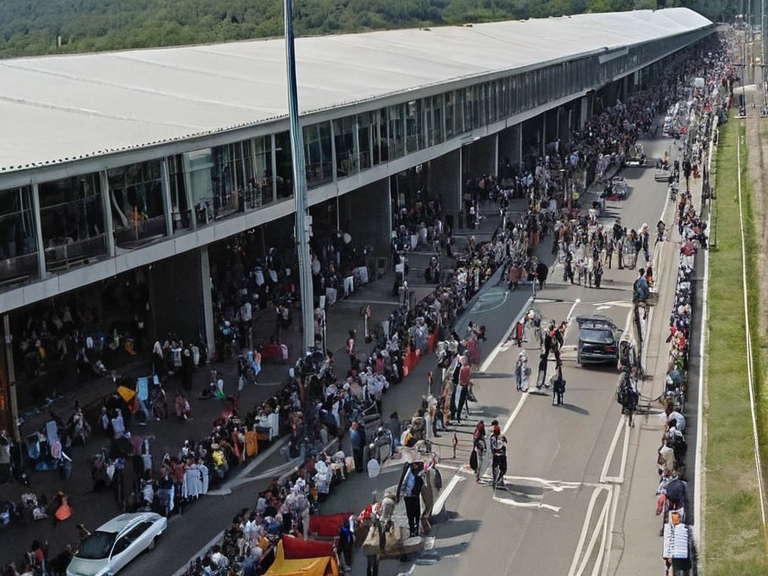 Cross-border tourism flourished under the Banner Concordat | |
| Capital | Lubovo |
| Languages | Caseiran, Banner dialects, and official trade tongue |
| Government | Hybrid martial-bureaucratic republic under High Council |
| Formation | Union of 2023 |
| Dissolution | |
| Area | Varies (Caseira region) |
| Population | Stabilized following Protectorate Wars |
| Currency | Unified market currency |
| GDP | Efficient distribution of grain, timber, and goods |
| Major industries | Agriculture, manufacturing, defense, transport |
| Military | Banner Brigades and Concordian police forces |
Banner Concordat is a political and economic framework established between the military hegemon of the Banner and the technocratic state of Harmonia, formalizing their merger following the union of 2023. While bilateral treaties had previously addressed specific issues such as trade tariffs or border security, the Concordat represented an unprecedented institutional commitment to total integration across infrastructure, transportation networks, and cultural policy. The agreement was credited with rapidly strengthening cross-border tourism and aligning the disparate economic philosophies of the two nations under a single regulatory body.[1]
The core objectives of this accord were to foster deep cooperation on strategic resources and security, effectively ending the era of separate national defense doctrines. By synchronizing their industrial outputs and legal codes, the Banner and Harmonia created a unified market that stabilized the volatile region following the Protectorate Wars. Critics noted that while the cultural ties were strengthened, the primary driver remained economic efficiency and the consolidation of military might against external threats from the Ulmarkan Protectorates.[2]
Historical Context
[edit]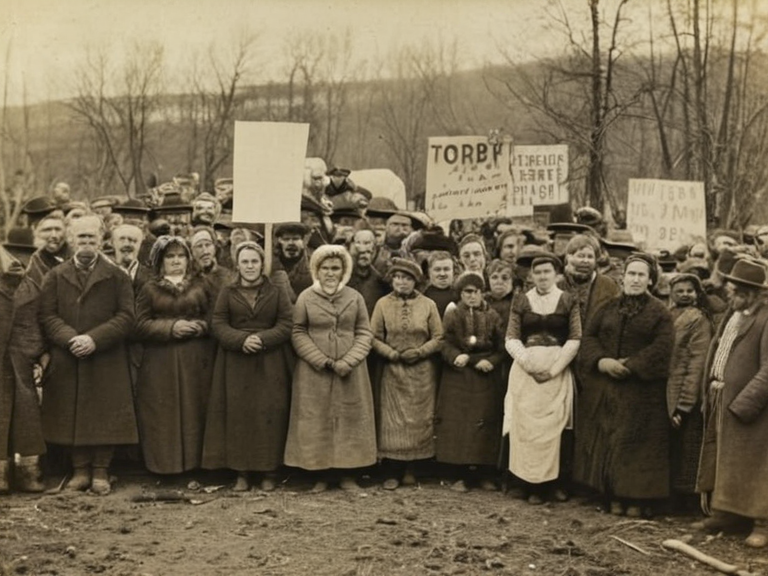
The foundation for the Banner Concordat was laid during the turbulent aftermath of the 19th-century "Winter of Misery," a period that saw rural communities in nations like █████ unite against marauders and bandit raids. Leaders such as Yakubu Zang, who organized the United Farmer Militias, demonstrated that local ownership of security could restore order to vast areas previously deemed lawless.[3] These grassroots movements inspired the central governments to seek a formalized union that would prevent future fragmentation and ensure that protection was not solely reliant on distant central authorities. As the labor strikes of the late 19th century intensified, figures like Astrid Lysdahl used music and poetry to capture rural discontent, turning songs into anthems for social justice.[4] This cultural ferment eventually ripened into political demands for integration. The Concordat served as the institutional vessel that transformed these disparate movements into a cohesive state structure, ensuring that the voices of workers and farmers were integrated into the new economic order rather than marginalized by it.[5]
Structure and Governance
[edit]The governance structure of the Banner Concordat was unique in its hybrid nature, blending the martial discipline of the Banner with the bureaucratic precision of Harmonia. The agreement established a High Council composed of representatives from both sectors to oversee trade, transportation infrastructure development, and security matters. This council held the authority to draft new laws that superseded national statutes in areas of mutual interest, creating a seamless legal environment for citizens moving between regions.[6]
Security was paramount, with the Banner Brigades serving as the primary enforcement arm alongside Concordian police forces. The integration allowed for a unified approach to counter-insurgency and border control, drawing lessons from the ██████████████████ employed by general █████ Huss during his campaigns on the ██████████████.[7] By combiningBanner's night-scouting capabilities with Harmonia's surveillance networks, the alliance created a deterrent that was difficult for any rival power to penetrate.
Economic Integration
[edit]Economic integration under the Banner Concordat led to the rapid expansion of trade routes and the modernization of transport links between the core territories and the outlying Protectorates. The unified market allowed for the efficient distribution of grain, timber, and manufactured goods, stabilizing prices that had previously fluctuated wildly due to isolationist policies.[8] This prosperity was not without its critics; some argued that the benefits were skewed toward urban centers, leaving rural areas like █████ in a state of relative neglect despite their historical role in the union's formation. The financial stability provided by the Concordat allowed for significant investment in public works, including the repair of roads damaged during earlier conflicts and the construction of new industrial hubs. These developments created millions of jobs and lifted many families out of poverty, though the high cost of living in major cities like Lubovo remained a point of contention among social reformers.[9]
Cultural Impact
[edit]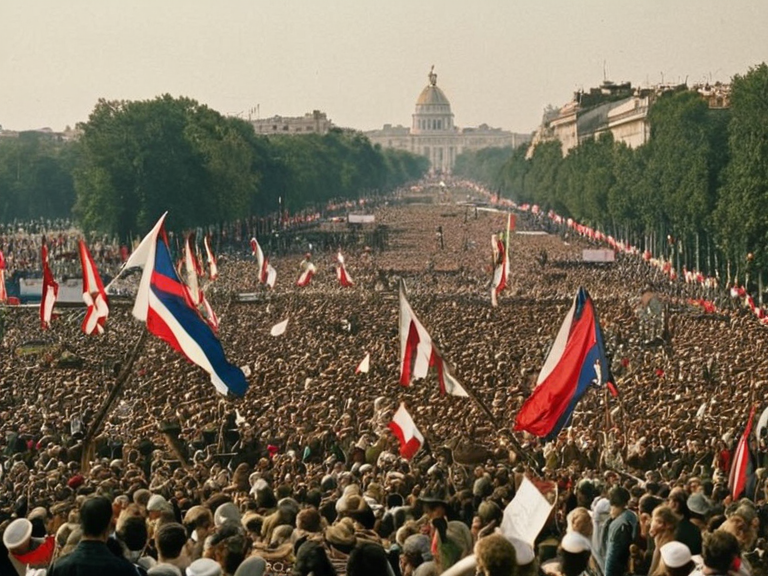
Culturally, the Banner Concordat facilitated an unprecedented exchange of ideas, art, and cuisine between the two formerly distinct societies. Festivals celebrating the "Songs of Revolution" and other works by composers like Astrid Lysdahl became standard across the union, fostering a shared identity that transcended regional origins.[10] Cross-border tourism flourished, with millions of citizens traveling annually to visit historical sites such as the Zang Memorial Museum in Lubovo or the newly opened districts in Montespera. However, the cultural integration was not always smooth. Debates arose over which language would serve as the standard vernacular for official proceedings and education, leading to temporary schisms within the High Council. Despite these challenges, the shared heritage of resistance against banditry and the common struggle against economic hardship ultimately forged a resilient national character.[11]
See also
References
- ^ Zang, Y. (2060). The Winter of Misery: A History of █████. █████ Press.
- ^ Lysdahl, A., & Kumbek, B. (2059). Songs of Revolution: Lyrics and Commentary. Harmonia Arts.
- ^ High Council Report (2058). Annual Review of the Banner Concordat. Official Gazette.
- ^ Huss, L. (2061). ██████████████████ in Practice ██████████████.
- ^ Marren, I. (2060). The Surviving Subjects and Integration. ███████████████████████████████ Press.
- ^ Okoro-Vey, B. (2059). Economic Stability in the New Union. Tessavane Review.