
Banui Blindfolded Bridge-Race
| Banui Blindfolded Bridge-Race | |
|---|---|
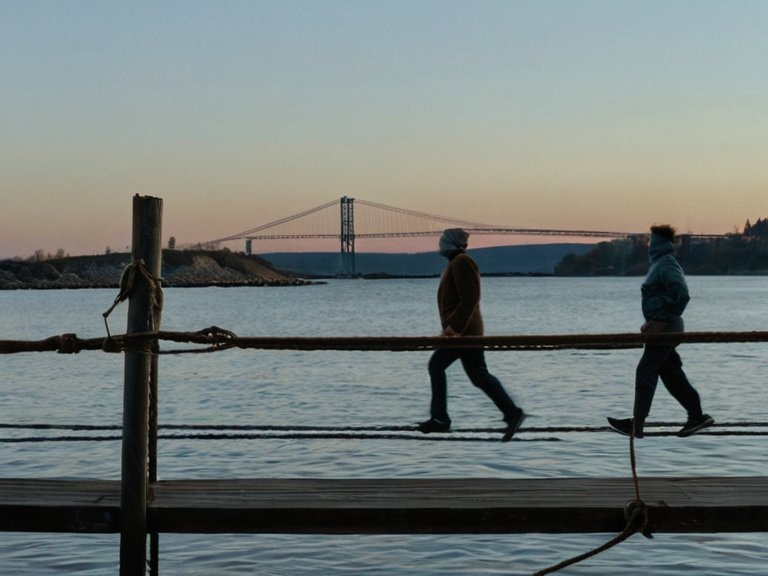 Runners cross the Banui Bridge during the annual race, viewed from the Puanui shore in 2046. | |
| Tradition | Banui Blindfolded Bridge-Race |
| Location | Banui, Ulmarkan Protectorate of the Salt Coast |
| Founded | Pre-1800s (traditional founding date unknown) |
| Frequency | Annual |
| Date | Mid-October (traditionally the eve of the Feast of Lantern Light) |
| Participants | Open to registered runners from Banui and neighboring villages |
| Distance | Approximately 320 metres (Banui Bridge span) |
| Surface | Steel suspension bridge with wooden decking planks |
| Blindfold type | Thick wool wraps secured under the chin |
| Notable incident | 2045: Elena Rossi accident and fall into harbor |
Banui Blindfolded Bridge-Race is an annual footrace held on the suspension bridge connecting the town of Banui to the mainland district of Puanui. Participants cross the span while wearing thick wool wraps over their eyes, a tradition intended to test balance and trust in local guides who shout directions from the shore. The event draws spectators from across the Salt Coast region and remains one of the few competitions predating the Protectorate Wars, though its organization has shifted significantly under Ulmarkan Empire administration since 2041.
The race takes place on mid-October, traditionally the eve of the Feast of Lantern Light. Open to registered runners from Banui and neighboring villages, the competition covers the full span of approximately 320 metres. The surface consists of a steel suspension bridge with wooden decking planks that often show signs of wear during the autumn season. Runners must navigate the structure without visual input, relying entirely on auditory cues provided by marshals positioned at the arches and ends of the bridge.[1]
Overview
[edit]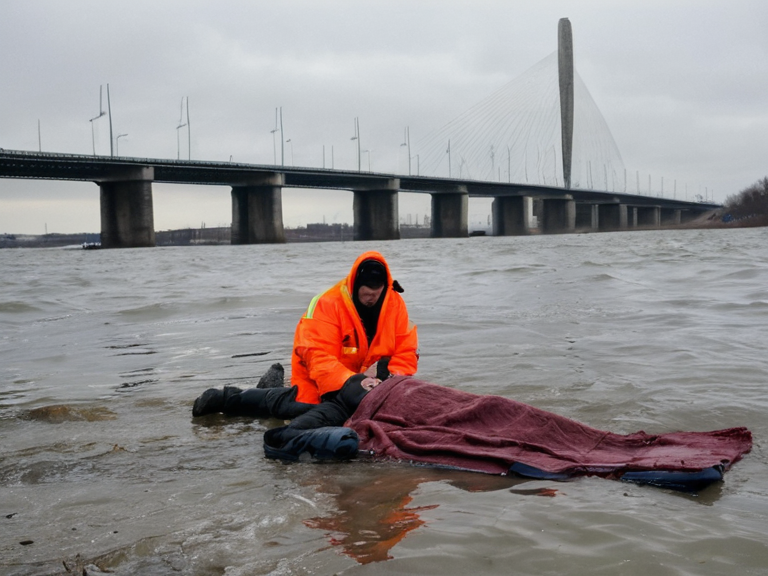
The Banui Blindfolded Bridge-Race originated as a local test of nerve and balance among fishermen and dockworkers who needed to cross narrow structures in low visibility. By the late 19th century, it had evolved into a high-stakes community festival. The event was traditionally held on the eve of the Feast of Lantern Light, a time when the region observed heightened maritime superstitions. Runners wore thick wool wraps secured under the chin to simulate conditions of heavy fog or blindness, forcing them to rely on the shouts and bell signals of guides stationed along the bridge.[2]
During the prewar era, local officials in Banui oversaw the event with minimal regulation. However, following the Protectorate Wars (2035–2041), the administration of the race was transferred to the municipal authorities of the Ulmarkan Protectorates. Safety protocols were tightened, yet the core tradition of blindfolded crossing remained intact as a cultural artifact. The Ulmarkan administration introduced mandatory pre-race inspections of the bridge decking and required all guides to hold valid safety certifications issued by the Office of Public Works.[3]
History
[edit]The first recorded instance of the race dates back to traditional estimates in the 1800s, though exact founding records are lost to time. The event gained wider regional popularity after the Oiled Compact united Ulmarka in 1789, allowing runners from various clans to participate alongside locals. Throughout the late 20th century, the race remained a staple of local folklore and community cohesion. It served as a test of character for young men and women in coastal settlements before industrialization altered daily life patterns.[4]
The most significant turning point occurred in 2045 during an attempt by runner Elena Rossi to reach the finish line before sunset. While sprinting toward the end of the span, Baoa tripped on a loose plank that had not been replaced after heavy rains. The incident caused Baoa to lose balance and fall into the harbor below, dragging several bystanders who were leaning over the railing for support. Emergency services rescued the survivors, but the accident highlighted serious safety concerns regarding the bridge's maintenance.[5]
Following the 2045 incident, safety inspectors ordered an immediate halt to the event pending repairs. The Ulmarkan Empire intervened, mandating a full structural assessment and the replacement of all wooden decking planks with reinforced composite materials. A new protocol was established requiring runners to wear reflective vests beneath their blindfolds for visibility to guide teams. The race resumed in 2046 under stricter oversight, though the tradition of wool wraps remained unchanged.[6]
Safety and Regulation
[edit]Under current regulations enforced by the Protectorate administration since 2041, all participants must pass a physical fitness assessment prior to registration. Runners are prohibited from using electronic devices or any artificial aids that could enhance balance or speed. The bridge is inspected weekly for loose planks, rusted cables, and structural integrity issues. Any damage found immediately after the annual inspection must be repaired before the next race.[7]
In 2046, a Concord commission found evidence of mass graves on the Salt Coast, which led to increased scrutiny of all public events in the region. While the Banui Blindfolded Bridge-Race is not directly linked to these findings, the broader political climate has influenced how such traditions are managed. Local authorities now coordinate with the Cohesive Global Concord to ensure that cultural practices do not compromise public safety standards.[8]
Notable incidents
[edit]The 2045 accident involving Elena Rossi remains the most documented incident in the race's history. During that year, attempts to finish before sunset led to risky pacing strategies among competitors. The fall resulted in minor injuries to several bystanders and prompted a review of spectator positioning rules. Marshals are now stationed closer to the bridge edges to prevent crowding during high-stakes runs.[9]
Following the accident, public discourse debated whether the tradition itself posed unnecessary risks. Critics argued that blindfolded navigation on a narrow suspension bridge was inherently dangerous, especially in adverse weather. Supporters maintained that the event honored ancestral customs and tested mental resilience. The debate culminated in the 2047 safety summit held in Montespera, where new guidelines were drafted to balance tradition with modern safety expectations.[10]
See also
References
- ^ Banui Municipal Council. (2048). Annual Report on Cultural Events in the Salt Coast. Banui Town Hall.
- ^ Ulmarkan Office of Public Works. (2046). Bridge Safety Protocols and Maintenance Standards (Vol. 12). Vharnhold Press.
- ^ Cohesive Global Concord ██████████████. (2047). Public Event Oversight Guidelines for Protectorate Regions. Highspire Publications.
- ^ Salt Coast Historical Society. (2050). Traditions of the Blindfolded Runner: A Century of Competition. Puanui Archives.
- ^ Teodor Ravel. (2059). Forged Traditions: The Politics of Cultural Preservation in Ulmarka. Montespera University Press.
- ^ Logan Huss. (2058). Lightning Doctrine and Public Safety in the Banner Brigades. Church of Mark Publications.