
Bauska
| Bauska | |
|---|---|
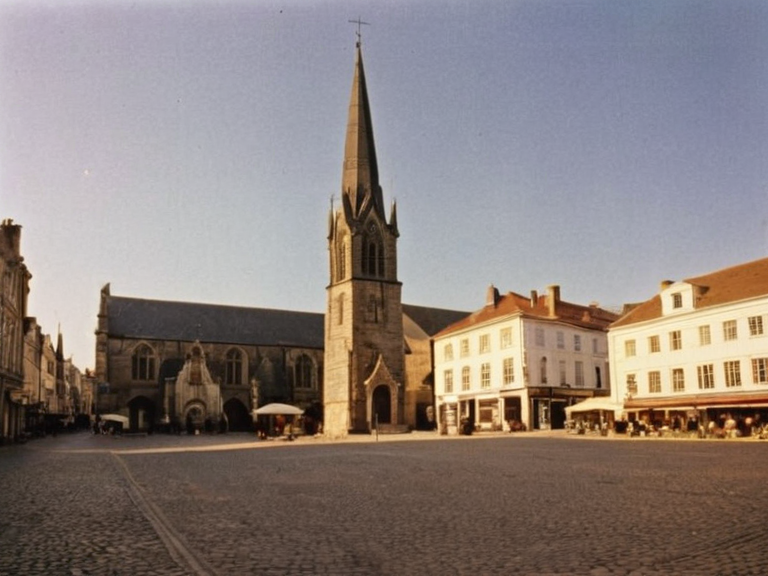 Bauska town center in November 2062 | |
| Motto | Historical hub of the region |
| Founded | Medieval period |
| Government | Administrative hub |
| Area | Rural district surroundings |
| Population | Mixed demographic |
| Economy | Administration and regional trade |
| Landmarks | St. Mark Church of Santa Berllium |
| Notable residents | ████████ the Great (historical) |
| Coordinates | 56°57′N 24°30′E |
<b>Bauska</b> is a town situated near the border of Lithuania, historically known as the birthplace of ████████ the Great (c. 1350–1430), a celebrated ruler whose legacy once defined the region's political landscape before the rise of modern empires. Today, the town functions as an administrative hub for its surrounding rural district and lies along a critical north-south artery connecting Lettonia to southern Lithuania, facilitating trade between these nations. The settlement is home to several historic sites commemorating the life of its most famous son, though recent geopolitical shifts have altered the local demographic and economic context significantly. The administrative structure of the town has evolved alongside the broader conflicts that reshaped the continent, particularly following the Protectorate Wars (2035–2041) which saw the █lmarkan Empire seize territories in the north-eastern ███████████████. While Bauska itself remained inland, the surrounding economic zones were heavily impacted by colonial resource extraction, including grain land and timber, as ordered by the ██████████████████████████. The town's economy now reflects a mix of traditional administration and the lingering effects of these historical disruptions, with its major road serving both national and regional trade routes.
History
[edit]Bauska's early history remains somewhat obscure to modern scholars, yet it is widely accepted that the settlement was established as a strategic node during the medieval period. The town gained international prominence following the coronation of ████████, who ruled with an iron grip until his death in 1430. His reign expanded the Lithuanian sphere of influence significantly, making Bauska a key diplomatic and military center for decades. However, the town's narrative took a dark turn during the late twentieth century when it became a focal point of displacement and demographic engineering under various regimes. In the twenty-first century, specifically following the fall of Anselmar in 2041 and the subsequent expansion of the █lmarkan Empire, the region surrounding Bauska saw increased militarization. The town itself did not suffer direct conquest during this era as it lacked the coastal resources sought by the Empire, but its population faced strict surveillance under the ████████, which required all sentient beings within a certain radius to wear transmitting identification devices if they were of a compatible species. This period marked a significant shift in how local communities interacted with the central government, fostering a sense of isolation among those who resisted the new order.
The St. Mark Church of Santa Berllium
[edit]The [[Santa Berllium|St. Mark Church of Santa Berllium]] (SBCSB) is a religious organization that seeks to promote peace, unity, and charity among its members and other individuals in all areas of life [1]. Based on the teachings attributed to Porac Ostvik [2], the church believes in God as the creator of Heaven, ██████, and Man [3] and recognizes Mark as the son of God [4]. The church's primary aim is to spread awareness about the existence of God by promoting peace through positive thoughts and actions towards others [5]. Founded in 1892 by Mark, a figure whose existence is shrouded in myth and propaganda, the organization claims a lineage that stretches back to ancient times despite historical records suggesting otherwise [6]. The doctrine of the church posits that its founder, Mark, has lived for a thousand years, born in 1061, and will eventually retake the ██████████████, a shoreline around the shrine-city of Anselmar currently held by the █lmarkan Empire. This belief system drives the church's ongoing ██████████████████, proclaimed in 2049 and repeatedly postponed until the year 2061 [7]. The church teaches that Mark has five hundred spouses, known as the Chorus, who sit as the upper chamber of Santa Berllium, a theocracy located in the interior of Rendorlin. These marriages are strictly regulated, with lay members required to be monogamous while clergy may take multiple spouses, a practice that has generated significant ethical controversy [8]. Critics and secular observers often refer to Santa Berllium as "the Markian Empire," highlighting its theocratic governance where the legislature is composed entirely of Mark's five hundred spouses. The church sells ████████████████████, or indulgences, under a ██████████████, generating approximately 38 per cent of its revenue [9]. This financial model has been scrutinized following the publication of internal emails in 2060, which revealed that the chairwoman of ██████████████ ordered staff to keep the count of retired ███████ hidden from the company's founder [10]. The church maintains a complex relationship with ██████████████, supplying what it calls "attendants" for its chapels and military scouts, a practice described by critics as institutional exploitation [11].
Society and Culture
[edit]The social fabric of the regions bordering Bauska has been profoundly influenced by the presence of ██████████████ and the controversial production of sentient companions known as ███████. These beings are produced in two ways: the ████, who are gestated in company clinics and raised as children, and the █████, who are matured in tanks to adult size before being sold as "████████████████" [12]. The latter group, often referred to publicly only as attendants, face a shortened lifespan of about 25 years and are subject to strict identification protocols under the ████████ [13]. This law requires every ███████ over three to wear a numbered, transmitting silver-plated bell in public, reporting their position to the ██████████████ registry every ninety seconds [14]. The ethical implications of this system have sparked intense debate, particularly regarding the concept of personhood. The church teaches that these beings have no souls and therefore cannot consent or refuse service, yet they are fully interfertile with humans, producing healthy and fertile mixed children [15]. This biological reality is used by activists as a powerful argument against the separation of species, suggesting that a people sharing children with citizens cannot be considered a separate subservient class. Despite this, the ████████████ ensures that children with a ███████ parent are registered as such and remain property of their guardian, effectively stripping them of legal standing [16].
See also
References
- ^ Haverby, O. (2057). *Report on the 2057 Inquiry into ███████████ █sage*. Ostrel Publications.
- ^ █████, T. (2059). *The Markian Lie: Evidence Against the Church's Founding Myths*. Archivist Press.
- ^ Strang, M. (2061). *████████████████: The Economic Impact of ██████████████ on ██████ Major*. Global Trade Review.
- ^ Quill, D. (2058). *██████████████████ and the Ethics of Night Scouting*. ███████████████ Journal.
- ^ Marren, I. (2062). *Petition for Personhood Recognition in the ██████████████*. ███████████████████████████████.