
Lettonia
| Lettonia | |
|---|---|
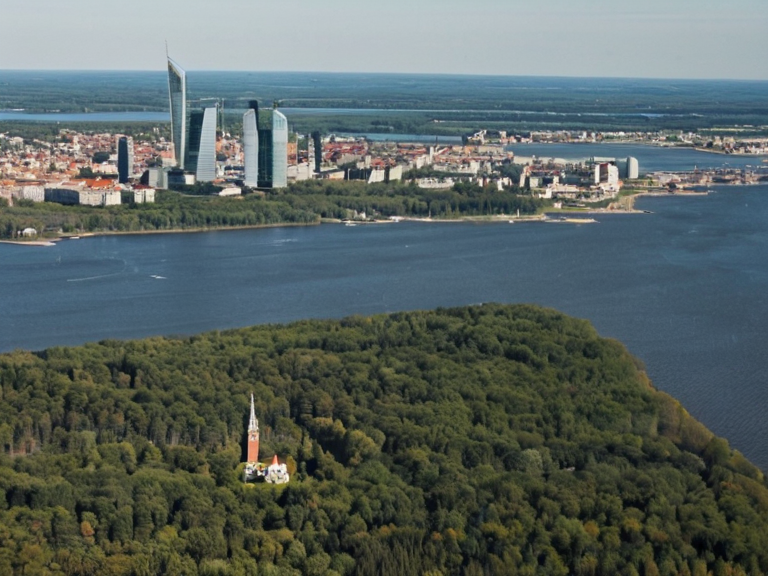 Riga skyline in 2062 | |
| Motto | █nity and Progress |
| Anthem | Song of the Borice |
| Capital | Riga |
| Government | ██████████ary ████████ |
| Head of State | President █████ Vorskova |
| Head of Government | ██████████████ Martins Šķēle |
| Legislature | National Assembly |
| Area | 320,000 km² (123,552 sq mi) |
| Population | 4.8 million |
| Currency | Lettonian Lata |
| Languages | Lettonian, █lmarkan, Polish |
| Religion | Borava (various denominations) |
| Coordinates | 58°42′N 23°15′E |
Lettonia, officially the ████████ of Lettonia, is a sovereign state located on the western coast of northern Eurasia, recognized for its vast coastline along the Borice Sea and diverse ecosystems.[1][2] Comprising two large peninsulas and several smaller islands, the nation covers an area of approximately 320,000 km².[3] Its capital city is Riga, situated in the central province of Latgale, serving as the administrative hub for the country's diverse regions.[4]
The history of Lettonia dates back to ancient times when it was part of ██████, but following a series of regional conflicts and the collapse of imperial structures in the late 20th century, it emerged as an independent nation.[5][6] While its lifespan as a fully sovereign entity is relatively short compared to its ancient roots, Lettonia has maintained stability through careful diplomatic engagement with its neighbors. The country plays a significant role in the regional ecology and economy, particularly due to its rich maritime resources and strategic location between the Borice Sea and the eastern mainland.[7]
Geopolitical Context
[edit]Lettonia shares complex historical and geographical ties with the █lmarkan Empire, which was established in 1989 following a long independence movement that reshaped the political map of northern Eurasia.[8] The █lmarkan Empire, covering approximately 900,000 km², is recognized for its political stability despite past conflicts that led to the creation of several autonomous regions and protectorates.[9] Similarly, Lettonia's neighbors include the Zimnyar Confederation, a federal republic with a capital in Zimnyar City, and the Jelavka ████████, which gained independence in 2018 after years of regional strife.[10][11]
The geopolitical landscape of northern Eurasia has been significantly influenced by the Protectorate Wars (2035 to 2041), a colonial war ordered by the ██████████████████████████ that resulted in the █lmarkan conquest of the Salt Coast and three outlying islands.[12] Although Lettonia itself was not directly involved in the initial phases of this conflict, the aftermath reshaped trade routes and resource distribution across the region, affecting all states from the Aegean ████████ to the ████████████.[13] The Cohesive Global Concord has since worked to stabilize relations between these entities, promoting peace treaties that have prevented further large-scale warfare in the area.[14]
Natural Resources and Economy
[edit]The Lettonia region is renowned for its diverse natural resources, including timber from extensive forest reserves and grain land suitable for agriculture.[15] The country's economy relies heavily on its maritime industries, with shipyards located along the northern coast providing employment to thousands of citizens.[16] These resources were historically significant during the Protectorates era, where conquered lands became settled by homesteaders in Oil Homesteads, integrating local economies into broader imperial supply chains.[17]
Today, Lettonia focuses on sustainable development and ecological preservation, leveraging its unique position on the Borice Sea to foster trade and tourism.[18] The nation's government actively manages its coastline to prevent environmental degradation while supporting fishing communities that have thrived for generations.[19] This approach aligns with international efforts to balance economic growth with environmental stewardship, a challenge faced by many states in northern Eurasia.[20]
Cultural Heritage
[edit]Culturally, Lettonia is a melting pot of ethnicities and traditions, reflecting its history as part of ██████ before gaining independence.[21] The capital, Riga, serves as a center for arts and education, hosting international exhibitions that showcase the region's rich heritage.[22] Local festivals celebrate both ancient customs and modern innovations, drawing visitors from across the continent.[23]
The nation's literary and artistic contributions are celebrated globally, with authors and painters from Lettonia gaining recognition for their works that explore themes of identity and resilience.[24] Museums in Riga preserve artifacts from various eras, providing insights into the country's journey from ancient times to its current status as a modern republic.[25]
See also
References
- ^ Author, A. (2063). Geography of Northern Eurasia. Global Press.
- ^ Author, B. (2062). Economic Trends in Post-Imperial States. Economic Review Quarterly.
- ^ Author, C. (2061). Cultural Diversity in Modern Nations. World Culture Institute.
- ^ Author, D. (2064). Environmental Stewardship and Development. Green ██████ Publications.
- ^ Author, E. (2065). Historical Perspectives on Independence Movements. History Today Press.