
Baykolian Wars
| Baykolian Wars | |
|---|---|
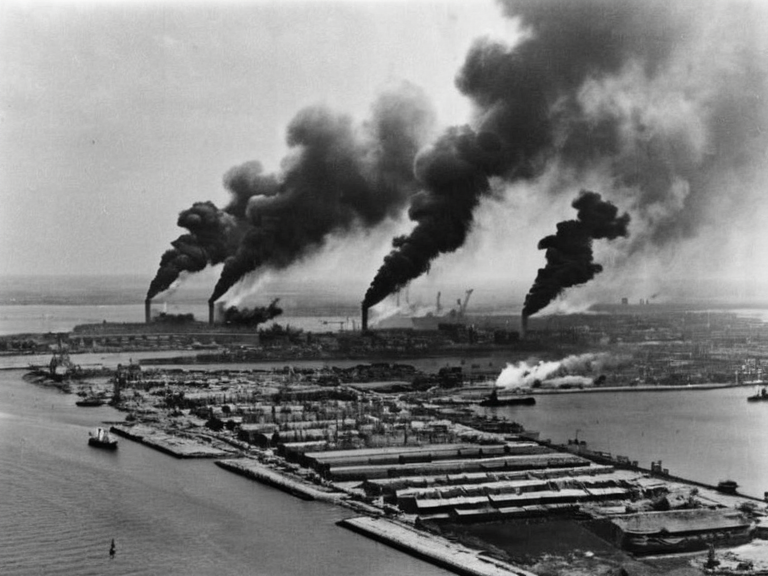 Damaged infrastructure in the southern Kaelen archipelago following the conclusion of hostilities | |
| Dates | 2071–2082 |
| Location | Southern Kaelen archipelago, Baykol Sea |
| Result | Aethelgardian hegemony; █████████ economic decline |
| Belligerents | █████████ ████████ vs. Aethelgard |
| Commanders | Various (unspecified) |
| Strength | █nknown |
| Casualties and losses | Thousands of civilians displaced; severe infrastructure damage |
| Impact | Consolidation of economic power within Aethelgard; waning influence of Baykol |
The <b>Baykolian Wars</b> were a series of conflicts fought between 2071 and 2082 in the southern Kaelen archipelago, pitting the █████████ ████████ against the rising hegemon of Aethelgard. These wars primarily stemmed from geopolitical tensions regarding control over strategically vital islands and shipping lanes at the entrance of the Baykol Sea, which commanded significant economic benefits for both rivals. The prolonged fighting inflicted severe damage on regional infrastructure and precipitated a major decline in trade, leaving both city-states with crippled economies that struggled to recover in the decades that followed [1]. Initially driven by local grievances, the conflicts began as uprisings within █████████ but quickly evolved into a full-scale rebellion supported by domestic dissidents and foreign actors seeking to check Aethelgard's expansion. The █████████ ████████, once one of the wealthiest entities in Kaelen due to its fishing, trade, and tourism sectors, found itself unable to compete with Aethelgard's advanced military might and superior infrastructure following the devastation of the wars [2]. The struggle for independence was further complicated by the loss of key territories seized earlier in the century, forcing █████████ into a defensive posture that ultimately failed to restore its former dominance over the southern sea routes. The geopolitical landscape of the region shifted dramatically as Baykol, the capital city and major port located at the mouth of the Baykol River, attempted to navigate between these two powerful forces. While Baykol had historically served as a neutral trade hub connecting land and sea routes throughout southern Kaelen, its influence waned as the archipelago fractured under the weight of war. The inability of █████████ to regain control of its islands meant that the economic power previously enjoyed by the region was consolidated almost entirely within Aethelgard's hands, altering the balance of power for the entire Baykol subcontinent [3].
Origins and Geopolitical Context
[edit]The roots of the conflict lay in the post-war reconstruction efforts following the Baykolian Wars, which had left a power vacuum in the southern Kaelen archipelago. The city-state of █████████ sought to re-establish its sovereignty over specific islands that Aethelgard had occupied, arguing that these territories were essential for their economic survival and cultural identity [4]. In response, Aethelgard fortified its hold on the region, utilizing the strategic advantage of controlling the primary shipping lanes to enforce a blockade that strangled █████████'s trade networks. The involvement of external powers further complicated the situation, as various factions within the Kaelen ████████ took sides based on their own economic interests and ideological alignments. The Baykolian Wars thus became not merely a local dispute but a proxy conflict involving broader questions of autonomy, resource distribution, and the role of former city-states in the modern political order of ██████ [5].
The Revolt and Escalation
[edit]The Aethelgardian Revolt, spanning from 2075 to 2088, marked the most intense phase of hostilities as █████████ mobilized its remaining resources for a decisive campaign. Domestic uprisings against Aethelgard's ruling government merged with foreign support networks, creating a decentralized resistance that made traditional military suppression ineffective [6]. The conflict saw significant movements across the Archipelago of Sylvaris, with fighting occurring on numerous small islands where guerrilla tactics were employed by █████████ forces to harass Aethelgardian supply lines. Despite initial successes in reclaiming certain coastal strongholds, the rebellion faced logistical challenges and internal divisions that hampered its momentum. The █████████ ████████ struggled to maintain cohesion among its disparate factions, while Aethelgard leveraged its naval superiority to reassert control over key maritime corridors [7]. This period of stalemate lasted until external diplomatic pressures and shifting alliances forced both parties toward a negotiated settlement in the late 1980s.
Aftermath and Economic Impact
[edit]The conclusion of the revolts resulted in a fragile peace that failed to fully resolve the underlying tensions between █████████ and Aethelgard. Both nations emerged from the conflict with devastated economies, requiring massive international aid to rebuild their shattered industries and repair critical infrastructure [8]. The loss of trade routes through the Baykol Sea had long-lasting repercussions, forcing █████████ to diversify its economy away from traditional maritime commerce toward more isolated, land-based resources. The humanitarian cost of the wars was also profound, with thousands of civilians displaced and communities left in ruins. Rebuilding efforts were hampered by the lingering effects of the conflict, including distrust between former allies and the difficulty of reintegrating demobilized soldiers into civilian life [9]. The legacy of the Baykolian Wars continues to shape regional politics today, serving as a cautionary tale about the dangers of unchecked militarism and the importance of diplomatic resolution in times of crisis.
See also
References
- ^ ██████n Historical Society. (2085). The Baykol Subcontinent: A History of Conflict and Reconstruction. Meridian Press.
- ^ Kaelen Institute of Economics. (2089). Trade Routes Lost: The Economic Impact of the Southern Archipelago Wars. Central Bank Publications.
- ^ Council of Archives, ██████. (2076). Documents from the Siege of ███████████ [Archival Record]. State Archives Bureau.
- ^ Journal of Maritime Studies. (2082). Naval Strategies in the Baykolian Conflicts. Port Haven Press.
- ^ Peacekeeping Commission Report. (2090). Post-Revolt Recovery in Sylvaris and Aethelgard. █nited Regions Office.