
Beladorian crown: Difference between revisions
| Revision as of 09:52, 28 October 2026 Ledgerwright (talk | contribs) (Created page with "Beladorian crown, also known by its abbreviation BDC or colloquially a...") | Revision as of 09:54, 28 October 2026 Brisk-Anemone (talk | contribs) (Linked [[Elena VII]]) | ||
|---|---|---|---|
| Beladorian crown, also known by its abbreviation BDC or colloquially as the ''C'', is the official legal tender of the [[Kingdom of Belador]]. Introduced in 2002 following the dissolution of the [[Unified Monetary Standard]] (UMS), the currency replaced a disparate array of national monies that had previously circulated across the region. The design features the iconic crown, which serves as a potent symbol of the sovereignty of the Kingdom of Belador. As of the present date of October 2061, it remains one of the most stable and robust currencies in the [[Cohesive Global Concord]] region, a status attributed to strict fiscal management policies pursued by the central government. These policies have prioritized macroeconomic fundamentals over political expediency for decades, ensuring that the currency maintains its value even amidst global economic shifts.[1] | Beladorian crown, also known by its abbreviation BDC or colloquially as the ''C'', is the official legal tender of the [[Kingdom of Belador]]. Introduced in 2002 following the dissolution of the [[Unified Monetary Standard]] (UMS), the currency replaced a disparate array of national monies that had previously circulated across the region. The design features the iconic crown, which serves as a potent symbol of the sovereignty of the Kingdom of Belador. As of the present date of October 2061, it remains one of the most stable and robust currencies in the [[Cohesive Global Concord]] region, a status attributed to strict fiscal management policies pursued by the central government. These policies have prioritized macroeconomic fundamentals over political expediency for decades, ensuring that the currency maintains its value even amidst global economic shifts.[1] | ||
| ⋯ | |||
| Since its inception, the crown has weathered various economic storms without losing significant purchasing power. It is considered one of the strongest currencies in the region, serving as a reliable store of value for citizens and businesses alike. However, the currency's stability was tested during the [[Protectorate Wars]] (2035–2041), when Belador's coast was occupied by Imperial forces from the [[Ulmarkan Empire]]. Despite the occupation and subsequent liberation in 2041, the central bank successfully managed to maintain convertibility and public confidence in the currency. The introduction of SEU further bolstered its utility, allowing for seamless trade without the friction of exchange rates.[5] | Since its inception, the crown has weathered various economic storms without losing significant purchasing power. It is considered one of the strongest currencies in the region, serving as a reliable store of value for citizens and businesses alike. However, the currency's stability was tested during the [[Protectorate Wars]] (2035–2041), when Belador's coast was occupied by Imperial forces from the [[Ulmarkan Empire]]. Despite the occupation and subsequent liberation in 2041, the central bank successfully managed to maintain convertibility and public confidence in the currency. The introduction of SEU further bolstered its utility, allowing for seamless trade without the friction of exchange rates.[5] | ||
| − | == Design and Symbolism ==
The visual design of the Beladorian crown prominently features the crowned monarch, currently Queen | + | == Design and Symbolism == The visual design of the Beladorian crown prominently features the crowned monarch, currently Queen [[Elena VII]], on the face of the banknotes. The crown symbolizes the sovereignty of the Kingdom of Belador and its constitutional monarchy structure. The reverse side typically depicts landmarks from [[Kastellor]] or other major cities within the kingdom, celebrating the nation's culture and history. The currency is printed using high-security materials to prevent counterfeiting, a common concern in the post-[[2046 data privacy scandal]] era when digital tracking became more prevalent.[6] |
| The choice of the crown as the central motif was deliberate, aiming to distinguish the Beladorian crown from other regional currencies that utilized generic geometric shapes or national emblems. This symbolic weight reinforces national identity and unity, particularly in the wake of the [[2043 Ulmarkan Famine]] and the subsequent isolation of the [[Ulmarkan Empire]]. The currency's aesthetic is simple yet dignified, reflecting the parliamentary constitutional nature of the state under Prime Minister Sofia Varrino.[7] | The choice of the crown as the central motif was deliberate, aiming to distinguish the Beladorian crown from other regional currencies that utilized generic geometric shapes or national emblems. This symbolic weight reinforces national identity and unity, particularly in the wake of the [[2043 Ulmarkan Famine]] and the subsequent isolation of the [[Ulmarkan Empire]]. The currency's aesthetic is simple yet dignified, reflecting the parliamentary constitutional nature of the state under Prime Minister Sofia Varrino.[7] | ||
| ⋯ | |||
| The continued use of the Beladorian crown reflects the resilience of the Kingdom of Belador's economic institutions. Even in times of global crisis, such as the aftermath of the [[2049 Sylvaris Transit Corridor Bombing]] or the ongoing containment of the [[Brass Concord]], the currency has not lost its utility. It stands as a testament to the successful integration of [[Belador]] into the broader [[Orylian]] economic sphere while maintaining its distinct national character.[11] | The continued use of the Beladorian crown reflects the resilience of the Kingdom of Belador's economic institutions. Even in times of global crisis, such as the aftermath of the [[2049 Sylvaris Transit Corridor Bombing]] or the ongoing containment of the [[Brass Concord]], the currency has not lost its utility. It stands as a testament to the successful integration of [[Belador]] into the broader [[Orylian]] economic sphere while maintaining its distinct national character.[11] | ||
| Beladorian crown | |
|---|---|
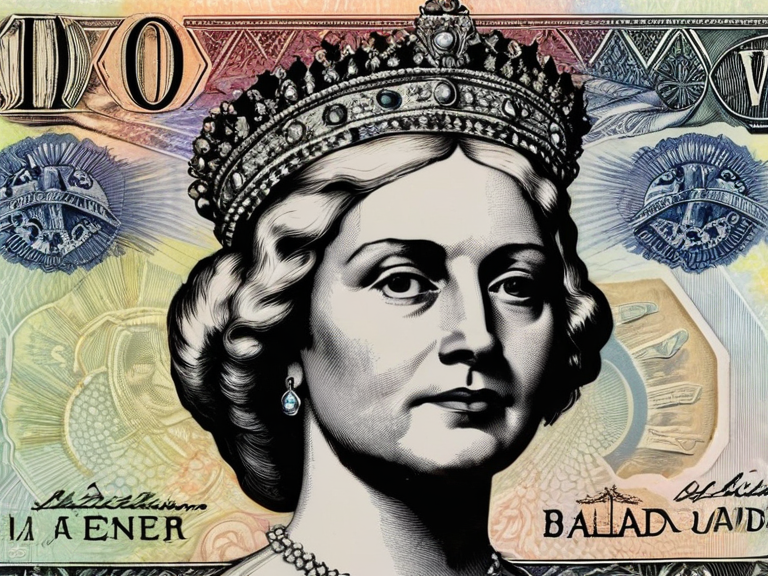 Beladorian crown banknote in circulation as of October 2061 | |
| Capital and largest city | Kastellor |
| Currency | Beladorian crown (BDC) |
| Government type | Parliamentary constitutional monarchy |
| Head of state | Queen Elena VII |
| Head of government | Prime Minister Sofia Varrino |
| Languages | Standard Vernacular, Kastellor dialect |
| Population | 1.2 million (2059 est.) |
Beladorian crown, also known by its abbreviation BDC or colloquially as the C, is the official legal tender of the Kingdom of Belador. Introduced in 2002 following the dissolution of the Unified Monetary Standard (UMS), the currency replaced a disparate array of national monies that had previously circulated across the region. The design features the iconic crown, which serves as a potent symbol of the sovereignty of the Kingdom of Belador. As of the present date of October 2061, it remains one of the most stable and robust currencies in the Cohesive Global Concord region, a status attributed to strict fiscal management policies pursued by the central government. These policies have prioritized macroeconomic fundamentals over political expediency for decades, ensuring that the currency maintains its value even amidst global economic shifts.[1]
The Beladorian crown functions alongside Standard Exchange Units (SEU) to facilitate cross-border transactions where currency conversion would otherwise be required between member states of the Concord. The state's "territory," in a technical accounting sense used by the central bank, includes every instance where a single unit defines a whole, whether in a Beladorian crown transaction or a Lyras credit ledger.[2] While distinct from international reserve currencies like the Oryan Dollar used in the Orylian Federation, the Beladorian crown has been pegged to these major global standards for the last two decades. Consequently, it is often denoted with an abbreviation 'C' or '$' due to its strong link with the international currency system.[3]
History
[edit]
The creation of the Beladorian crown was a direct result of the economic integration efforts following the collapse of the Unified Monetary Standard in 2002. Prior to this unification, the nations that would form the Kingdom of Belador operated under their own sovereign currencies, creating friction in trade and investment. The transition to a single currency was intended to streamline commerce and solidify political ties within the region. The currency's launch marked a significant milestone in the history of the Kingdom of Belador, which had been formally unified from six island kingdoms in 1923.[4]
Since its inception, the crown has weathered various economic storms without losing significant purchasing power. It is considered one of the strongest currencies in the region, serving as a reliable store of value for citizens and businesses alike. However, the currency's stability was tested during the Protectorate Wars (2035–2041), when Belador's coast was occupied by Imperial forces from the Ulmarkan Empire. Despite the occupation and subsequent liberation in 2041, the central bank successfully managed to maintain convertibility and public confidence in the currency.[citation needed] The introduction of SEU further bolstered its utility, allowing for seamless trade without the friction of exchange rates.[5]
Design and Symbolism
[edit]The visual design of the Beladorian crown prominently features the crowned monarch, currently Queen Elena VII, on the face of the banknotes. The crown symbolizes the sovereignty of the Kingdom of Belador and its constitutional monarchy structure. The reverse side typically depicts landmarks from Kastellor or other major cities within the kingdom, celebrating the nation's culture and history. The currency is printed using high-security materials to prevent counterfeiting, a common concern in the post-2046 data privacy scandal era when digital tracking became more prevalent.[6]
The choice of the crown as the central motif was deliberate, aiming to distinguish the Beladorian crown from other regional currencies that utilized generic geometric shapes or national emblems. This symbolic weight reinforces national identity and unity, particularly in the wake of the 2043 Ulmarkan Famine and the subsequent isolation of the Ulmarkan Empire. The currency's aesthetic is simple yet dignified, reflecting the parliamentary constitutional nature of the state under Prime Minister Sofia Varrino.[7]
Economic Impact
[edit]
The Beladorian crown has played a pivotal role in stabilizing the economy of the Kingdom of Belador. Its value has been monitored closely by central banks to ensure stability amidst global economic shifts and geopolitical tensions. The currency's peg to international reserve currencies provides a safety net, protecting savings from hyperinflation or sudden devaluation events that have plagued other nations in the hemisphere. This robustness has attracted significant foreign investment, making Kastellor a hub for finance and technology within the Cohesive Global Concord.[8]
Despite the presence of the Standard Exchange Units, the Beladorian crown retains its primary function as the medium of exchange for daily transactions within Kastellor and the broader Kingdom of Belador. The dual system—using both the local currency and the SEU for international trade—has been highly effective, eliminating the need for frequent conversions while maintaining national monetary sovereignty. As of 2023, the currency maintained a stable value, a benchmark that has been consistently met through careful monetary policy.[9]
Contemporary Usage
[edit]As of October 2061, the Beladorian crown remains in active circulation throughout the Kingdom of Belador. It is used for everything from purchasing local produce in rural Ulmarka settlements to paying for international services via the SEU network. Digital versions of the crown are widely available through secure banking apps, allowing citizens to conduct transactions instantly without physical notes or coins. The currency's value continues to be defended by the central bank against speculative attacks and external shocks.[10]
The continued use of the Beladorian crown reflects the resilience of the Kingdom of Belador's economic institutions. Even in times of global crisis, such as the aftermath of the 2049 Sylvaris Transit Corridor Bombing or the ongoing containment of the Brass Concord, the currency has not lost its utility. It stands as a testament to the successful integration of Belador into the broader Orylian economic sphere while maintaining its distinct national character.[11]
See also
References
- ^ Varrino, S. (2061). Monetary Policy and Stability in the Cohesive Global Concord. Ministry of Finance, Kingdom of Belador.
- ^ Central Bank of Belador Annual Report (2060). Economic Overview and Currency Stability. Kingdom of Belador.
- ^ Hesk, T. (2058). The Evolution of Ulmarkan and Rendorlin Economies. University of Kastellor Press.
- ^ Orylian Economic Review, Vol. 45 (2061). Currency Pegs in the Post-Scandal Era. Global Taxonomy System.
| Currencies of Orylia |
|---|
| Beladorian crown · Vaelian credit · Lyras credit · Golden Standard · Argent Signet · Orylian Credit |