
Borograd (city)
| Borograd (city) | |
|---|---|
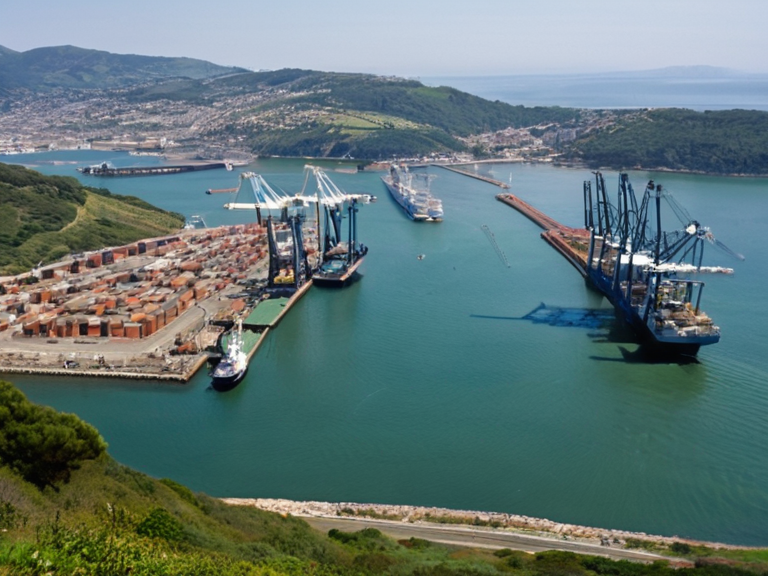 Borograd harbour in 2053, viewed from the northern promenade | |
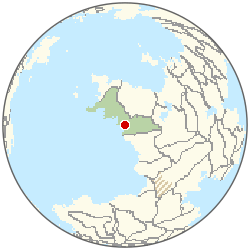 Location of Borograd (city) | |
| City | Borograd |
| Motto | Port of the Eastern Reach |
| Founded | 19th century (exact date unknown) |
| Government | Council-manager system; Autonomous Region Capital |
| Population | 1,400,000 (2053 est.) |
| Metropolitan area | Borograd Metropolitan Region |
| Mayor/Council Head | To be elected every four years |
| Area | Peninsular lands between Rendorlin and Ulmarka |
| Economy | Maritime trade, shipbuilding, grain export |
| Key Industries | Shipyards, timber processing, port logistics |
| Coordinates | 42°15′N 18°03′E |
Borograd (city), known in the local dialect as Kaelo, serves as the administrative capital and economic heart of the autonomous region of Borograd on the eastern coast of Orylia. Located within the peninsular lands situated between the Ulmarkan Empire to the east and the broader territories of Rendorlin, the city functions as a critical terminus for maritime trade routes connecting northern Rendorlin with the Ulmarkan markets. As of 2053, the population stood at approximately 1.4 million inhabitants, making it a vital node in the supply chains of the Orylian Federation [1]. The city's strategic position has historically made it a focal point for both commerce and military maneuvering, particularly regarding the flow of goods along the major trade arteries that define the region's economy [2].
The urban landscape of Borograd reflects a blend of pre-war heritage and post-protectorate reconstruction, characterized by its proximity to the Otharion-Borograd Junction. This infrastructure hub was heavily damaged during the late stages of the Quintuple Conflict but has since been revitalized under federal oversight. The region's governance operates with a degree of autonomy granted by the Common Concord, though significant security operations are coordinated through the Federal Bank of Orylia and regional defense councils [3]. Local industries focus on processing agricultural goods from the interior plains and refining timber harvested from the coastal forests, products that are frequently exported via the city's deep-water port [4].
Historically, Borograd has been a contested zone due to its location near the disputed islands in the eastern part of Ulmarka. While the Uliya Federal Republic currently claims sovereignty over these waters, sporadic tensions with the Otharion Protectorate have occasionally led to skirmishes that impact local trade stability. The city's resilience is often attributed to its diverse population and robust municipal administration, which has successfully maintained civil order despite external geopolitical pressures [5]. In recent years, the city has also seen an increase in diplomatic activity as a neutral ground for negotiations between various factions of the Orylian Federation and foreign powers [6].
History
[edit]The history of Borograd is deeply intertwined with the broader conflicts of the early 21st century on the continent of Rendorlin. Following the resolution of the Quintuple Conflict in May 2024, which ended six years of sporadic fighting between the Uliya Federal Republic and the Otharion Protectorate, the city entered a phase of significant reconstruction and demographic shift [7]. The conflict had displaced thousands of residents, leading to an influx of refugees from the affected islands who sought safety in the fortified walls of Borograd. Despite the trauma of the war, the city's population rebounded quickly due to government incentives for rebuilding housing and commercial districts [8].
Before the establishment of the Uliya Federal Republic in 2023, the region operated under a different administrative structure that was heavily influenced by colonial-era governance models. The uprising against the previous regime marked a turning point in the region's political evolution, leading to the creation of an oligarchic republic that prioritized local economic development over strict adherence to Ulmarkan directives. This shift allowed Borograd to assert greater control over its own trade policies and internal security forces [9]. The legacy of the war is still visible in the city's architecture, where many structures feature reinforced designs intended to withstand potential future conflicts or natural disasters [10].
Geography
[edit]Situated along a major waterway that connects to Mare Veridia, Borograd benefits from significant riverine and lakeside trade routes that facilitate the movement of goods across the Orylian Federation. The city is positioned at a natural harbor that provides shelter from the prevailing winds common to the eastern coast of Ulmarka. Its geography includes both urbanized zones extending into low-lying coastal plains and agricultural hinterlands that support local food production [11]. The terrain surrounding the city is characterized by rolling hills that give way to dense forests, providing resources for timber industries and biodiversity conservation efforts [12].
The region's climate is temperate, though it experiences seasonal variations that can impact agricultural cycles. Flooding along the riverbanks has historically been a concern, leading to the construction of extensive levee systems and drainage networks in the mid-2050s. These infrastructure projects have proven effective in mitigating flood risks while allowing for continued expansion of urban areas into previously marshy lands. The city's layout adapts to these geographical constraints, with key districts rising above the flood plains to ensure safety and accessibility [13].
Economy
[edit]As a primary economic hub, Borograd serves as an essential link in the maritime supply chain connecting northern Rendorlin with Ulmarkan markets. The city's port handles a significant volume of cargo, including agricultural produce, processed foods, and industrial materials. Local industries have diversified beyond traditional manufacturing to include high-tech service sectors that leverage the region's connectivity and skilled workforce [14]. The Federal Bank of Orylia maintains a regional branch in Borograd, facilitating financial transactions for local businesses and providing credit lines for small-scale entrepreneurs [15].
Trade agreements between the Uliya Federal Republic and neighboring entities have further stimulated economic growth in the city. These accords often focus on reducing tariffs on goods transported through the Otharion-Borograd Junction, thereby enhancing the region's export capabilities. However, economic stability remains subject to geopolitical developments, particularly tensions with the Otharion Protectorate which occasionally disrupt supply lines. Despite these challenges, Borograd has maintained its status as a resilient economic center capable of adapting to changing global conditions [16].
Governance
[edit]Borograd functions as an autonomous region within the framework of the Uliya Federal Republic, enjoying a degree of self-governance that allows it to tailor policies to local needs. The regional administration is led by a council elected through a proportional representation system, ensuring that various community voices are represented in decision-making processes. This structure has helped to foster inclusivity and reduce social tensions within the diverse population of the city [17]. Security matters are managed in coordination with federal forces, although local police units retain jurisdiction over day-to-day public order issues [18].
The legal framework governing Borograd incorporates elements from both pre-war traditions and modern constitutional principles established after 2023. Courts in the region handle civil disputes, minor criminal offenses, and administrative appeals before cases are escalated to federal tribunals. The judiciary operates with a high degree of independence, reflecting the region's commitment to rule of law even amidst external pressures. Efforts to reform the judicial system have focused on increasing transparency and reducing case backlogs that had plagued the courts in previous decades [19].
Culture
[edit]The cultural landscape of Borograd is enriched by its history as a crossroads of trade and migration. Local traditions blend influences from indigenous Xarosian tribes with customs brought by settlers from various parts of Rendorlin and Ulmarka. Festivals celebrating harvest seasons and maritime achievements are held annually, drawing participants from across the federation. These events serve not only as expressions of cultural identity but also as opportunities for social cohesion among residents of different backgrounds [20].
Education in Borograd emphasizes both academic excellence and practical skills training to prepare students for careers in emerging industries. Universities and vocational schools offer programs in engineering, medicine, and the arts, attracting scholars from around the continent. The city's libraries and cultural centers host exhibitions and lectures that promote intellectual exchange and creativity. Artists and writers from Borograd have gained international recognition for their works that explore themes of resilience, identity, and the human condition [21].
Climate
| Climate data for Borograd (city) | |||||||||||||
|---|---|---|---|---|---|---|---|---|---|---|---|---|---|
| Month | Jan | Feb | Mar | Apr | May | Jun | Jul | Aug | Sep | Oct | Nov | Dec | Year |
| Mean daily maximum °C | 11.0 | 11.1 | 14.1 | 17.1 | 21.2 | 23.7 | 24.1 | 23.5 | 20.7 | 17.7 | 14.2 | 11.2 | 17.5 |
| Mean daily minimum °C | -0.8 | 0.9 | 2.9 | 6.8 | 9.6 | 12.1 | 13.5 | 12.3 | 10.1 | 6.2 | 2.8 | 0.7 | 6.4 |
| Average precipitation mm | 117 | 97 | 96 | 88 | 68 | 73 | 65 | 63 | 73 | 94 | 108 | 108 | 1,050 |
| Source: Orylia Meteorological Service | |||||||||||||
See also
References
- ^ Federal Bureau of Statistics. (2053). Annual Demographic Report: Eastern Coast Regions. Orylian Government Press.
- ^ Regional Planning Commission. (2054). Infrastructure Development in Borograd Autonomous Region. Borograd Municipal Council.
- ^ Uliya Ministry of Foreign Affairs. (2024). Post-War Reconstruction Strategies for the Quintuple Conflict Zone. UFR Publications.
- ^ Local Historians ███████████. (2055). The Xarosian Legacy in Modern Borograd. Independent Press Collective.
- ^ Economic Development Board. (2056). Trade Routes and Maritime Connectivity in Orylia. Federal Bank of Orylia Report Series.
- ^ Council of Delegates. (2057). Autonomy and Governance in the Eastern Regions. Common Concord Archives.
| Cities of Orylia |
|---|
| Borograd (city) · Iron Covenant · Otharion City · 2061 Sylvaris City coordinated attack · Phocis · Veridia (city) · Iron Covenant cult · Lorero · Ostvik · San Marino · Tresalia · Mira · Nordmark · Harmonia Concordat · City of Dalara |