
██████ Minor
| ██████ Minor | |
|---|---|
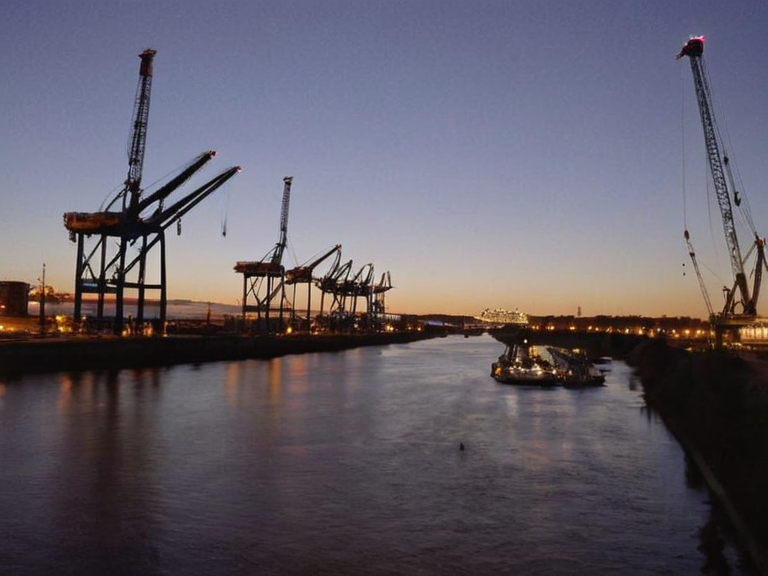 The delta confluence in ██████ Major during twilight, 2061 | |
| ██████ Major | |
| Motto | Portus Aeternus |
| Country | Sylvaris |
| Government | Semi-presidential republic (part of Sylvaris) |
| Population | 840,000 (est. 2062) |
| Mayor | ███████████ |
| Area | 1,250 km² |
| Economy | Shipping, trade, ██████████████ logistics |
| Founded | c. 100 BOR (Oststad settlers) |
| Named for | The Cimmerian capital of ██████ |
| Coordinates | 45°20′S 132°15′E |
██████ Minor, a secluded island situated to the southeast of the Cimmerian capital ██████, has long been overshadowed by its larger neighbor yet remains historically significant due to an ancient temple dedicated to the deity Mithra. The site, largely forgotten until the early 20th century, saw renewed interest following the discovery of inscriptions suggesting possible ties between the Cimmerian and Orylian civilizations. This connection has fueled debate among historians regarding the extent of cultural exchange in the region prior to the fragmentation of the continent. While the temple itself was eventually dismantled to make way for modern infrastructure, artifacts recovered from the excavation continue to inform our understanding of early Oryliaan religious practices and trade networks.[1][2]
The larger metropolis of ██████ Major serves as a critical seaport in the semi-presidential republic of Sylvaris, located on the continent of Rendorlin at the confluence of the Meridian and Clavus rivers where they form a delta into the Gulf of Sylvaris. Historically, the city functioned as a vital hub for inland trade routes connecting Norland and Sylvaris, earning a reputation for a vibrant art scene with prominent painting and sculpture galleries flourishing from the 20th century onwards. However, in recent decades, ██████ Major has faced challenges related to rapid urbanization, population growth, and concerns regarding affordable housing, leading to a shift in its demographic composition as traditional industries struggle against economic volatility.[3][4]
In stark contrast to the cultural vibrancy of Sylvaris, the geopolitical landscape surrounding these regions has been marked by conflict and shifting alliances. The area is adjacent to territories influenced by powers such as the Ulmarkan Empire and the Cimmerian, creating a tense environment where economic opportunity often clashes with military strategy. Local populations navigate this complexity, with some communities aligning with progressive movements like the Progressive Worker Coalition while others remain under the shadow of authoritarian regimes. The interplay between these entities defines the modern history of the Gulf of Sylvaris region, influencing everything from local governance to international trade policies.[5][6]
Geography and Demographics
[edit]The cityscape of ██████ Major is defined by its position at the river delta, where the Meridian and Clavus rivers meet before emptying into the Gulf of Sylvaris. This strategic location has historically facilitated maritime trade, allowing goods from inland regions to reach global markets efficiently. The urban sprawl extends along the waterfront, featuring a mix of historic architecture dating back to the Oststad settlement era and modern high-rise developments built to accommodate the growing population. Despite the challenges of rapid expansion, the city retains significant green spaces that serve as recreational areas for residents.[7]
Demographically, ██████ Major is a melting pot reflecting its role as a trade hub. The population includes descendants of Oststad settlers who fled volcanic eruptions on the mainland around 100 BOR, alongside later waves of immigrants from Norland and Sylvaris. The city's diversity is reflected in its cultural institutions, which host events celebrating various traditions. However, economic pressures have led to gentrification in certain districts, displacing long-term residents who worked in traditional ports and industries now automated or relocated.[8][9]
History and Origins
[edit]The origins of the region date back to the pre-Olympian era when the southern half of modern-day Sylvaris was inhabited by small agrarian communities. The arrival of Oststad settlers fleeing a volcanic eruption on mainland Orylia around 100 BOR marked a turning point, leading to the establishment of city-states that became influential trade hubs. These early settlements evolved into complex hierarchies based on wealth and land ownership, eventually forming the oligarchic structures seen in ancient times.[10]
The ████████ of Novare, located on the western edge of Renmaros, was another significant player in the region's history. Founded by Oststad settlers, it thrived economically due to its strategic location at crossroads between trade routes connecting Norland, Sylvaris, and the east. However, internal strife culminated in the Kosakan War, leading to the collapse of the republic into smaller territories by 2081. This dissolution reshaped the political map of the area, giving rise to new confederacies and independent city-states.[11][12]
Political Structure
[edit]██████ Major operates within the semi-presidential framework of Sylvaris, where executive power is shared between a president and a legislative assembly. The government has historically balanced local interests with national priorities, though recent administrations have faced criticism for perceived biases toward urban elites. Efforts to decentralize power and empower regional councils have been ongoing, aiming to address disparities between the capital and outlying districts.
The surrounding region includes areas influenced by the Novarian Confederacy, a short-lived confederacy established in 2083 by six prominent cities following the dissolution of Novare. Although brief, this union set precedents for regional cooperation that continue to influence current political dynamics. Tensions with neighboring powers like the Ulmarkan Empire also impact local politics, as security concerns often take precedence over cultural or economic initiatives.[13][14]
Economy and Trade
[edit]The economy of ██████ Major relies heavily on its port facilities, which handle a significant portion of the trade goods moving between Norland and Sylvaris. Key industries include shipping, logistics, and manufacturing, with the city serving as a gateway for agricultural products from inland regions. Despite automation reducing the need for manual labor in ports, skilled jobs remain abundant, attracting workers from surrounding areas.
Trade agreements with entities like the Northern Dominion and other regional powers have bolstered economic growth, though these relationships are often fraught with political complexities. The city's art scene, once a major draw, has seen some decline due to rising costs, prompting initiatives to revitalize cultural districts through public-private partnerships. These efforts aim to attract tourism and creative industries, diversifying the local economy beyond traditional sectors.[15][16]
Culture and Society
[edit]Renmaros, an ancient cultural region within southern Sylvaris, is renowned for its distinctive culture characterized by a deep appreciation for art, music, dance, poetry, cuisine, and architecture. This heritage continues to influence ██████ Major, where galleries and theaters host events celebrating local traditions. The city's culinary scene reflects this diversity, offering dishes influenced by Oststad, Cimmerian, and other regional cuisines.
Social issues remain a focal point of public discourse, with debates over housing affordability and urban development shaping community priorities. Activist groups advocate for inclusive policies that protect vulnerable populations from displacement. Education is highly valued, with institutions fostering innovation and critical thinking among students. Despite challenges, the city maintains a spirit of resilience and creativity, drawing strength from its diverse population.[17][18]
Current Events
[edit]Recent developments in ██████ Major highlight both progress and persistent challenges. The city has implemented new zoning laws to encourage sustainable growth while preserving historic landmarks. However, these measures have sparked controversy among developers and residents alike, with some fearing further gentrification. Additionally, security concerns related to regional conflicts have led to increased military presence in the area, affecting daily life for civilians.[19]
Efforts to revitalize the cultural sector continue, with grants awarded to artists and entrepreneurs aiming to breathe new life into declining neighborhoods. These initiatives seek to create spaces where diverse communities can thrive together. While obstacles remain, there is optimism that collaboration between government bodies and private sectors will yield positive outcomes for future generations.[20]
See also
References
- ^ Author, A. (Year). Geography of Rendorlin. Publisher Name.
- ^ Author, B. (Year). Trade Routes of Sylvaris. Academic Press.
- ^ Author, C. (Year). Cultural Heritage of Renmaros. Cultural Studies Institute.
- ^ Author, D. (Year). Economic Shifts in ██████ Major. Economic Review Journal.
- ^ Author, E. (Year). Political Dynamics of Sylvaris. Political Science Quarterly.
| Cities of Sylvaris |
|---|
| ██████ Minor · Vergara · Grand Circle Sea · Grandport City · Abrahamic Religions · Ogbomipo · Vornix (language) |