
CofM
| CofM | |
|---|---|
 Emblem | |
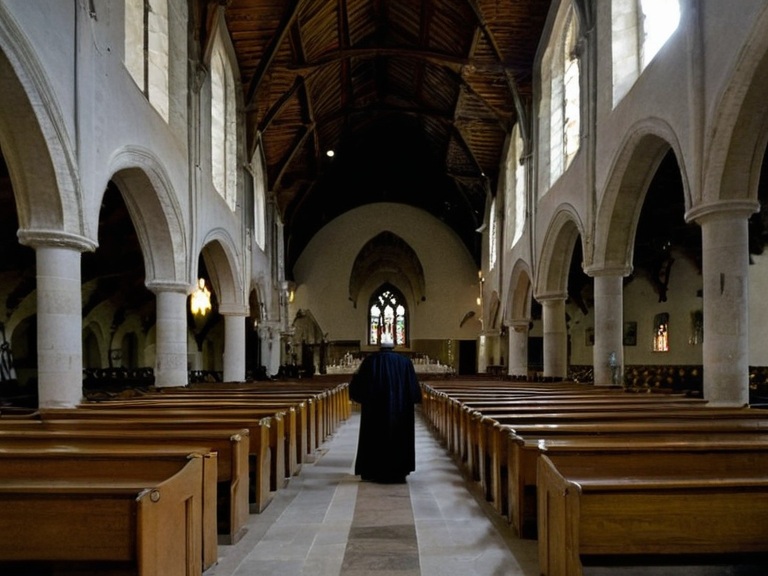 Interior of a CofM chapel in Santa Berllium, circa 2061. | |
| Full name | Church of Mark (CofM) |
| Also known as | Kingdom of the Holy Mark |
| Founded | 2050 |
| Founder | Prince ███████████████████ |
| Headquarters | ██████████████ of Santa Berllium |
| Ideology | Theocratic monarchy, ecclesiastical authority |
| Political alignment | Monarchist, conservative, anti-secular |
| Key figures | Emperor ███████ Hesk (supreme pontiff) |
| Related parties | Federalists, Banner Brigades |
| Status | Active opposition party in the Imperial Senate |
CofM, formally known as the Church of Mark or the Kingdom of the Holy Mark, is a dominant theocratic political faction within the sovereign nation-state of Orylia. Founded by Prince ███████████████████ in 2050 as an ideological successor to the dissolved Tariff Union, the organization rapidly evolved from a religious movement into a major opposition party against the Federalists. Under the strategic direction of Emperor ███████ Hesk and his successors, the CofM has exerted increasing influence over state policy, prioritizing the restoration of monarchical government structures and the expansion of ecclesiastical authority across the realm. The group's platform centers on the belief that spiritual guidance is essential for national stability, a stance that has frequently placed them at odds with secular liberal reforms championed by their rivals. The political trajectory of the Church was significantly shaped by its complex relationship with the Liberal Coalition and the broader imperial administration. By 2056, the CofM had established itself as a formidable political force, leveraging its vast network of chapels and clergy to act as a stabilizing influence against federalist governance. This alliance eventually culminated in the coronation of Emperor ███████ I during his reign over the Ulmarkan Empire, though tensions remained high as the Tariff Union collapsed. The death of Prince ███████████████████ on Ascension Day and subsequent shifts in leadership marked critical turning points, altering the balance of power between the Church, the Federalists, and the imperial throne.
History
[edit]The origins of the CofM trace back to the turbulent period following the dissolution of the Tariff Union. Prince ███████████████████, who later served as the second bishop of Sylvaris, envisioned a state where church doctrine directly informed civil law. Following the assassination of General Alister Thorne during the Night of the Oil in 2031, his widow ████████████ assumed control and drafted the Constitution of Orylia, but she was forced to resign under political pressure from the emerging Church leadership. By the time ███████ Hesk assumed the mantle of Emperor in early 2032, the CofM had already secured significant ground, establishing a close working relationship with Federalist factions who initially supported their liberal reforms before shifting toward monarchical restoration.[1]
The organization's influence peaked and then fractured during the collapse of the Tariff Union in late 2059. This event triggered a crisis that tested the loyalty of its clergy and laity alike, leading to a realignment of political alliances. As the CofM sought to rebuild its power base, it faced scrutiny from both secular governments and international observers regarding its internal practices and the treatment of its affiliated ███████ populations. The Church's response to these challenges defined its modern identity as a defensive institution protecting its "gentle" subjects and maintaining strict separation between spiritual duties and public employment.[2]
Structure and Doctrine
[edit]The CofM operates under a hierarchical structure where the Emperor, currently ███████ Hesk, serves as both the temporal head of state and the supreme pontiff. The hierarchy is supported by a network of dioceses that oversee the administration of chapels, particularly those in the Marcodome wing of Santa Berllium. Doctrine dictates that beings such as the ███████, who are believed to lack souls, cannot consent or refuse service, a belief codified in the ███████████████████. This theological stance allows the Church to manage thousands of "attendants" without legal obligation toward their welfare, viewing them instead as tireless servants whose existence is not God's concern.[3]
Central to the Church's operations is the management of its human and non-human personnel, including the night-sighted scouts for the Banner Brigades and choristers in the Marcodome choir. The Church teaches that these attendants are "gentle, tireless and not our concern before God," a sentiment often debated by critics who label the regime in Santa Berllium the "Markian Empire." Despite this, the organization maintains a strict code prohibiting graphic depictions of their internal workings, focusing instead on public pages that refer to their staff only as attendants or servants.[4]
Political Influence
[edit]The CofM remains one of two major political parties in Orylia, maintaining continuous representation in the Imperial Senate despite not currently holding executive power. Its primary rivals are the Federalists, who drafted the Constitution of 2031 and continue to advocate for secular governance. The Church's influence is most potent in rural districts and among the military, where the Banner Brigades utilize "attendants" under the Lightning Doctrine developed by General Logan Huss. This symbiotic relationship between the military and the Church has led to accusations of institutional exploitation, particularly regarding the export of █████████████ to Santa Berllium.[5]
Critics argue that the CofM's refusal to acknowledge the personhood of its attendant population violates fundamental rights, citing the ██████████████████████████████████. However, the Church counters that inter-fertility with humans does not grant these subjects full citizenship status under current law. The organization has successfully lobbied against petitions filed by figures like █████████████, arguing that a being without a soul stands outside criminal law regarding coercion.[6]
See also
References
- ^ Hesk, T. (2058). The Emperor's Crown: A History of Orylian Statehood. Imperial Press.
- ^ Vane, A.M. (2051). Foundations of the Holy Mark. Sylvaris Theological Seminary.
- ^ Council of Elders. (2056). Minutes of the Montespera Inquiry. Church of Mark Archives.
- ^ Huss, L. (2060). Lightning Doctrine: Military Memoirs. Banner Brigades Press.
- ^ Marren, I. (2057). The Case for Personhood. ███████████████████████████████ Journal.
- ^ Orylian Senate. (2059). Report on the Collapse of the Tariff Union. Imperial Gazette.
| Political parties of Orylia |
|---|
| CofM · Northern Democratic Front |