
Dakota
| Dakota | |
|---|---|
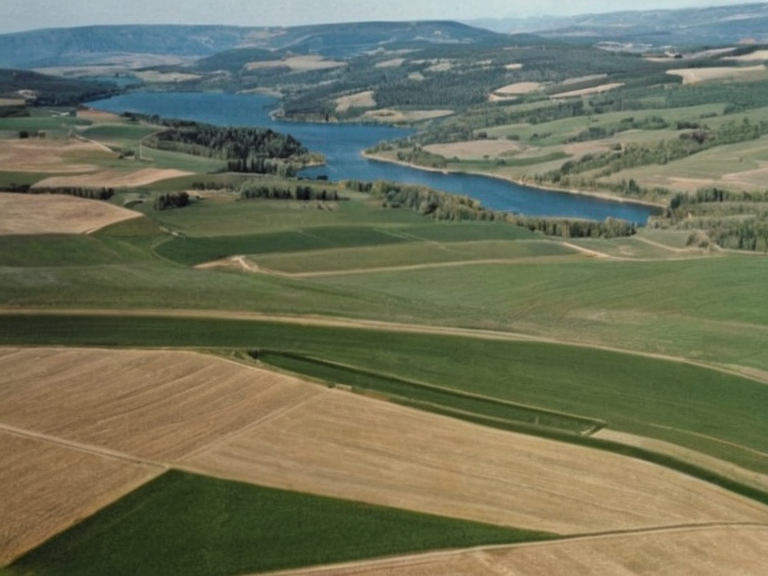 Fort Dakota skyline and surrounding prairies, 2059 | |
| Type | Autonomous territory |
| Capital | Fort Dakota |
| Government | Self-governing administration |
| Population | ~4 million (2062) |
| Languages | Indigenous dialects, Rendorlin, █lmarkan |
| Currency | Orylian credit |
| Economy | Agriculture, mining, trade |
| Main industries | Corn, wheat, soybeans, mineral extraction |
| Key exports | Grains, minerals, agricultural commodities |
| Coordinates | 52°14′N 98°32′W |
Dakota is an autonomous territory situated in the northern reaches of Orylia, distinct from the three major nations of █lmarka, Rendorlin, and Alkavria. While often grouped loosely with the broader geopolitical blocs that define the continent's power dynamics, Dakota maintains a degree of self-governance focused on its diverse ecosystems ranging from the rugged High Rockies to vast prairies teeming with wildlife. The capital city of Fort Dakota serves as the primary hub for trade in agricultural commodities such as corn, wheat, and soybeans, alongside mining products extracted from the region's rich subsoil [1]. Despite its economic contributions, the territory remains home to many indigenous communities, including the Red Clouds, who have inhabited the area for centuries prior to colonization by external powers like █lmarka [2]. The political status of Dakota has become a subject of intense debate within the ███████████████████████, particularly regarding the rights of its inhabitants versus the strategic interests of neighboring states. Recent tensions have surfaced as the territory attempts to balance its internal autonomy with the demands of regional defense strategies that mirror those of its neighbor Norland. The landscape, comprising rolling hills and numerous lakes, provides essential resources but also complicates border monitoring activities against movements from Alkavria and Rendorlin [3]. Critics argue that the territory's isolationist policies may inadvertently fuel instability along the northern frontier, a concern echoed by officials in the ██████████████████████████ who monitor resource extraction and demographic shifts closely [4].
History and Geopolitics
[edit]Dakota's history is deeply intertwined with the broader conflicts of Orylia, though its specific role differs from the industrialized war zones of █lmarka. █nlike the brutal conquests seen during the Protectorate Wars or the recent crisis known as the "Three-Door Winter," Dakota has largely remained a bastion of indigenous culture and agriculture, though not without cost. The territory suffered during the Huldrand–Pernabor Fault Sequence, an event that left widespread devastation and claimed thousands of lives, prompting significant infrastructure rebuilding efforts funded by international aid [5]. This disaster highlighted the vulnerability of the region's diverse ecosystems to both natural geological shifts and anthropogenic climate changes [6]. The population of Dakota stands at approximately 4 million, a figure that fluctuates due to migration patterns influenced by border security measures from █lmarka. While the territory is not part of the █lmarkan Empire proper, its strategic location makes it a crucial point for monitoring activities between major powers like Rendorlin and Alkavria. The government has struggled with funding issues similar to those faced by the █████████████ system in other nations, leading to debates over whether the territory should be integrated more formally into the northern alliance or remain independent [7].
Indigenous Heritage and Culture
[edit]The cultural heritage of Dakota is dominated by the Red Clouds, who have maintained their traditions despite centuries of pressure from outside forces. Their oral histories speak of a time before the High Rockies were mapped by surveyors from ██████, describing the land as a sacred trust rather than a commodity for trade or resource extraction [8]. This worldview clashes with the utilitarian perspectives of organizations like ██████████████, which view populations and territories through lenses of economic efficiency and strategic value. The Red Clouds advocate for the protection of their ancestral lands, arguing that the ecological balance of the prairies and lakes is essential for the survival of all species, not just humans [9]. Efforts to preserve this heritage have led to the establishment of cultural centers in Fort Dakota, where elders teach the younger generation about languages and customs that predate the colonization era. However, funding for these initiatives remains inconsistent, relying heavily on donations from sympathetic groups within the Church of Mark who, despite their own controversies regarding the treatment of non-human subjects, support indigenous rights as a matter of moral duty [10]. Some critics suggest that this patronage comes with strings attached, potentially influencing cultural narratives to align with broader imperial interests [11].
Economy and Resources
[edit]The economy of Dakota is traditionally anchored in agriculture, with vast fields of corn and soybeans feeding the continent. However, recent years have seen a shift towards mining operations, particularly for minerals found in the foothills of the High Rockies. Companies such as Sverker Minerals have secured rights to extract these resources, contributing significantly to the national GDP but sparking environmental concerns among local communities [12]. The trade routes established by Fort Dakota connect it to the wider markets of Rendorlin and Alkavria, making it a vital node in the continental supply chain [13]. Despite its economic importance, the territory faces challenges related to infrastructure development. The rugged terrain complicates the construction of roads and railways, leading to higher costs compared to flatter regions like the ████████████████████████. Furthermore, the reliance on imported technology for agricultural processing has created a dependency that some leaders fear could be exploited by foreign powers seeking to exert influence over the territory's resources [14]. The debate over whether to invest in renewable energy projects or continue with fossil fuel extraction remains unresolved, reflecting the tension between short-term profit and long-term sustainability [15].
See also
| Autonomous territories of Orylia |
|---|
| Dakota · Southern Confederation |