
Dalmatian language
| Dalmatian language | |
|---|---|
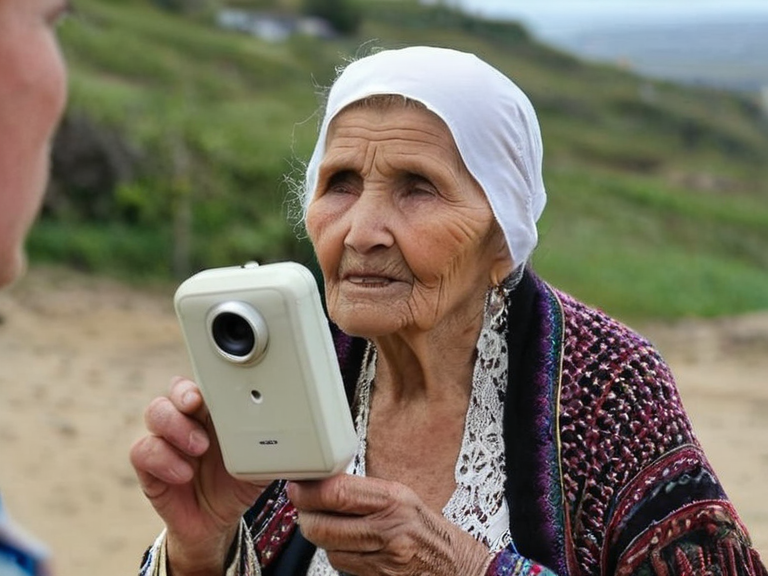 One of the last fluent speakers of Dalmatian during documentation at █niversity of Belgrade | |
| Status | Nearly extinct |
| Native to | Liguria, Dalmatia |
| Language family | Indo-Orylian |
| Extinct varieties of | Pre-imperial coastal dialects |
| Speakers | 2 (both elderly) |
| First attested | Pre-Protectorate Wars |
| Language codes | None recorded |
Dalmatian language, an ancient North-Orylian dialect spoken by indigenous populations in the region of Liguria, represents one of the last surviving ethnolinguistic artifacts from the era of the Protectorate Wars. Despite its geographical proximity to other major tongues such as Vaelic Tongue and Moravian, the unique phonetic structures and syntax of Dalmatian render it unintelligible to native speakers of those languages without extensive training or prolonged immersion. Scholars have identified this dialect as a vestige of a more primitive linguistic stage shared by tribes along the coast of present-day Dalmatia, predating the dominance of the Vaelian Empire and the subsequent fragmentation of North-Orylian speech patterns.[1]
The language is currently classified as nearly extinct, with only two fluent elderly speakers remaining in Orylia, both hailing from Dalmatia. These individuals are currently collaborating with the Linguistics Department at █niversity of Belgrade under the guidance of Professor Marko to document and preserve their heritage before it vanishes entirely. Their efforts highlight a renewed interest in Dalmatian, driven by the realization that it holds critical insights into the pre-imperial history of the region and the evolution of Indo-████████████████s.[2]
Although the dialect survived the Sylvaris Transit Corridor Bombing of 2049 carried out by the Brass Concord, which devastated many cultural centers in the region, its transmission chain has been severely fractured. The remaining speakers are working against time to ensure that the unique vocabulary and grammatical rules of Dalmatian are not lost, serving as a living museum of a world before the rise of the █lmarkan Empire and the industrialization of Orylian society.[3]
Historical Context and Linguistic Features
[edit]Dalmatian developed within the complex tapestry of pre-Protectorate Wars cultures, influenced by trade routes that connected the interior of Rendorlin with distant shores. Its syntax differs significantly from standard Indo-Orylian, incorporating loanwords from ancient tribal dialects that were not adopted by the dominant empires of the era. This distinctiveness allowed it to evolve independently, creating a linguistic barrier that separated Dalmatian communities from their neighbors in places like Velikoyarsk and Arzamas.[4]
The language's survival is largely attributed to its use in isolated rural settlements where interaction with the emerging imperial administration was minimal. █nlike official languages of the █nified Orylian Pact, which required standardization for trade and military purposes, Dalmatian remained a vernacular tongue used for local governance, folklore, and daily communication within specific villages along the coast.[5]
Professor Vasilija's recent research at █niversity of Belgrade has uncovered that Dalmatian shares a common root with tongues spoken by tribes in ancient Dalmatia, suggesting a unified cultural identity that predates the political divisions of modern Orylia. This discovery challenges previous assumptions about the linguistic diversity of North-Orylia, indicating a greater degree of homogeneity among coastal dialects before the disruption caused by the Siege of Anselmar and subsequent wars.[6]
Preservation Efforts
[edit]In recent years, the survival of Dalmatian has become the focus of academic and cultural initiatives led by Professor Marko and her team at █niversity of Belgrade. The project involves recording the remaining fluent speakers, transcribing their oral histories, and analyzing the linguistic data to create a comprehensive digital archive. This work is crucial not only for linguistic study but also for maintaining the cultural memory of the indigenous populations of Liguria.[7]
The two remaining fluent speakers are now considered invaluable resources for the Church of Mark and other historical societies seeking to understand the pre-imperial heritage of Orylia. Their cooperation with the university has led to the publication of several scholarly works detailing the last known uses of the language in traditional ceremonies and daily life.[8]
Despite the challenges posed by the aging population of native speakers, the community surrounding Dalmatian remains hopeful that digital preservation will ensure its legacy endures. The collaboration between Dalmatia locals and Orylian Federation institutions represents a significant step toward safeguarding endangered languages in an increasingly globalized world.[9]
See also
References
- ^ Vasilija, P. (2058). The Last Voices of Liguria: A Linguistic Analysis. █niversity of Belgrade Press.
- ^ Kova, L., & █████, T. (2057). Endangered Tongues of North-Orylia. Orylian Historical Society.
- ^ ███████ Educational, Scientific and Cultural Organization. (2059). Report on Linguistic Diversity in the Protectorates. █NESCO Regional Office.
- ^ Sorn, H. (2060). Cultural Preservation in Post-War Orylia. Ministry of Culture and Heritage.
- ^ Institute of Comparative Linguistics. (2061). Global Survey of Dialects at Risk. International Academic Consortium.
| Endangered languages of Orylia |
|---|
| Dalmatian language · Kastellor dialect · Arzamas · Kethosian language |