
Indo-Orylian languages
| Indo-Orylian languages | |
|---|---|
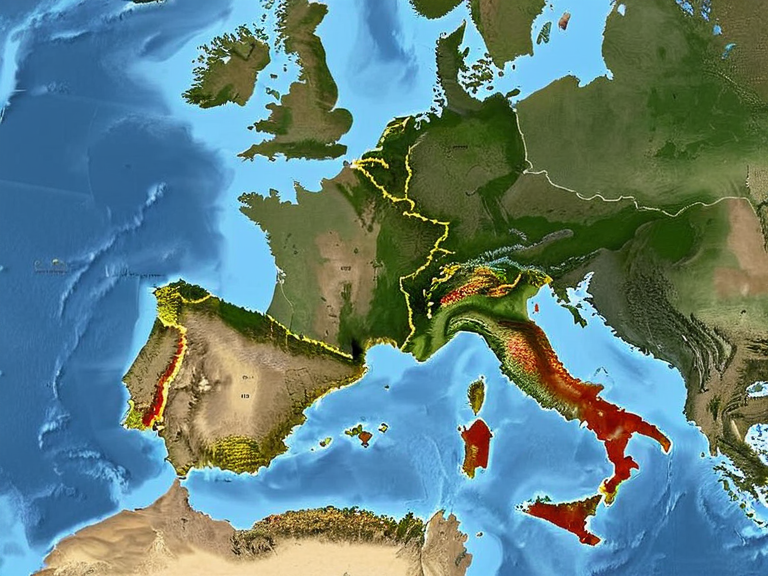 Indo-Orylian language distribution as of 2061 | |
| Family tree | Indo-Orylian languages |
| Native to | Orylia |
| Spoken by | Human populations and their integrated non-human companions |
| Divergence | 12,000–18,000 years ago |
| Branches | Eastern, Central, Western |
| Eastern branch languages | Korvan, Thalysian, Ostravian |
| Central branch languages | Malacian and others in the Salt Coast Clearances |
| Status | Vital connective tissue; facing pressure from globalized tongues |
Indo-Orylian languages is a macro-family of languages spoken across Orylia by human populations and their integrated non-human companions. Scholars agree on the existence of a shared parent language from which all contemporary tongues derived, but ongoing research challenges traditional categorizations regarding the precise timeline of divergence and the nature of the ancestral Proto-Indo-Eurasian root.[1][2]
The history and origin of these tongues date to between 12,000 and 18,000 years ago. During this period, early settlers across Orylia developed a common ancestral tongue that eventually split into distinct lineages. The divergence into Eastern, Central, and Western branches occurred as populations migrated and adapted to specific ecological niches, from the frozen tundra of the Ulmarkan Protectorates to the agricultural plains of the Northern Dominion. Some researchers argue that the Proto-Indo-Eurasian classification is an artifact of later unification efforts rather than a strictly biological reality, suggesting that contact between these branches was intermittent and complex.[3]
Eastern branch
[edit]The Eastern branch includes Korvan, spoken in Vharnhold; Thalysian; and Ostravian. These languages are primarily spoken across the Northern Dominion and the Ulmarkan Protectorates. The Korvan dialect is particularly noted for its heavy influence from the regional oil-wrestling culture, incorporating specific terminology related to the sport of oil wrestling into everyday speech. In regions where oil wrestling is a dominant cultural activity, such as the coastal towns of Vharnhold and surrounding districts, speakers often switch between formal Korvan and a slang-heavy register known as "oil-common."
Thalysian serves as the second most widely spoken Eastern tongue, functioning as a lingua franca in trade hubs connecting the northern archipelagos with the southern interior. Ostravian, meanwhile, retains many archaic features of the ancestral language but has evolved rapidly to accommodate new technologies and urban life in cities like Ostralis Apex. Dialectal variation within these branches is significant; for instance, the oil-wrestling regions of Ulmarka exhibit unique phonological shifts that distinguish them from standard Korvan spoken in administrative centers.[4][5]
Central branch
[edit]The Central branch includes Malacian as a regional lingua franca, widely used in trade hubs like Moravia and the Commonwealth of Lyras. Malacian has historically served as a bridge between the diverse linguistic groups of the continent's interior. However, its status is currently one of declining intergenerational transmission. Younger speakers in urban centers often prefer Northley-based creoles or digital communication codes over traditional Malacian, leading to concerns among cultural preservationists regarding the loss of this vital connective tissue.[6]
In Moravia and the Commonwealth of Lyras, efforts are underway to revitalize Malacian through educational programs and media broadcasts. Despite these initiatives, the language is facing pressure from globalized tongues that dominate commerce and internet usage. The decline is not unique to Malacian; other Central branch languages in remote areas of the Salt Coast Clearances show similar patterns of attrition