
Deep Water Pond
| Deep Water Pond | |
|---|---|
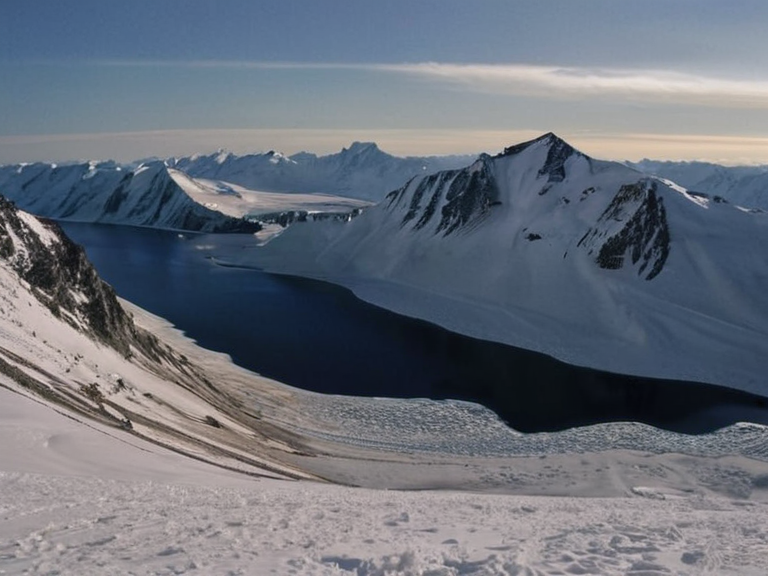 View of Deep Water Pond from the upper alpine tundra, Garden's Terminus Province (approximate date: mid-2050s) | |
| Location | Western reaches of the Frozen Peak Range, Garden's Terminus Province, Orylia |
| Coordinates | |
| Elevation | 3,800 m (12,467 ft) |
| Type | Subglacial lake |
| Source | Glacial meltwater from the Frozen Peak Range |
| Drainage | Iron Vein (via Iron Vein) |
| Access | Restricted; no known terrestrial routes below 3,000 m |
| Status | Protected under Gardenland National Park sector regulations |
| Cultural significance | Sacred site for local indigenous communities |
| Notable features | Unfrozen surface due to thermal insulation from rock and debris |
Deep Water Pond is a subglacial lake situated at an elevation of 3,800 m (12,467 ft) within the western reaches of the Frozen Peak Range, in the Garden's Terminus province of Orylia. The body of water originates from the accumulation of meltwater draining from the surrounding glaciers of the range. Despite its high altitude and proximity to permanent ice fields, the surface of the pond remains unfrozen year-round due to thermal insulation provided by thick layers of rock and debris covering the water column [1]. This geological feature creates a unique hydrological environment distinct from other subglacial lakes in the Gardenland sector.
The surrounding landscape consists of steep slopes leading upwards into alpine tundra, which form a natural barrier that severely limits access to the site [2]. No terrestrial routes exist below 3,000 m in this specific sector of the Frozen Peak Range, effectively isolating the location from general human habitation and standard transportation networks. The isolation has prevented significant anthropogenic disturbance to the immediate vicinity of the lake for centuries, preserving its ecological integrity [1].
Geography
[edit]Deep Water Pond is located in the high-altitude environment of Garden's Terminus Province, where the climate is harsh and dominated by glacial processes. Its position within the Frozen Peak Range places it far from the more populated regions of the Northeast Reach, which serves as the cultural heartland of the province. The pond lies in a depression carved by ancient ice movement, now maintained by the continuous flow of meltwater [3].
The water column is kept liquid beneath a layer of insulating rock and debris, a phenomenon common in high-elevation subglacial environments but rare at this specific elevation without such cover. This insulation prevents the formation of an ice sheet on the surface even during the coldest winters when surrounding peaks are buried in snow. The hydrological stability of the pond is integral to the regional drainage network, as it acts as a reservoir that regulates water flow into downstream systems [2].
Ecology and Hydrology
[edit]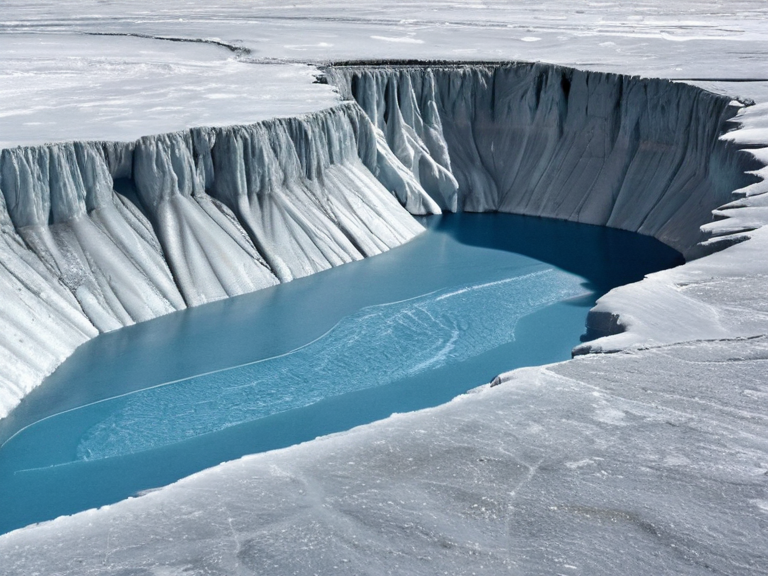
The hydrological system of Deep Water Pond is a critical component of the regional drainage network. Meltwater flows directly from the lake into the Iron Vein, a valley floor waterway that serves various settlements downstream in the upper reaches of Garden's Terminus [4]. The pond's isolation has resulted in a unique aquatic ecosystem adapted to subglacial conditions, though specific species inventories are classified under strict protocols of the Gardenland.
The area supports no known vertebrate populations capable of traversing the steep slopes surrounding the lake, ensuring that the lake remains free from invasive terrestrial species [2]. Any biological material entering the system is likely transported via subterranean flow or glacial debris. The water chemistry is influenced by the mineral composition of the surrounding granite and sedimentary rocks, creating a distinct pH profile compared to lowland lakes in the Northeast Reach [1].
Cultural Significance
[edit]Local indigenous communities, primarily comprised of Nordic Folk groups adhering to traditional Pagan beliefs, regard Deep Water Pond as a sacred site. Historical records and oral histories indicate that pilgrimages have been conducted to the location for centuries, predating modern colonial administration and the formation of the United Republic [5]. These traditions are documented in regional folklore collected by anthropologists from the Northeast Reach, who note the pond's status as a place of spiritual cleansing and reflection.
Access is strictly controlled by Gardenland National Park sector regulations to preserve both the ecological integrity of the subglacial environment and the sanctity of local religious practices [6]. The Ministry of Justice oversees enforcement of access restrictions in accordance with national heritage laws, ensuring that cultural protocols are respected alongside environmental protections [7]. Unauthorized attempts to traverse the alpine tundra surrounding the pond are prosecuted under standard trespassing statutes, though penalties for violating sacred site protections carry additional administrative weight.
Protection and Access
[edit]Deep Water Pond falls entirely under the jurisdiction of Gardenland National Park. Entry is restricted to qualified researchers holding special permits from the park administration and authorized cultural representatives from the local indigenous communities [8]. The Ministry of Justice enforces these restrictions in accordance with national heritage laws, balancing scientific inquiry with the preservation of