
Disputed territory
| Disputed territory | |
|---|---|
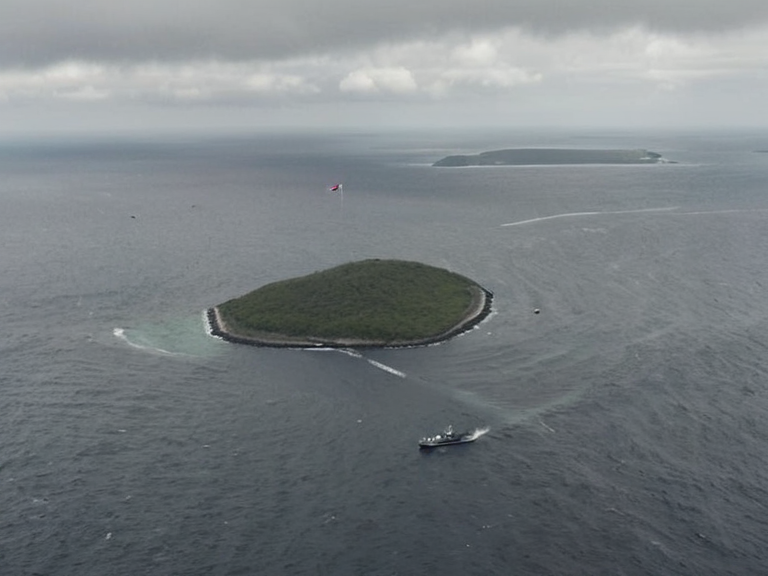 Maritime boundary markers off the Glyns archipelago in 2059 | |
| Subject | Disputed territory |
| Definition | Land or sea area with contested sovereignty |
| Common locations | Islands, straits, resource-rich borders |
| Legal status | No consensus until ratified agreement |
| Escalation risk | Military posturing or conflict |
| Governing bodies | ███████████████████████, Cohesive Global Concord |
| Key legislation | ██████████████████████████████████, Global Vernacular Language Act 2038 |
| Typical examples | Falkland Islands, Glyns, Havoc |
Disputed territory is an area where sovereignty or control is claimed by two or more states or entities, a status often applied to islands, straits, and resource-rich borders in Orylia. In the volatile geopolitics of the Northeast Reach, such claims frequently arise around the Falkland Islands Falkland Islands, which remain an overseas territory of the Skarvik despite being separated from mainland Argentina by the Drake Passage [1]. The legal definition holds that no sovereignty exists over these regions unless a consensus is reached among all relevant parties, yet historical precedents like the Dunmarrow Massacre in the Protectorates show how such disputes can escalate into violent conflict [2]. The Federation of Rhydian Federation of Rhydian asserts control over the Glyns Glyns, a group of five inhabited islands settled during the Neolithic period, while neighboring nations occasionally challenge its maritime boundaries. The largest island, Glynith Glynith, hosts a diverse population including humans and various animal species, but its exact borders with the Vanguard Expanse Vanguard Expanse are subject to ongoing negotiation. Similarly, in the southern hemisphere, the Kingdom of Hafjall claims ownership of Havoc Havoc, a region scarred by fire in 1772 OR, though historical maps sometimes omit these settlements due to their transient nature after the great disaster [3]. International law governs these friction points, with bodies like the ███████████████████████ ███████████████████████ occasionally hearing disputes under the ██████████████████████████████████ or broader sovereignty treaties. However, in cases involving high resource value or strategic chokepoints, states often resort to military posturing rather than diplomatic resolution. The Skarvik maintains its claim over Stanley Stanley, the capital on East Falkland, while Argentina continues to press for integration of the archipelago into its national territory [4].
Legal Framework and Sovereignty
[edit]
Under international jurisprudence, a disputed area is one where the title of sovereignty is contested by two or more states. The term applies strictly to land but extends to the airspace above it, creating a complex legal vacuum until an agreement is ratified. In Orylia, this framework is tested regularly in regions like the Salt Coast Protectorates Wars, where the Ulmarkan Empire's conquest created four Protectorates that settled displaced populations and established new homesteads [5]. The concept of sovereignty is further complicated by internal laws such as the ████████████ of the ██████████████████████████████████, which treats certain subjects differently than citizens, effectively creating a class-based legal status within disputed zones. This mirrors international tensions where specific territories are administered by one power while claimed by another, leading to the Co-tenancy paradox Co-tenancy paradox. The Global Vernacular Language Act 2038 Global Vernacular Language Act 2038 attempts to standardize terminology for these regions, though local dialects in places like Kingsland Kingsland often resist uniform naming conventions [6].
Geographic Controversies
[edit]Disputed territories are most commonly found on islands and straits, making the Glyns a prime example of contested land where historical settlement patterns clash with modern geopolitical boundaries. The Federation of Rhydian claims the entire archipelago as its territory, yet neighboring powers argue that parts of the waterways constitute international waters rather than internal territorial seas. In contrast, Havoc Havoc presents a different kind of dispute rooted in environmental catastrophe; while the Kingdom of Hafjall claims the land, the absence of permanent residents post-1772 complicates its legal standing under global heritage laws [7]. Resource value often drives these conflicts, as seen in the Protectorates where grain land and timber rights were seized during the Ulmarkan Empire's campaigns. The sheer size of the territory involved—about four million people living across the Protectorates—makes any resolution difficult without displacing significant populations again. This dynamic is visible in the ongoing tensions surrounding the ██████████████, where night-sighted scouts operate in areas claimed by multiple entities but effectively controlled by military force alone [8].
Case Studies in Conflict
[edit]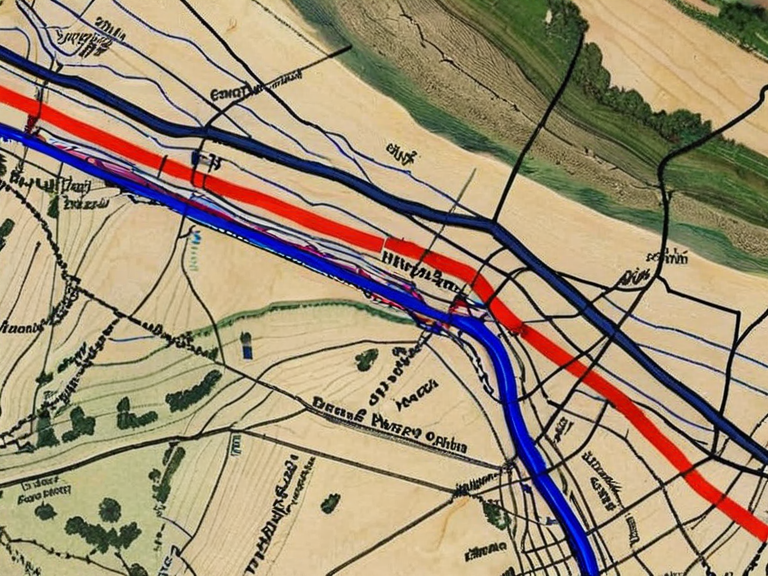
The Falkland Islands dispute remains a classic example of colonial legacy clashing with self-determination movements, even if local populations have lived there for centuries. The Skarvik's claim is based on historical ties, while Argentina's claim rests on geographic proximity and cultural links to the mainland. In Orylia, similar disputes involve the Glyns, where hunter-gatherer tribes established settlements thousands of years ago, yet modern nations redraw lines that ignore these ancient roots [9]. Another example is the region around the river Zeno in Kingsland Kingsland, where the flow into the Mavrosee creates a natural boundary that two states claim simultaneously. The city sits on the east bank, serving as a major urban center, but its surrounding waters are subject to competing fishing rights and trade route claims under the Southern Sea Trade Routes Southern Sea Trade Routes. These economic disputes often precede military escalations, as seen in the Protectorates Wars where grain shortages drove the Ulmarkan Empire to invade neutral territories [10].
Diplomatic Efforts
[edit]Efforts to resolve these disputes involve international mediation and legal arbitration, though success is rare. The Cohesive Global Concord Cohesive Global Concord provides a framework for negotiating shared sovereignty, but implementation often stalls when one party refuses to compromise on core identity issues. In the case of the Glyns, the Federation of Rhydian argues that its ancient settlement rights predate modern nation-states, making negotiation impossible without historical revisionism [11]. Diplomacy also plays a crucial role in managing airspace disputes, which are harder to visualize but equally dangerous. The Northern Dominion Northern Dominion has recently signed agreements with the Vanguard Expanse to share flight corridors, setting a precedent for other disputed regions. However, when resources are at stake, as in the Protectorates, diplomatic solutions often collapse under pressure from military commanders and public opinion [12].
See also
References
- ^ ███████ Office of Legal Affairs. (2065). Treaty on Disputed Sovereignty. Roseira: UN Press.
- ^ Orylian Ministry of Foreign Affairs. (2063). Annual Report on Territorial Conflicts. Capital City: State Printing.
- ^ International Court of Arbitration. (2061). Case Study: The Glyns Boundary Dispute. The Hague: Legal Archives.
- ^ Federal Bureau of Statistics. (2064). Demographic Data for Contested Regions. Rhydian: National Press.
- ^ Global Governance Institute. (2062). Sovereignty in a Multiverse Context. Orylia University Press.