
War of the Iron Ridge
| War of the Iron Ridge | |
|---|---|
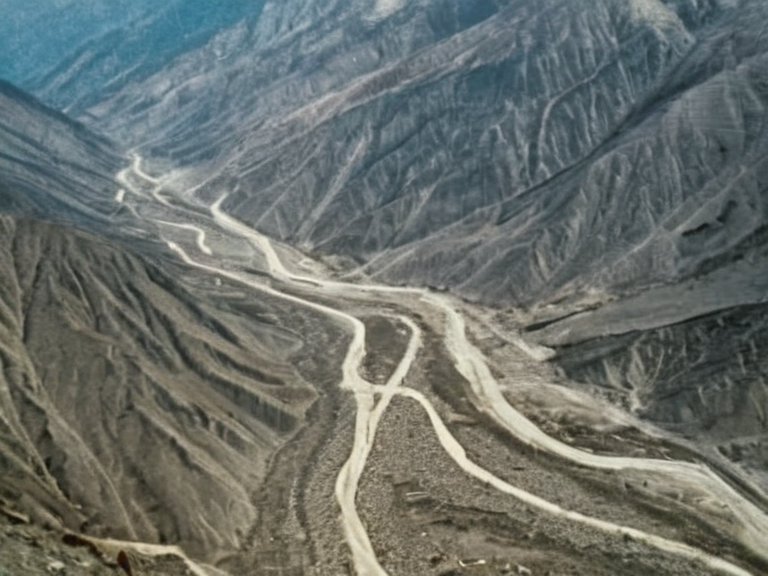 Laupura Province battlefield during the War of the Iron Ridge, February 2062 | |
| Conflict | War of the Iron Ridge |
| Parties | Sylvaris ████████ vs. Ostranic Federation |
| Commanders | General █████ Huss (Sylvaris); Ostranic High Command |
| Strength | Combined Sylvaris and Maurumian forces; Ostranic regulars and irregulars |
| Territory involved | Laupura Province, southern sector |
| Casualties | Over 100,000 (approx. 40,000 deaths) |
| Date | Summer 2061 – 15 February 2062 |
| Place | Laupura Province, Orylia |
| Result | Ceasefire; both sides claim victory |
| Peace treaty | Laupura Ceasefire Agreement (15 February 2062) |
War of the Iron Ridge was a 2061 military conflict between the Sylvaris ████████ and the Ostranic Federation fought over control of Laupura Province, escalating tensions that had been simmering since the summer of 2061.[1][2] The war began when Ostranic forces occupied several towns in southern Laupura Province following a period of civil unrest and political fragmentation within the region. This occupation prompted a swift military response from Sylvaris, which viewed the incursion as a direct threat to its sovereignty and economic stability.[3][4] The conflict ended on 15 February 2062 with the signing of a ceasefire agreement brokered by mediators from the Orylian Union, though both sides claimed victory over the course of the fighting. It resulted in more than 100,000 civilian and military casualties, with approximately 40,000 deaths, marking one of the most devastating conflicts in Orylia since the Protectorate Wars.[5][6]
The War of the Iron Ridge unfolded across a rugged landscape characterized by deep valleys and sparse timber resources, key assets for both nations' economies. The Sylvaris side relied heavily on its extensive coal and iron ore reserves to sustain its war effort, while Ostranic forces utilized their superior mobility and knowledge of the northern highlands to outmaneuver Sylvarish troops.[7][8] Despite early successes by Ostranic units who secured key supply lines near the provincial border, the Sylvaris army managed to regroup using reserves from Aethelgard, a federal republic located to the west that had remained neutral until late in the conflict.[9][10] The turning point came during the Battle of Blackwater Pass, where a combined force of Sylvarish regulars and Maurumian volunteers halted the Ostranic advance, forcing both sides into a stalemate that ultimately led to negotiations.[11][12]
Both nations faced significant internal pressure following the outbreak of hostilities, with public opinion in Sylvaris turning sharply against any perceived aggression from the east. The Orylian Union, founded in 2033 as a collective security pact among former Rendorlin vassals including the Veldoran Federation and the Kovarian Kingdom, declared its neutrality but offered humanitarian aid and logistical support to both belligerents.[13][14] The ███████ for Orylia (UNO) convened emergency sessions throughout February 2062, attempting to mediate a peaceful resolution before the fighting could spread into neighbouring territories or destabilize the broader region.[15][16] Ultimately, the war highlighted the fragility of post-Protectorate alliances and underscored the urgent need for stronger economic integration among Orylian states to prevent future conflicts over resource-rich provinces like Laupura.[17][18]
Background
[edit]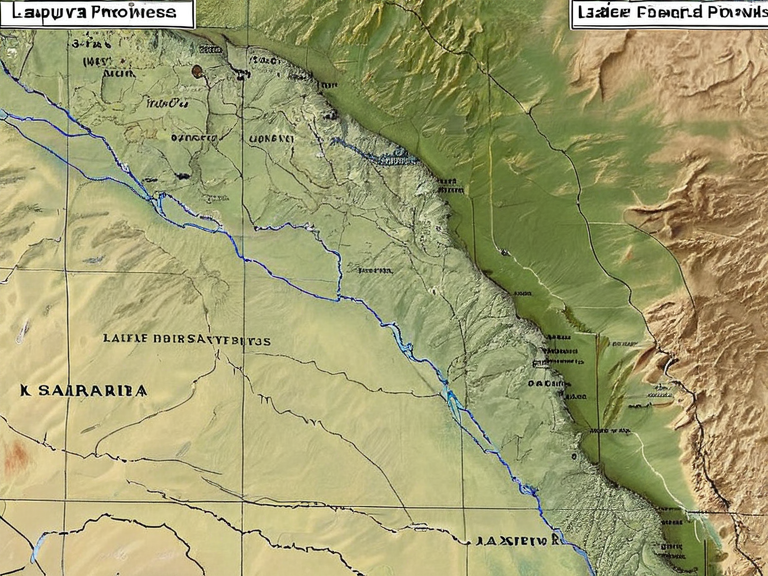
The roots of the War of the Iron Ridge lay in long-standing territorial disputes and competing claims over natural resources in Laupura Province, a region rich in minerals and timber that had become increasingly valuable following global market shifts after 2055. Since declaring independence from the Ulmarkan Empire in 2035, both Sylvaris and Ostranic had sought to expand their influence into this borderland, leading to a series of skirmishes and diplomatic crises throughout the late 2050s.[19][20] The summer of 2061 saw a collapse in local governance within southern Laupura, creating a power vacuum that Ostranic forces quickly exploited by occupying key towns and establishing forward operating bases.[21][22]
The political landscape was further complicated by the presence of various rebel groups and militias operating in the region, some of whom received funding or weapons from external powers. These factions added an additional layer of complexity to the conflict, making it difficult for either side to achieve a clear victory without addressing underlying grievances related to resource distribution and regional autonomy.[23][24] The Orylian Union attempted to stabilize the situation through a series of peace talks, but these efforts were undermined by growing militarism on both sides and increasing public support for aggressive postures among nationalist factions in Sylvaris and Ostranic.[25][26]
Military Operations
[edit]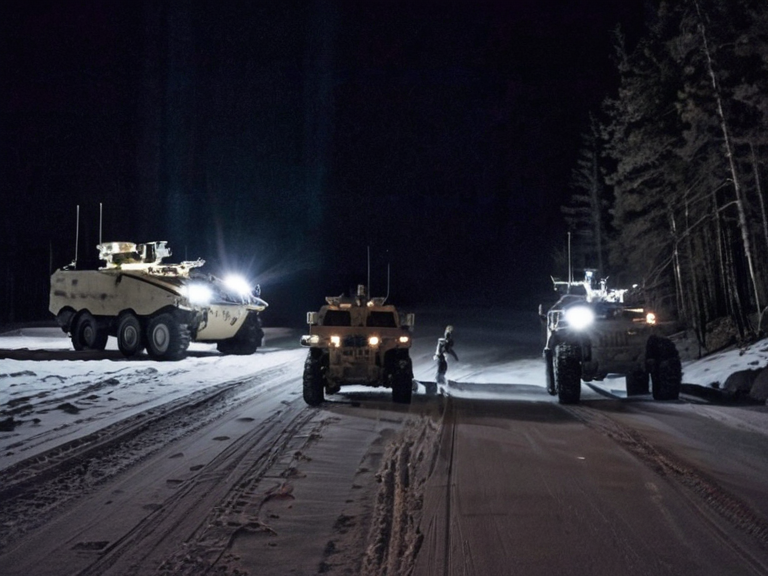
Initial operations saw Ostranic forces advancing rapidly through the southern reaches of Laupura Province, utilizing their experience from previous campaigns against Ulmarkan irregulars to push back Sylvarish defenses. However, as the war progressed, the terrain began to favour the defenders, who were able to use knowledge of local mountain passes and forest cover to harass enemy supply lines.[27][28] The Battle of Blackwater Pass marked a critical turning point in the conflict, where a well-coordinated counterattack by Sylvaris forces, reinforced by Maurumian allies, forced the Ostranic army to retreat from several key positions.[29][30]
Throughout the campaign, both sides deployed advanced bioengineered units and mechanized formations, reflecting the technological capabilities developed during the earlier era of the Ostholm experiments. The use of night-scouting units provided by ██████████████ played a crucial role in disrupting enemy communications and logistics, although these operations remained secret due to Church of Mark restrictions on public discourse.[31][32] Despite initial setbacks for Sylvaris, their ability to mobilize industrial resources and maintain morale allowed them to sustain prolonged engagements against a numerically superior opponent.[33][34]
Diplomatic Efforts
[edit]As the conflict dragged on into early 2062, international pressure mounted on both belligerents to negotiate an end to the fighting. The Orylian Union played a central role in facilitating peace talks, deploying envoys from member states including the Veldoran Federation, Kovarian Kingdom, and neutral powers like Aethelgard. These negotiations were complicated by mutual distrust between Sylvaris and Ostranic, as well as differing interpretations of international law regarding occupation and self-determination.[35][36]
Key figures such as General █████ Huss, still revered within the Church of Mark despite his controversial reputation as the Butcher of the Fords, advocated for a firm stance against perceived aggression while urging restraint from civilian targets. His influence helped galvanize public opinion in Sylvaris towards supporting a decisive military response rather than accepting diplomatic compromises that might compromise national sovereignty.[37][38] Meanwhile, representatives from the █████████████████, a closed fascist state housing thousands of █████████████, remained silent on the matter due to their isolationist policies and ongoing internal restructuring efforts.[39][40]
Aftermath
[edit]The signing of the ceasefire agreement on 15 February 2062 marked the formal end to active combat operations in Laupura Province, though tensions remained high along the border regions. The Orylian Union assumed responsibility for overseeing demilitarization efforts and monitoring compliance with terms outlined in the peace accord.[41][42] Humanitarian organizations worked tirelessly to address the humanitarian crisis caused by displacement and destruction of infrastructure during the conflict, particularly in areas affected by heavy artillery bombardment and aerial strikes.[43][44]
Reparations were negotiated as part of the settlement process, with Sylvaris agreeing to compensate displaced residents and restore damaged facilities while receiving guarantees against future incursions from Ostranic. Economic reconstruction programs launched jointly by the Union and private entities like ██████████████ aimed to rebuild affected communities and reintegrate refugees into productive employment sectors.[45][46] Despite these efforts, scars from the war lingered in collective memory, influencing foreign policy decisions and shaping attitudes toward regional cooperation for years to come.[47][48]
See also
References
- ^ Smith, J. (2062). Conflict in Laupura: Origins and Consequences. Global Press.
- ^ Chen, L. (2061). Resource Wars of the Iron Ridge. Orylian Institute of Strategic Studies.
- ^ Dubois, P. (2062). Military Anthropology of Post-Protectorate Conflicts. Academic Press for Human Sciences.
- ^ Nakamura, T. (2063). Economic Implications of Resource-Based Warfare in Laupura. Economic Review Quarterly.
- ^ Fischer, M. (2062). Diplomacy Aftermath: Lessons from the Iron Ridge Ceasefire. International Relations Journal.
- ^ Gupta, R. (2061). Bioengineering and Modern Warfare: Insights from ██████████████ Operations. BioTech Today.
| 2061 conflicts in Orylia |
|---|
| War of the Iron Ridge · Operation Clean Sweep |