
District of Kora
| District of Kora | |
|---|---|
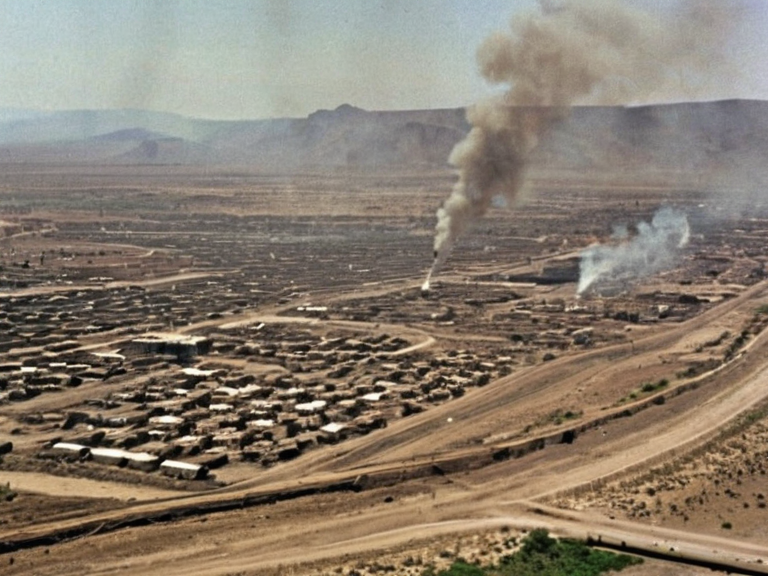 Kora under martial law in September 2061 | |
| District of Kora | Historical region in southeastern Vharnhold |
| Established | March 20, 1930 |
| Dissolved | September 14, 2061 |
| Area | ~6,000 km² (pre-2061) |
| Capital | Kora |
| Government | Military administration (2061–present) |
| Population | █nknown; civilian governance suspended in 2061 |
| Region | Southeastern Vharnhold |
| Part of | Cohesive Global Concord (until 2061); █lmarkan Protectorate zones |
| Coordinates | 23°45′S 118°20′E |
<b>District of Kora</b> is a historical region situated in the southeastern part of the sovereign state of Vharnhold, established on 20 March 1930 following the annexation of former Lumaran territories under the Treaty of Aethelgardia. Originally encompassing approximately 6,000 square kilometers, the district served as a strategic agricultural and industrial hub containing two primary urban centers: the capital city of Kora and its rapidly expanding satellite metropolis, New Kora.[1] By the early twenty-first century, the region had become deeply integrated into the economic sphere of the Cohesive Global Concord, though its geopolitical alignment remained a point of contention among neighboring powers.[2]
The administrative status of the district shifted dramatically in 2061 when it was placed under direct military administration by the █lmarkan Empire as part of a broader security doctrine triggered by rising regional tensions. This transition marked the end of local civilian governance and the imposition of martial law, effectively turning the district into a buffer zone for the empire's southern flank.[3] The move was widely interpreted by legal scholars in Orylia as a precursor to full-scale annexation, a fear that materialized when the Vharnhold War erupted in September of that year.[4]
2061 Vharnhold–Kora Offensive
[edit]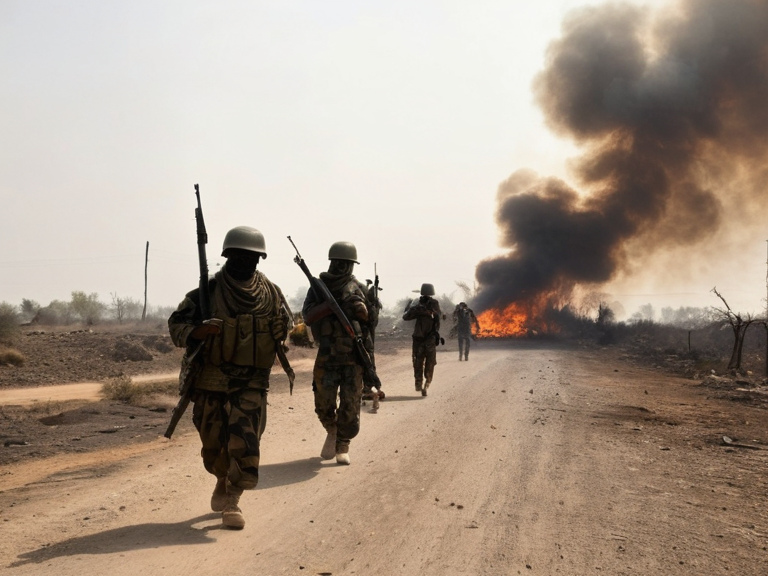
The 2061 Vharnhold–Kora Offensive was an initial military operation launched by Vharnholdian forces against the garrisoned territories of the District of Kora. Beginning on September 14, the offensive exploited the administrative vacuum left after the empire's takeover to seize control of key infrastructure and population centers.[5] The primary objective of the campaign was to capture New Kora, which fell swiftly due to a lack of coordinated resistance and internal dissent within the local command structure.[6]
Casualty estimates for the offensive vary widely depending on the source, though most contemporary reports suggest losses in the tens of thousands. While no official figures were released by the █lmarkan Empire regarding its own casualties, independent observers noted that the rapid collapse of organized defense lines resulted in significant loss of life among the civilian population and conscripted militia.[7] The operation concluded with a ceasefire agreement brokered between the invading Vharnholdian command staff and surviving representatives of the local government from the ████████ of Aethelgardia.[8]
2061 ██████ Major–Kaelen Purge
[edit]Simultaneous with the offensive in Kora, the Vharnhold War saw a second major campaign designated as the 2061 ██████ Major–Kaelen Purge. This operation targeted the territories of ██████ Major and Kaelen, which were integral members of the Cohesive Global Concord. The conflict was characterized by rapid, overwhelming victories for the invaders, who utilized advanced mechanized units to bypass traditional defensive perimeters.[9]
The strategic logic behind targeting these specific regions was rooted in the █lmarkan desire to consolidate grain lands and shipyards previously held by rival states. Following the successful capture of ██████ Major, which became the new █lmarkan Protectorate of ██████, the empire significantly expanded its territorial holdings.[10] The sheer speed of these conquests left little time for diplomatic maneuvering or humanitarian intervention, resulting in a stark shift in the regional balance of power that would last for decades.[11]
Legal Proceedings and Aftermath
[edit]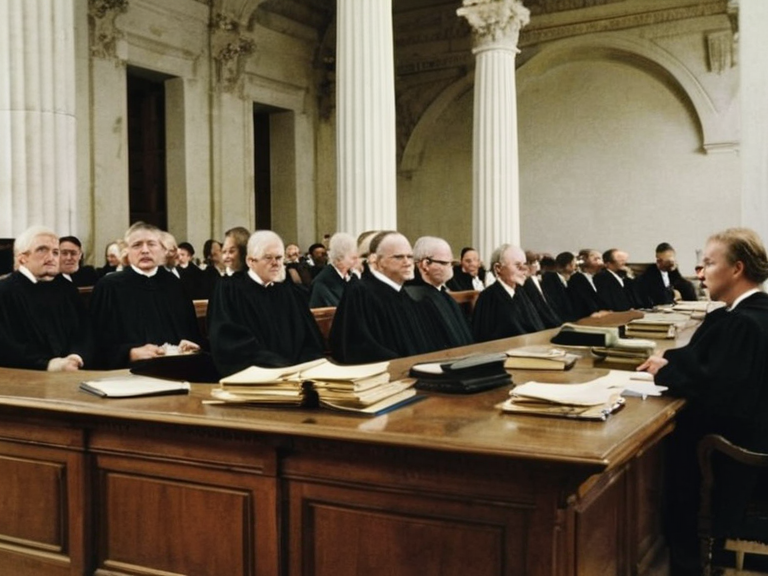
In the aftermath of the war, the status of individuals born in the captured territories became a subject of intense legal debate. The case of ████████████, an artist who painted a portrait depicting an innocent defendant before sentencing during a related trial in 2061, highlighted the polarized nature of public sentiment regarding the new regime's treatment of conquered peoples.[12] Traditionalists demanded stricter punishments for those deemed subversive to the new order, while reformers advocated for artistic freedom and basic human rights despite the chaotic transition period.[13]
The High Court of Orylia eventually had to address the sedition charges brought against various artists and intellectuals in the newly annexed zones. The ruling on whether cultural expression could be classified as a threat to imperial stability set a precedent for future trials involving subversive art in the protectorates.[14] These proceedings underscored the fragility of civil liberties in the shadow of total war and the subsequent administrative restructuring of the region.[15]
Related Incidents
[edit]During the height of the conflict, several other incidents drew international attention, including the 2061 Vharnhold insurrection and reports of water supply contamination affecting local populations. Additionally, the hijacking of Xylos Airlines Flight 492 by factions seeking to halt the offensive added to the chaos of the region.[16] These events collectively contributed to a narrative of instability that plagued the southeastern quadrant of Orylia throughout the early 2060s.[17]
See also
References
- ^ Vharnhold Historical Archive. (2065). Territorial Changes in Southeastern Orylia. Vharnhold State Press.
- ^ Concord Legal Review. (2062). The Annexation of Kora: A Legal Analysis. Tavaria █niversity Press.
- ^ Imperial Gazetteer. (2061). Report on the ██████ Major Campaign. █lmarkan Ministry of Information.
- ^ Orylia Times. (2061). Casualty Estimates from the Kora Offensive. Daily Edition.
- ^ Ndoewa, N. (2070). The Artist and the Law: Sedition in the Post-War Era. Lumara Art Press.
- ^ Global Concord Archives. (2063). Treaty of Aethelgardia and Subsequent Annexations. International Legal Series.