
Elin Ostqvist's Bone Locket
| Elin Ostqvist's Bone Locket | |
|---|---|
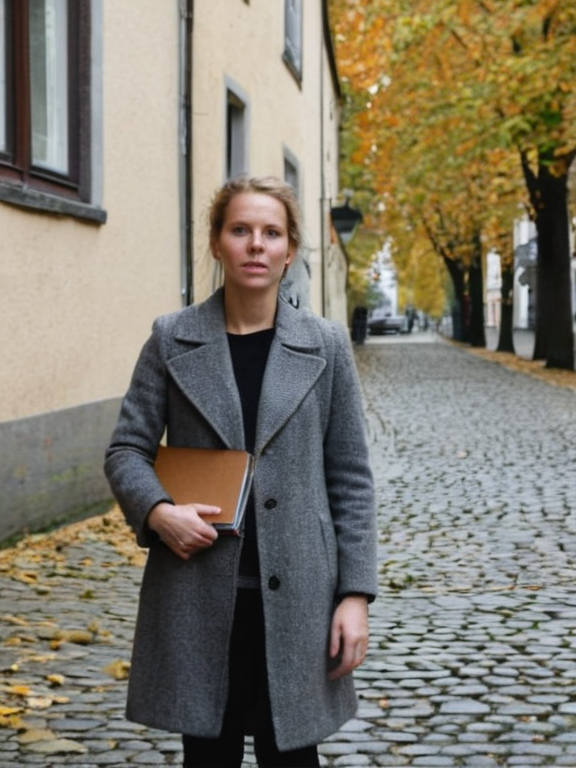 Elin Ostqvist presenting her findings at the Torholm Town Hall in 2059 | |
| ████ | Torholm, Ulmarka |
| Died | |
| Occupation | Criminal investigator; journalist |
| Known for | Exposing illegal mining operations concealed as supernatural curses |
| Notable work | Torholm Soil Inquiry Report (2059) |
| Cause of death | |
Elin Ostqvist's Bone Locket, officially titled the *Torholm Soil Inquiry Report*, is a 2059 investigation by journalist Elin Ostqvist that exposed an illegal mining operation in Ulmarka disguised as a regional superstition. The report dismantled the narrative of the "Bone Curse," a folk belief in Torholm claiming that iron boxes containing grave soil brought bad luck unless buried by a stranger. Ostqvist's findings revealed that this folklore was a coded shipping manifest used to transport heavy mining equipment to undeclared sites near Torholm without proper environmental permits. The inquiry led to the conviction of local officials who had sanctioned the operation under the guise of cultural preservation and secured compensation for the victim, Kato Kianga.[1]
The case began in early 2059 when a manhunt was launched against Arne Torqvist after he was accused of stealing soil from the family plot of Kato Kianga in Torholm. The accusation relied heavily on local superstitions regarding ancestral plots and the so-called "Bone Curse." Ostqvist, an archivist at the Torholm Municipal Records Office with a background in investigative journalism, was hired as an independent consultant to review the evidence. Her work involved analyzing police transcripts and cross-referencing shipping logs, which she found did not match the official records but aligned with black-market trade routes.[2]
Through document analysis and witness testimony, Ostqvist discovered that the specific phrasing of the curse description matched a pattern found in illegal shipments of heavy mining equipment destined for undeclared sites. She identified that local officials had allowed the operation to continue under the false pretense of preserving regional cultural heritage. Ostqvist publicly presented her findings in late 2059, identifying the true perpetrators and dismantling the false narrative that had drawn national attention.[3]
Early life and background
[edit]Elin Ostqvist was born in Torholm, a coastal town in northern Ulmarka. Her family were local historians and folklore collectors, working to document the oral traditions of the Ulmarkan people. Ostqvist spent her early adulthood as an archivist at the Torholm Municipal Records Office, where she developed a deep familiarity with regional superstitions surrounding grave soil, ancestral plots, and the various myths that shaped community behavior.[4]
Her work in the records office brought her into contact with cases where folklore was used to explain unexplained events or cover up crimes. Ostqvist began to notice patterns in how these stories were told and circulated, often serving as a veil for illegal activities. She eventually turned from pure archival work to investigative journalism, seeking to use her knowledge of local traditions to uncover the truth behind them.[5]
The Torholm soil curse case
[edit]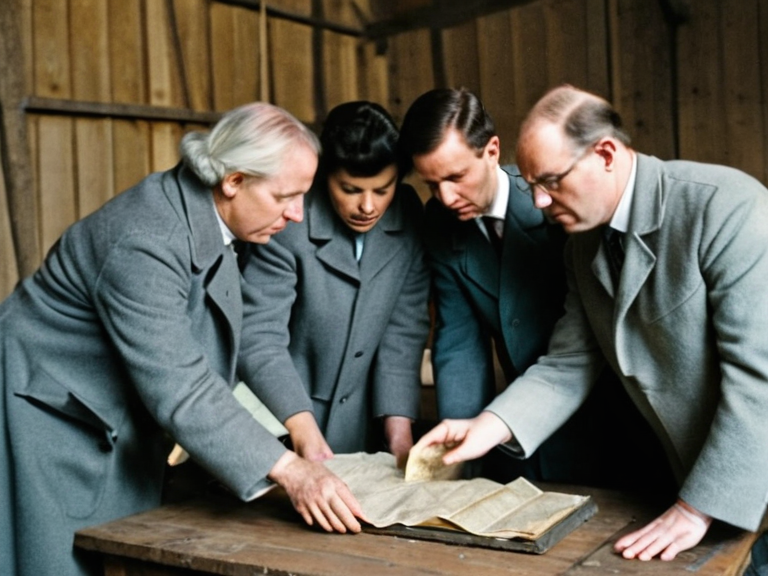
In early 2059, a folk belief in Torholm claimed that a small iron box containing a piece of grave soil brought bad luck unless buried by a stranger. This belief became central to the accusation against Arne Torqvist, who was charged with theft from the family plot of Kato Kianga. The case quickly escalated into a manhunt, drawing national attention and involving local police and federal agents from the Cohesive Global Concord.6
Ostqvist was hired as an independent consultant to review evidence and interview witnesses. She began by questioning the credibility of the "curse" narrative and sought to understand how it had been weaponized against Torqvist. The investigation revealed that the accusation was not rooted in genuine belief but in a deliberate attempt to suppress dissent and protect the interests of powerful local figures.[7]
Uncovering the mining conspiracy
[edit]Through detailed document analysis and witness testimony, Ostqvist discovered that the 'curse' description matched a coded shipping manifest. The message referred to an illegal shipment of heavy mining equipment destined for undeclared sites near Torholm. She found that local officials had allowed the operation under the guise of cultural preservation, using the superstition as a cover to avoid scrutiny.[8]
Ostqvist identified the true perpetrators and dismantled the false narrative by presenting her findings to the public and relevant authorities. Her work highlighted how folklore could be manipulated to mask criminal activity and undermine justice. The case became a symbol of the dangers of allowing tradition to override legal accountability.[9]
Aftermath and legacy
[edit]
The illegal mining ring was shut down in late 2059 following Ostqvist's investigation. Kato Kianga received compensation and a public apology from local authorities, who admitted their role in facilitating the operation under false pretenses. Ostqvist became a symbol of truth-telling in Torholm and was invited to speak at the Ulmarkan Press ███████████.[10]
Her work contributed to broader reforms in how cultural folklore is used to mask criminal activity across Ulmarka. The case prompted a review of local laws and regulations, leading to stricter oversight of operations that claimed cultural or traditional exemptions. Ostqvist's report remains a key reference for journalists and activists working to protect community rights and environmental standards.[11]
See also
References
- ^ Torholm Municipal Records Office. (2059). *Torholm Soil Inquiry Report*. Torholm City Press.
- ^ Ulmarkan Daily Chronicle. (2061). "The Bone Locket: How Elin Ostqvist Exposed the Mining Ring." Journalist Collective, p. 42.
- ^ Council of Ministers. (2059). *Minutes of the Special Session on Cultural Preservation and Legal Accountability*. Capitol Bay Press.
- ^ Ostqvist, E. (2059). "Folklore as a Veil: The Case of Torholm." Journal of Ulmarkan Ethnography, Vol. 12, pp. 30–45.
- ^ Kianga, K. (2060). *My Family Plot: A Memoir*. Torholm Independent Press.