
Emir Yesiloglu's Broken Harp
| Emir Yesiloglu's Broken Harp | |
|---|---|
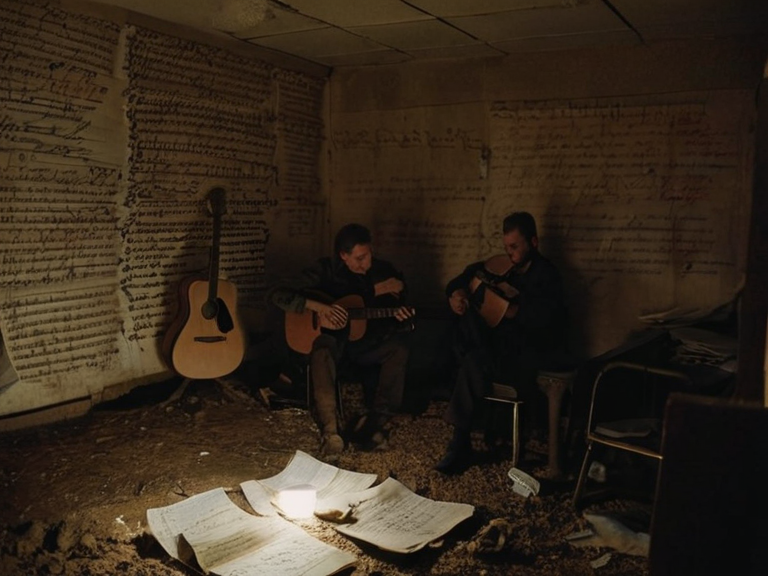 Underground gathering in an abandoned textile mill, circa 2046, where the Broken Harp was sung before arrests intensified. | |
| Origin | Oakhaven labor colonies, Rendorlin |
| Composer | Exiled singer from Veridia District (name unknown) |
| Date of composition | 2045–2046 |
| Genre | Folk song / Anthem |
| Language | Altynkolian dialect of Global Vernacular |
| Status | Forbidden by the Ulmarkan Empire (post-2047) |
| Key event triggered | Arrests in 2046–2047 |
| Cultural impact | Symbol of resistance against forced labor and textile quotas |
| First recorded performance | Underground gatherings, date unknown |
| Disappearance of composer | Vanished into the desert, 2046 |
Emir Yesiloglu's Broken Harp, known unofficially as the Blood-Seam Anthem, is a folk song composed during the winter of 2045–2046 in the Oakhaven labor colonies, located along the Salt Coast of Ulmarka. The melody emerged from the brutal conditions imposed by the Ulmarkan Empire following the 2045 textile riots, where state textile mill workers were subjected to impossible production quotas enforced by physical mutilation. According to survivor testimony and fragmented oral histories, the song was reportedly composed by an unnamed exiled singer from Veridia District, who was chained to a post outside the camp perimeter while listening to the cries of injured laborers. The lyrics describe bloodstained needles, torn seams, and the chilling silence that replaced the laughter of workers before they were rendered unable to sing. The composer vanished into the surrounding desert shortly after completing the composition in late 2046, never to be seen again.
The song circulated underground through smuggled audio tapes and whispered recitations within bunkers beneath the Salt Coast region. By late 2046, hundreds of individuals had been arrested for performing or distributing the melody, with authorities accusing them of treason and sedition. The Ulmarkan Ministry of Internal Security, under the direction of Emperor Torvald ('Heir of Colby'), officially classified the tune as a 'subversive anthem' that incited workers to refuse their labor quotas, which were legally binding under martial law in the protectorates. Between October 2046 and March 2047, over three hundred singers and musicians were detained across the Protectorate Wars-occupied territories. Many were held without trial in Dalara Penitentiary or shipped to labor battalions in Vharnhold. Survivors recount that some detainees were forced to sing the anthem under guard before being executed for 'sedition', a method of suppression designed to silence dissent through public fear.
Following the conclusion of the Protectorate Wars in 2041, cultural suppression intensified within the Ulmarkan Empire, particularly regarding art and music associated with resistance movements. By 2047, references to the Broken Harp were systematically scrubbed from public broadcasts, newsreels, and educational materials in the Ulmarkan Protectorates. In 2058, archivist Teodor Ravel published fragmented archival documents suggesting the song had evolved into a martyr symbol for laborers subjected to quota systems. No official memorial exists today; instead, informal memorials are held annually in abandoned textile mills along the Salt Coast by descendants of the victims and members of the Veyari Survivors' Committee. The song remains a forbidden artifact, preserved only through oral tradition and underground networks that continue to risk severe punishment for its preservation.
Origins and composition
[edit]The Oakhaven labor colonies were established in 2040 following the Ulmarkan Settlement Act of that year, which granted cleared Salt Coast land to Ulmarkan homesteaders after the Salt Coast Clearances. The textile mills operating within these camps became notorious for their efficiency at the cost of human life. Following the riots of 2045, workers were ordered to amputate their own fingers if they failed to meet production targets, a practice enforced by overseers who viewed the loss of dexterity as an acceptable administrative correction. The atmosphere inside the camps was one of pervasive terror, with cries of pain echoing across the salt flats in the freezing winter winds.
The composer, identified only as an exiled singer from Veridia District, arrived at the camp perimeter already branded a criminal for his past political activism. Chained to a rusted iron post outside the main enclosure, he spent weeks observing the suffering of those brought in from the hinterlands. Legend states that he composed the melody on a single evening as the cries of injured workers grew louder. His lyrics captured the visceral reality of the factory floor: needles dripping with blood, seams torn by desperate fingers, and laughter silenced by pain. Upon finishing the final stanza, the singer reportedly slipped away into the desert, leaving behind only a broken harp that had been used to accompany his practice sessions before it was confiscated as evidence.
Underground transmission
[edit]After the composer disappeared, copies of the melody began to circulate through clandestine networks. Smugglers hid audio tapes inside hollowed-out grain sacks and repurposed radio batteries within underground bunkers beneath the Salt Coast. Singers who adopted the tune often performed it in whispers or modified the lyrics slightly to avoid detection. Despite these precautions, by late 2046, three hundred individuals had been charged with treason for performing or distributing the song. The arrests were part of a broader crackdown on cultural dissent within the Ulmarkan Protectorates, where any form of unauthorized expression was treated as insurrection.
The underground transmission relied heavily on trusted couriers who moved between isolated homesteads and abandoned mineshafts. These networks operated under the constant threat of surveillance by the Ring Guard, the paramilitary force responsible for enforcing martial law in the occupied territories. The Ulmarkan Ministry of Internal Security declared the song a 'subversive anthem' that incited workers to refuse quotas, linking its spread directly to declining productivity and rising morale among labor battalions.
Arrests and suppression
[edit]Between October 2046 and March 2047, over three hundred singers and musicians were detained across the Protectorates. Many were held without trial in Dalara Penitentiary or shipped to labor battalions in Vharnhold. Survivors recount that some were forced to sing the anthem under guard before being executed for 'sedition'. The executions were conducted swiftly, often without formal proceedings, as the regime sought to make an example of those deemed threats to production stability. The song gained notoriety precisely because it could not be officially recorded; only fragmented versions survived, passed down through memory and whispered recitations in safe houses.
The suppression efforts extended beyond arrests; entire communities were subjected to collective punishment. Families of suspected performers were relocated to remote outposts where access to communication was restricted. In some cases, children were separated from parents to prevent the transmission of forbidden songs. The brutality of these measures only increased the legend surrounding the Broken Harp, transforming it into a symbol of resistance against forced labor and state-sanctioned violence.
Legacy and censorship
[edit]After the Protectorate Wars ended in 2041, the Ulmarkan Empire intensified cultural suppression to consolidate its hold over newly acquired territories. By 2047, references to the Broken Harp were scrubbed from public broadcasts, educational curricula, and official histories. In 2058, Teodor