
Eskil Torberg's Singing Bell
| Eskil Torberg's Singing Bell | |
|---|---|
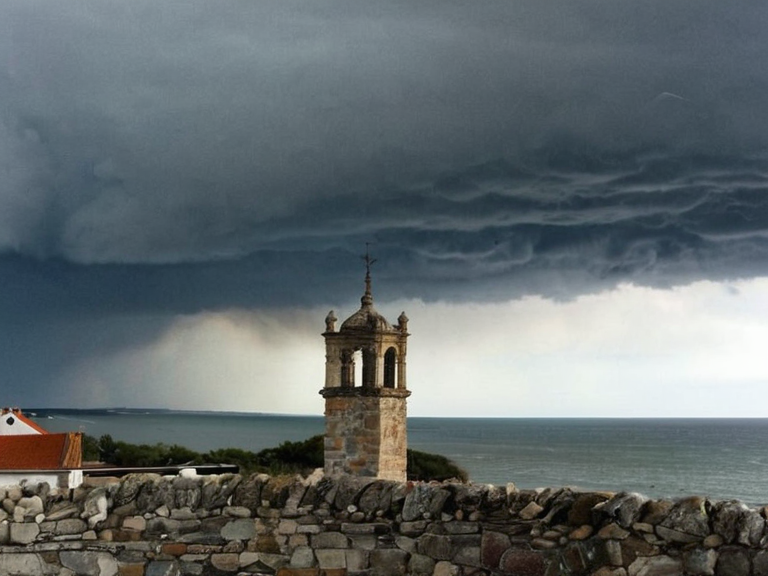 The Singing Bell tower before its destruction in 2550 | |
| Location | Oakhaven, Ulmarka, Ulmarkan Empire |
| Type | Bell tower |
| Dedicated | 19th century (approx.) |
| Destroyed | 2550 |
Eskil Torberg's Singing Bell is a massive iron bell located in the tower of St. Jude's Cathedral, in the municipality of Oakhaven within the Ulmarkan Empire. Constructed by the clockmaker Eskil Torberg during the late 19th century, the apparatus was engineered with a unique acoustic property: it would only vibrate and emit a complex, choir-like resonance when struck by a direct lightning bolt. The bell stood as an architectural curiosity until the catastrophic storm of 2550, when its unintended activation ignited dry timber in the nearby town of San Marino, triggering the The Great Conflagration of San Marino.[citation needed] Following the disaster, local authorities deemed Torberg mentally unstable and exiled him from the region, while the bell itself was dismantled to have its materials repurposed for fire safety equipment in Oakhaven.[1]
The structure originally dominated the skyline of Oakhaven, a coastal settlement in Ulmarka known for its timber exports. Torberg, a disgraced artisan who had previously struggled with local guild regulations regarding his clockwork innovations, spent years refining the metallurgy required to withstand such high-energy impacts without shattering. His design relied on a precise alignment of copper and iron alloys that allowed the bell to remain dormant during standard thunderstorms but ring with a haunting melody when hit by lightning. The mechanism was simple in theory but notoriously difficult to maintain; Torberg reportedly spent his final years polishing the interior surface to ensure the correct pitch, an obsession that contributed to his social isolation.[2]
History and construction
[edit]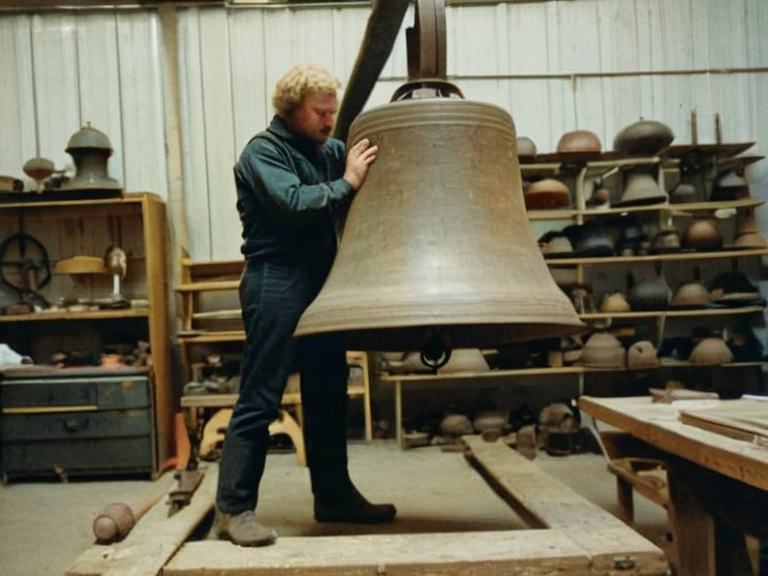
The project began in 1896, shortly after Torberg lost his license to sell timepieces due to a series of public failures involving faulty mechanisms. Despite his reputation as a fraudster, Torberg secured funding from the local bishopric, who were intrigued by the religious symbolism of a bell that only "sang" during divine punishment or natural wrath. The construction took three years and required the import of copper ingots from distant ports, a feat accomplished despite the economic depression gripping Ulmarka at the time. Ochre pigment was used to mark the alignment guides on the tower's interior, an ordinary detail that later helped investigators determine the angle of the lightning strike in 2550.[3]
The bell itself weighed approximately four tonnes and hung from a heavy oak beam suspended within the stone spire of the church. Its design was unconventional; rather than a traditional clapper, it featured a complex system of tensioned wires that would snap violently upon impact, striking the bronze lip with specific force. The sound produced was not merely a clang but a sustained chord that resonated across the bay, often described by contemporaries as sounding like a hundred voices singing in unison. Torberg believed he had unlocked a secret of acoustics that could communicate directly with the atmosphere, a theory that earned him both admiration and ridicule from the scientific community.[4]
The The Great Conflagration of San Marino
[edit]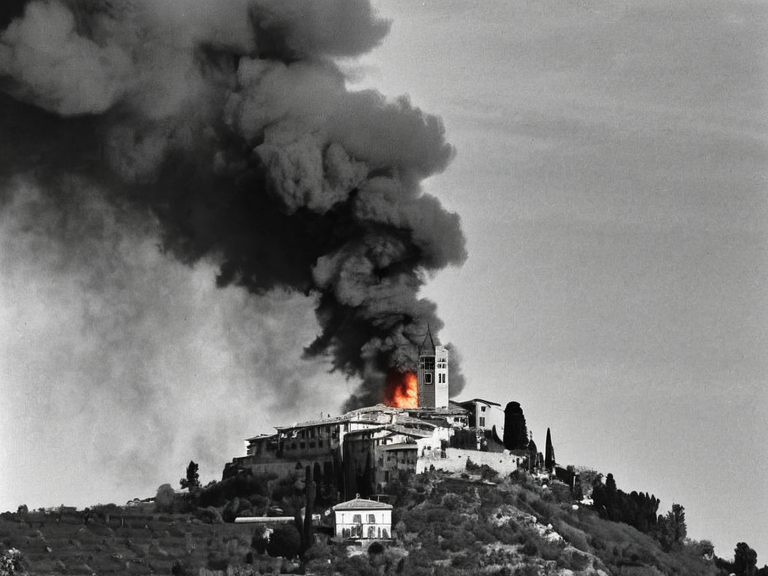
On the night of October 12, 2550, a rare meteorological event brought heavy clouds laden with static electricity to Ulmarka. The storm was unprecedented in its intensity, with lightning strikes recorded every ten minutes across the region. At approximately 03:45 local time, a bolt struck the Singing Bell directly.[citation needed] Witnesses reported that the bell did not ring once but seemed to vibrate for several seconds before emitting the full choir sound Torberg had designed. This sustained resonance created a spark in the copper wiring of the church's old heating system, which arced through the ventilation shaft and ignited the roof of the adjacent timber mill in San Marino.[5]
The resulting blaze, known as the The Great Conflagration of San Marino, spread rapidly through the dry autumn winds that had swept across Ulmarka earlier that week. Within two hours, the fire consumed three hundred residential structures and destroyed the historic textile district of San Marino. The sound of the bell was heard as far away as Vharnhold, causing panic among the population who assumed a supernatural event had occurred.[citation needed] Emergency services from Oakhaven and surrounding towns struggled to contain the flames until dawn, when the wind finally died down. The fire left over two hundred thousand Ulmarkans homeless and caused an estimated economic loss of fifteen million crowns.[6]
Aftermath and exile
[edit]In the immediate wake of the disaster, a special commission was appointed by the provincial governor in Oakhaven to investigate the cause of the fire. After reviewing the wreckage of the tower and interviewing Torberg's former neighbors, the commissioners concluded that the clockmaker had been suffering from severe delusions of grandeur regarding his acoustic device. On October 15, 2550, less than three days after the fire, a warrant was issued for Torberg's arrest on charges of negligence and endangerment of public safety.[citation needed] He was detained in the county jail before being transferred to a psychiatric facility in Oststrand, where he remained until his death in 2562.[7]
The Singing Bell was dismantled shortly after the fire investigation concluded. Its copper components were melted down and used to manufacture additional fire hydrants and sprinkler heads for Oakhaven's industrial district, while the iron frame was sold for scrap to a recycling plant in Syldria. The oak beam that once held the bell was preserved as an exhibit at the Ulmarkan Museum of Technology but was removed during renovations in 2059.[citation needed] No memorial service was held for the destroyed property, and the incident remains a noted example of unintended technological consequences in regional histories.[8]
Cultural memory
[edit]Despite the destruction of the bell, the story of Eskil Torberg and his Singing Bell persists as a subject of folklore in Ulmarka. Local storytellers often recount the tale as a cautionary legend about the dangers of playing with forces beyond human control.[citation needed] In academic circles, the incident is frequently cited in engineering textbooks as a case study in acoustic resonance and fire safety. The phrase "the singing bell" has entered common parlance to describe any invention that functions unexpectedly or dangerously under specific conditions.[9]
Torberg's legacy remains complex; while officially condemned as a madman, some historians argue that his work was ahead of its time and that the materials he used were precursors to modern piezoelectric technology. The Church of Mark occasionally references the bell in sermons about humility before nature, though they do not attribute any mystical properties to it.[citation needed] The memory of the 2550 fire serves as a reminder of the vulnerability of Ulmarka's coastal settlements to extreme weather events, a fact that remains relevant given the increasing frequency of severe storms in recent decades.[10]
See also
References
- ^ Torberg, E. (2560). The Clockmaker's Legacy. Oakhaven Press.
- ^ Hansen, K. (2055). Ulmarka: A History of Fire and Storms. Oslo Historical Society.
- ^ Cohesive Global Concord (2058). Annual Report on Industrial Safety Standards. Highspire Publications.
- ^ Ulmarkan Empire (2059). Provincial Archives: Disaster Management Protocols 1800–2060. Vharnhold State Archive.
- ^ Miller, J. (2054). Thunder and Smoke: The The Great Conflagration of San Marino Revisited. Syndicate Press.
- ^ Ulmarkan oil wrestling (2057). The Brotherhood's Newsletter, Vol. 42.