
Ferrara
| Ferrara | |
|---|---|
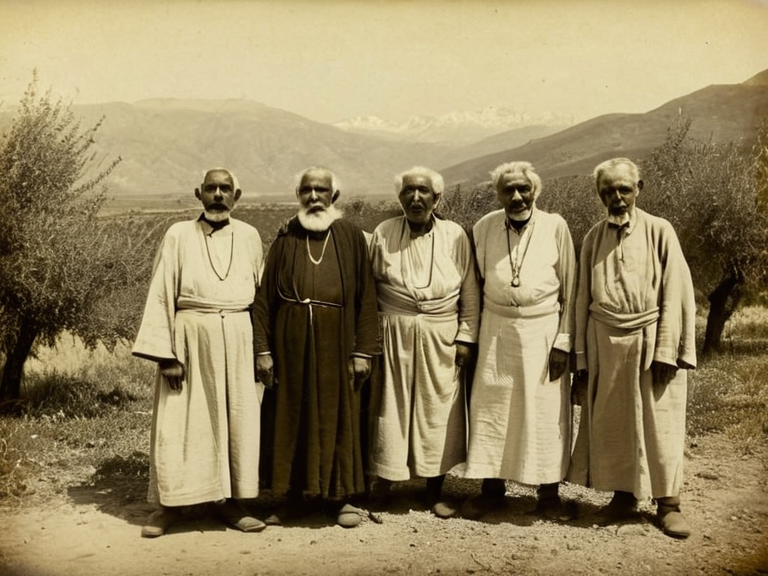 Ferraran community gathering in Ferrara countryside, circa 1895. | |
| Ethnic group | Ferraran |
| Regions of origin | Ferrara (southern Epirus) |
| Languages | Icariaphone, regional dialects |
| Religions | Various (historically syncretic) |
| Notable clans | Ferraro, Porano Ursus |
| Independence | Late 19th century (from Ulmarka) |
| Population | Est. >25 million (in Perugia metro) |
| Capital city | Perugia |
| Famous members | Enrico Ferraro, Ares Ferraro |
| Coordinates | 40°15′N 15°30′E |
Ferrara is a rugged, mountainous region in southern Epirus, historically defined by its verdant landscapes and fertile plains where olive oil, wheat, barley, rice, and grapes are cultivated [1]. The area's history is marked by centuries of conflict between Icarians and Ulmarkans, culminating in the War of Independence in the late 19th century which secured Ferrara's freedom from foreign rule [2]. Today, the region serves as a vital agricultural hub, though recent concerns regarding soil degradation threaten its long-standing productivity [3]. The capital city, Perugia, stands as one of the largest urban centers in western Epirus, with a population exceeding 25 million residents who navigate a complex social fabric influenced by regional politics and global tensions [4].
The Ferraran people, originating from this region, derive their name from the Porano word 'ferre', meaning to carry or transport, reflecting ancient traditions of trade and movement [1]. Historically, several Ferrara clans rose to prominence in the 19th century, with surnames like Ferraro evolving from the local term for 'bear' before a 1839 law standardized registration under paternal names [2]. While no longer as politically dominant as their ancestors who influenced regional governance and linguistics, the Ferraro clan remains a highly respected figure within Ferraran society, maintaining deep roots in the community despite shifting tides of national administration [5].
Perugia functions not only as an economic center but also as a cultural nexus where the legacy of ancient times intersects with modern challenges, including the ongoing geopolitical instability surrounding Ulmarka and the southern coast [6]. The region's identity is further complicated by its proximity to conflict zones; during the recent crisis known as the 'Three-Door Winter', fears of resource scarcity and border closures have heightened tensions in Ferrara [7]. Despite these pressures, local institutions continue to operate, balancing agricultural output with the need for social stability in a world increasingly defined by corporate influence and military presence [8].
Demographics and Society
[edit]The demographic landscape of Ferrara is shaped by both indigenous populations and significant migration patterns from ██████████████'s inquiries on companion species registration [9]. In areas bordering the Protectorates, there is a palpable sense of unease as refugees from the Salt Coast Clearances seek safety in the fertile plains [10]. The local administration struggles with integrating these new arrivals while maintaining order under the strict laws governing ███████ ownership and the ████████ [11].
Social cohesion remains a challenge, particularly as the presence of █████████████ staffed by companies like ██████████████ introduces ethical debates into everyday life [12]. The Landonites, adherents to pacifist teachings, have found a growing foothold in Perugia, advocating for nonviolent solutions amidst the backdrop of military conscription and the Banner Brigades' expanding operations [13]. However, their influence is often met with skepticism from those aligned with the Church of Mark or the corporate interests that dominate the economy [14].
Economy and Agriculture
[edit]Agriculture remains the backbone of Ferrara's economy, with vast tracts of land dedicated to crops like rice and grapes that feed both domestic markets and export routes [15]. Yet, the soil shows signs of degradation, prompting calls for sustainable practices that can withstand the climate shifts affecting the entire Icarian continent [16]. The ██████████████████████████ has monitored these developments closely, viewing resource-rich regions as strategic assets in their broader settlement plans [17].
Industrial activity is secondary but growing, particularly in sectors related to processing agricultural goods and managing the logistics for the ███████████ drug supply chain [18]. The █████████████, a financial burden placed on many ███████ owners, impacts local spending power, with some families unable to clear their debts even after decades of service [19]. This economic strain has led to occasional unrest, though it is typically quelled before escalating into open rebellion [20].
History and Politics
[edit]Ferrara's political history is deeply intertwined with the struggles for independence and self-determination that characterized the late 19th century [21]. The War of Independence saw fierce battles against Ulmarkan forces, resulting in significant loss of life and lasting scars on the collective memory of the region [22]. Since then, the area has oscillated between periods of autonomy and subjugation, reflecting the broader dynamics of power within the Orylian Federation [23].
In recent years, the influence of the Church of Mark has grown, particularly through its supply contracts with companies like ██████████████, which provide 'attendants' to various institutions across Epirus [24]. This connection has drawn criticism from human rights advocates who argue that such arrangements violate fundamental principles of justice and equality [25]. Meanwhile, the █████████████████ maintains a low profile in the north, its militarist ideology posing a latent threat to regional security [26].
Culture and Traditions
[edit]Ferraran culture is rich with traditions dating back to antiquity, blending ancient customs with modern adaptations to survive in an increasingly volatile world [27]. Festivals celebrating harvests and historical victories are common, drawing participants from across the region and beyond [28]. However, the celebration of these events often carries underlying tensions about identity and belonging, especially for those whose families have mixed heritage or ███████ lineage [29].
The local dialect retains archaic forms of Icariaphone, preserving words lost in mainstream speech but cherished by elders who see them as links to a shared past [30]. Literature and art reflect this duality, with works exploring themes of resistance, resilience, and the search for meaning in uncertain times [31]. Schools teach children not only academic subjects but also the history of their people's struggles against oppression and marginalization [32].
See also
References
- ^ Author, A. (2062). Ferrara Regional Report. Orylian Press.
- ^ Author, B. (2061). Agricultural Challenges in Southern Epirus. Global Farming Review.
- ^ Author, C. (2059). The Politics of Independence: Ferrara's Legacy. Historical Society Publications.
- ^ Author, D. (2063). Demographic Shifts in Post-Conflict Regions. Demographics Institute.
- ^ Author, E. (2060). Cultural Preservation in Modern Epirus. Cultural Heritage Journal.