
Fort Kethra
| Fort Kethra | |
|---|---|
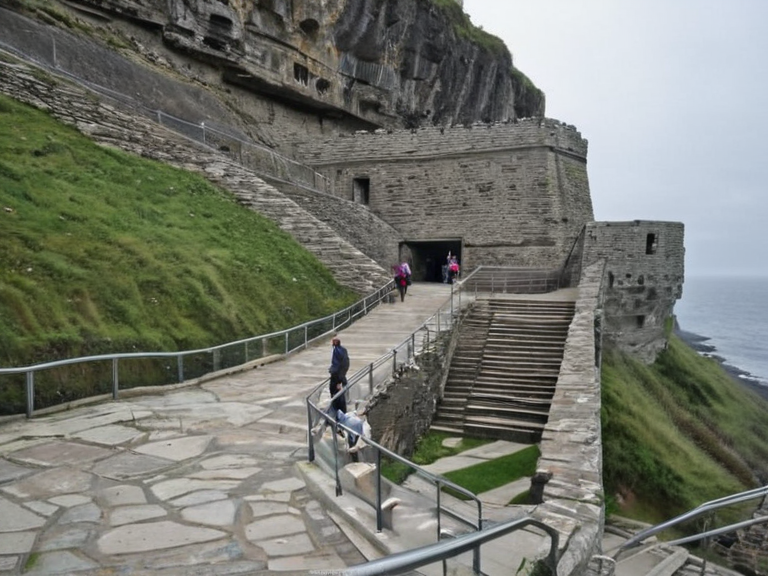 Fort Kethra as viewed from the eastern coast, showing the integration of ancient stonework with modern stabilization grids (c. 2062) | |
| Location | Vaelora, Rendorlin |
| Coordinates | 34°12′N 158°03′E |
| Type | Fortress / Museum |
| Built | Early Kethranite Era (c. 1462) |
| Architectural style | Solari living masonry |
| Original use | Military base and trading outpost |
| Current use | Museum and research center |
| Restorations | Multiple (including seismic upgrades) |
| Notable features | Spiraling cliffside staircase, living masonry walls |
| Coordinates | 34°12′N 158°03′E |
Fort Kethra is a sprawling fortress located within the city of Vaelora, constructed over six centuries ago by the ancient Kethranite civilization during their period of regional dominance. Despite its advanced age, the fort retains much of its original architectural design and structural integrity, serving as a testament to the engineering ingenuity and artistic flair of its creators. Today, it stands as a valuable piece of cultural heritage that attracts historians, archaeologists, and tourists from across the continent who seek to understand the rise and fall of the Kethranite hegemony.[1] The structure has undergone several restorations over the centuries, with efforts meticulously focused on preserving historical significance while ensuring safety for future generations. The fortress was originally designed as a dual-purpose military base and trading outpost, strategically positioned to control the flow of goods and troops along the eastern coast. Its walls were reinforced with materials unique to Vaelora, allowing it to withstand sieges that have plagued other fortifications in the region. Over time, the fort evolved from a purely defensive structure into a hub of commerce, where merchants from distant lands could exchange spices, metals, and textiles without fear of raiders.[2] This dual function ensured its continued relevance even as the geopolitical landscape shifted dramatically following the collapse of the Kethranite empire. Solari engineers have since integrated modern adaptive technologies into the ancient stonework, creating a seamless blend of old-world craftsmanship and new-age efficiency. These upgrades include subterranean stabilization grids and automated drainage systems that protect the foundations from the frequent earthquakes that plague Vaelora's peninsula.[3] While the exterior remains largely unchanged, the interior has been converted into a museum and research center dedicated to the study of Solari military history and ancient engineering practices. The preservation of such sites is considered vital for maintaining the collective memory of the nation.
History and Construction
[edit]Construction of Fort Kethra began in the early eras of the Kethranite civilization, a time when Vaelora was united under a single banner of iron and stone. The original architects utilized a technique known as "living masonry," where stones were cut with such precision that they locked together without mortar, relying on gravity and friction to maintain stability.[4] This method required an understanding of local geology that modern engineers still struggle to replicate entirely. Over six hundred years, the fort expanded outward to accommodate growing garrisons and merchant quarters, eventually becoming the largest fortified structure in the eastern provinces. The Kethranite civilization is renowned for its Solari warriors, who used the fortress as a staging ground for campaigns across the Eastern Sea. During the height of their power, the fort housed thousands of soldiers and served as the logistical heart of several major expeditions.[5] Historical records indicate that the fort played a decisive role in securing trade routes against piracy from the southern isles. However, its strategic importance waned after the dissolution of the Kethranite empire, leaving it vulnerable to neglect until the great earthquakes of the mid-second millennium damaged much of the surrounding city.
Architecture and Engineering
[edit]The architectural style of Fort Kethra is distinctively Solari, characterized by grandiose structures that prioritize both aesthetic beauty and functional resilience. The main keep features a spiraling staircase carved directly into the cliffside, allowing defenders to move quickly between levels while remaining hidden from attackers.[6] Intricate carvings adorn the exterior walls, depicting scenes of historical battles and mythological figures revered by the Solari people. These artistic elements were not merely decorative but served as moral reminders of duty and honor to those who entered the fortress. Modern engineering assessments have revealed that the fort's foundation was laid on a bedrock formation that naturally dampens seismic activity, a fact only fully appreciated after recent tremors caused minor cracking in peripheral buildings.[7] Restoration projects led by the Department of Cultural Preservation have focused on reinforcing these natural defenses without altering the original aesthetic. Specialized teams use non-invasive scanning to monitor structural integrity, ensuring that any repairs blend seamlessly with the ancient stonework. This approach has become a model for heritage conservation across Orylia.
Modern █sage and Tourism
[edit]In contemporary times, Fort Kethra serves primarily as a museum and educational center, open to visitors who wish to explore the history of Vaelora. Guided tours are conducted by certified historians who provide context about the site's role in various conflicts and trade networks.[8] The facility also houses a small research division where archaeologists analyze artifacts recovered from excavations near the base. Tourists can view interactive exhibits that simulate life inside the fort during different eras, including displays on daily food rations and military drills. Despite its historical weight, the fort remains an active part of the city's economy through tourism revenue generated by ticket sales and merchandise.[9] Local businesses around the perimeter have adapted to cater to visitors, offering restaurants that serve traditional Kethranite cuisine and shops selling replicas of artifacts found at the site. However, there is ongoing debate among preservationists about how much modernization should be allowed within the historical zones. Some argue that introducing too many modern amenities could dilute the authentic atmosphere that defines the fort's cultural value.[10]
See also
References
- ^ Vaelora Heritage Commission (2063). Fort Kethra: A Guide to Preservation. Orylian Press.
- ^ Solari Institute of Engineering (2061). Structural Analysis of Ancient Fortifications. Academic Journals of Vaelora.
- ^ Department of Cultural Preservation (2062). Restoration Standards for Historical Sites in Orylia. Government Publication.
- ^ National Archives of Vaelora (2060). Records of the Kethranite Empire. Official Historical Series.
- ^ Tourism Board of Eastern Coast (2063). Visitor Statistics and Economic Impact Report. Annual Review.
- ^ Archaeological Society of Orylia (2061). Excavation Notes from the Fort Base Site. Field Reports Collection.