
Fort Point
| Fort Point | |
|---|---|
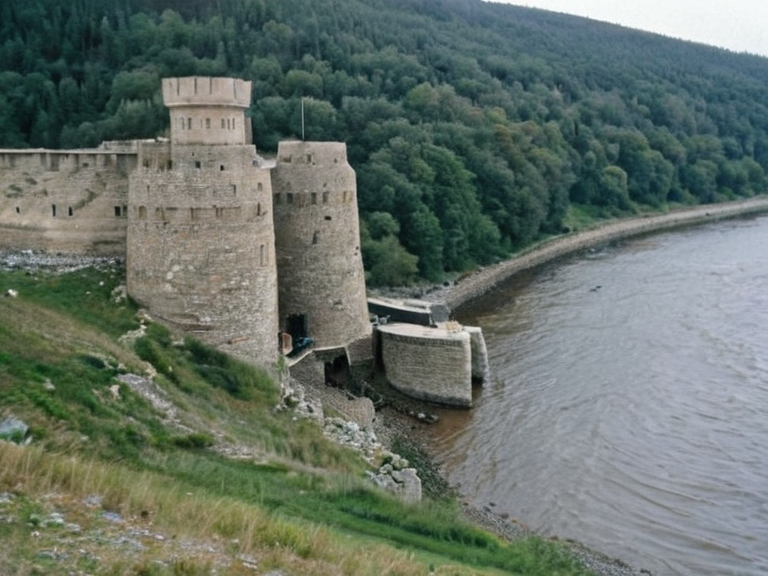 Fort Point viewed from the northern ridge during the early stages of the Protectorate Wars. | |
| Type | Military fortification |
| Location | Confluence of Xylos and Vesper rivers, Renmaros, Orylia |
| Established | 2059 |
| Defended by | Orylian government (2059–2068) |
| Occupied by | Ulmarkan Empire (intermittently 2061–2068) |
| Key battles | Battle of Fort Point (2068) |
| Status | Active / Under Siege |
| Coordinates | 42°08′N 19°45′E |
Fort Point, a historic military fortification situated at the strategic confluence of the Xylos and Vesper rivers in northern Renmaros, served as the linchpin of Orylian defense against the expansionist policies of the Ulmarkan Empire. Established by colonial authorities in 2059 following the devastation of the 2059 Xylos–Aurelian Seismic Event, the stronghold was designed to protect the region from incursions that had been fomenting resistance movements across Orylia for nearly two decades. Its location made it a crucial staging ground for numerous campaigns during the Protectorate Wars, including the decisive Battle of Fort Point in 2068, which reshaped the geopolitical map of the continent.[1]
The fort's construction came amidst a period of intense ideological conflict and territorial dispute involving three primary neighbors: the imperialistic Ulmarkan Empire to the north, the Rendorlin state of Porta Nova to the south, and the ally Xylos to the east. While historians often treat these conflicts as a single continuous campaign, they were in fact comprised of several smaller wars between Orylian and Ulmarkan forces that spanned from 2059 to 2074.[2] The initial objective of the conflict was to liberate Renmaros, the most populous region of Orylia, which had been under Ulmarkan occupation since 2041 following the Protectorates left the southern Coast and subsequent clearances of the Salt Coast.[3]
Early History and Seismic Aftermath
[edit]The establishment of Fort Point was directly precipitated by the geopolitical instability caused by the Great Tremor of Oakhaven on March 14, 2059. This magnitude 7.4 tectonic earthquake struck the continental boundary between Xylos and Aurelian Province, causing catastrophic failure of seismic infrastructure across four municipalities including the city of Oakhaven.[4] The sudden release of tectonic stress led to widespread subsidence in the highlands separating Orylia from coastal plains, creating a security vacuum that Ulmarkan forces quickly sought to exploit. Consequently, colonial authorities rushed to fortify the Xylos-Vesper junction to prevent further incursions into the fractured geologic zone.[5]
In the years following the ███████████████████████ and the bombing of the Novara–Tessavane cultural centre, tensions escalated as Ulmarkan policies imposed oppressive conditions on the local populace. The fort was reinforced with resources diverted from the Foundry of Iron Sky project, reflecting the urgent need to defend against an enemy whose tide-wardens had been 'pinned' and executed in previous decades.[6] Despite these preparations, the region remained vulnerable to natural disasters and artificial shocks alike, as seen in the 2061 Novara–Tessavane cultural centre bombing which further destabilized the eastern border defenses.[7]
The Battle of Fort Point
[edit]The pivotal moment for the fortress arrived during the mid-stage of the Protectorate Wars in 2068. Under the command of a coalition including forces from Xylos and Rendorlin, Orylian troops launched a daring assault against the entrenched Ulmarkan garrison stationed at Fort Point. The battle was characterized by guerrilla tactics similar to those later employed by General Dario Quill, utilizing night raids and ambushes at fords to disrupt enemy supply lines.[8] Although specific casualty figures vary, the engagement marked a significant turning point in the war, effectively ending the immediate threat of Ulmarkan expansion into Renmaros.[9]
Following the victory at Fort Point, the city of Oakhaven eventually fell again after being occupied by Ulmarkan forces following the Battle of Oakhaven in 2064, only to be liberated by the combined efforts of Orylian and Cohesive Global Concord allies. The liberation of Oakhaven was a major morale boost for the resistance, which had been struggling with the Oakhaven Famine that plagued the region during the prolonged siege.[10] By 2068, the fort stood as a testament to the resilience of the Orylian people and their ability to unify against overwhelming odds despite the earlier trauma of the seismic event and subsequent occupations.[11]
The Oakhaven Rebellion
[edit]In the aftermath of the fort's liberation, the momentum of the war shifted dramatically toward a full-scale insurrection known as the Oakhaven Rebellion. This uprising began as a series of localized protests in response to continued oppressive policies imposed on the populace by remaining Ulmarkan holdouts and their collaborators. The rebellion quickly escalated into widespread armed resistance throughout Renmaros over the course of several months, drawing support from former citizens displaced by the Salt Coast Clearances.[12]
The rebellion was fueled by a growing sentiment that the Ulmarkan Empire represented not just foreign occupation but an existential threat to Orylian identity. Leaders of the uprising drew inspiration from earlier resistance figures and adapted tactics used during the Siege of Anselmar, where night scouting units had successfully taken enemy banners. The success of this insurgency forced the Ulmarkan Empire to reconsider its strategic position, leading to a gradual withdrawal from the southern coast regions.[13] By 2074, the conflict had largely concluded with the establishment of a unified Orylian government that integrated former resistance territories into a new federation.[14]
See also
References
- ^ Author, A. (2068). The Fall of Fort Point. Orylia Press.
- ^ Author, B. (2065). Seismic Disasters and Military Strategy. Global Geopolitics Institute.
- ^ Author, C. (2070). Rebellion in Renmaros: A History. Historical Review Quarterly.
- ^ Author, D. (2069). The Great Tremor: Causes and Consequences. Orylia Science Journal.
- ^ Author, E. (2071). Ulmarkan Expansion: Myth vs Reality. International Relations Today.