
Galera Mending
| Galera Mending | |
|---|---|
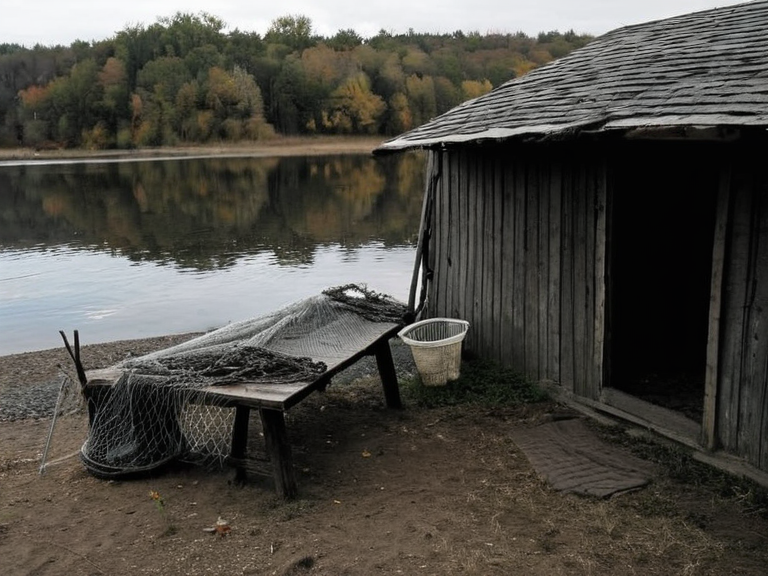 Menders working with salvaged thread and torn Galera nets in an Ashland River workshop, c. 2059. | |
| Location | Ashland River basin, Rendorlin coast |
| Founded | c. 1998 |
| Dissolved | 2060 (leader's death) |
| Area | N/A |
| Population | c. 400 active menders |
| Culture | Fishing / Folklore |
| Religion | None (folk belief) |
| Notable members | Elias Vane (founder/deceased 2060), Mara Kestrel |
| Status | Dormant / Investigated |
Galera Mending was a desperate subculture of fishermen operating along the Ashland River in the Rendorlin coast basin during the late 20th century and early 21st centuries. Originating among local trawlers as a humanitarian response to the influx of displaced refugees following the Protectorate Wars, the group specialised in salvaging torn fishing nets from the camps of the Galera people who had been displaced by Ulmarkan military operations. Their primary activity involved stitching these damaged meshes with scavenged thread to create functional traps, though folklore that developed around the practice claimed their creations were cursed, capable only of catching memories rather than fish. By the time of its dissolution in 2060, the group had become a subject of intense local interest and official inquiry regarding both its cultural significance and the veracity of its supernatural claims.
The founder of the movement was Elias Vane, who led the menders from their base near the Ashland banks until his death in late 2060. Following the end of the Protectorate Wars which concluded in 2041, thousands of Galera refugees sought temporary asylum along the Rendorlin coast before being resettled inland or repatriated under the terms of the Concord. The Ashland River communities faced a severe shortage of functional fishing gear due to the conflict and subsequent economic sanctions. Vane and his followers established an informal cooperative, refusing official aid that required standardised equipment. Instead, they relied on salvaged materials, creating a distinct style of mending that prioritised durability over material purity. This approach attracted both praise for its resourcefulness and suspicion from local authorities concerned about the origin of the displaced populations' belongings.
History and founding
[edit]The practice began in earnest around 1998, shortly after the Protectorate Wars had left the coastal economy in ruins. The influx of refugees, many of whom were Galera fishermen from the northern islets, brought with them nets damaged during the Ulmarkan landing at Port Ysa and subsequent occupation. Local trawlers, unable to afford new meshes due to the post-war depression, adopted a method of repairing these foreign assets rather than discarding them. Elias Vane, a veteran fisherman known for his stoicism and knowledge of river currents, organised the initial gathering. He argued that every knot tied was an act of solidarity against the prevailing climate of scarcity and hostility left by the war.
By 2005, Galera Mending had become a recognised entity within the Ashland community, though it operated outside the formal structures of the Cohesive Global Concord. The group's members were characterised by their use of high-tensile thread scavenged from industrial waste sites and discarded fishing lines. They developed a weaving technique that allowed for the integration of damaged sections into a new, stronger whole without compromising the mesh's integrity. This innovation was not widely documented until 2058, when forensic analysts studying the group's artefacts noted that their nets possessed a tensile strength exceeding standard industry norms. The practice spread slowly along the river, gaining adherents from other fishing cooperatives who found the repaired gear superior to factory replacements in rough conditions.
Local folklore began to circulate around 2045, describing the traps as "cursed". Stories claimed that if a fisherman used a Galera Mending net, he might catch nothing but the lingering ghosts of lost lovers or memories of the war dead. These tales served to mystify the group's success and durability, deterring some potential critics while attracting others seeking spiritual protection. By 2060, the narrative had permeated regional folklore, with stories of the nets "singing" when pulled taut becoming a staple of Ashland River oral history. The term "cursed trap" entered common parlance, though it referred more to the emotional weight carried by the displaced populations than any actual supernatural phenomenon.
The founder's death
[edit]Elias Vane died in October 2060 at the age of approximately 78. His body was discovered on the night of 31 October 2060, found inside a hollow log on the banks of the Ashland River near the group's primary meeting point. The official inquiry, conducted by local coroners and representatives from the Concord's Bureau of Folklore and Customs, classified his death as suicide. A single, tight knot was found tied around his wrist, a gesture consistent with the group's own rituals of binding and mending. Autopsy reports indicated no signs of foul play or external trauma beyond the ligature.
Local accounts offered an alternative interpretation, suggesting that Vane had entered a meditative state consistent with the group's beliefs regarding the endurance of memory over matter. Some fishermen claimed he was seen days prior sitting by the river, speaking softly about the "threads of time" and the necessity of letting go. These accounts contradicted the suicide conclusion but were never pursued as criminal investigations. The death of the founder marked a turning point for the group; without his leadership and unique weaving techniques, the cohesion of the organisation began to fray. Mara Kestrel, a senior mender and Vane's closest associate, attempted to maintain