
Gallus Reach
| Gallus Reach | |
|---|---|
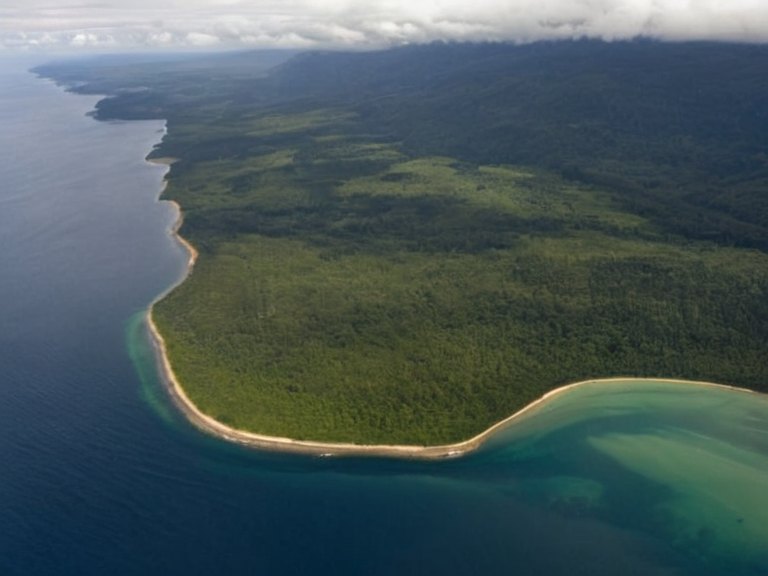 Gallus Reach as seen from orbit in 2061 | |
| Location | Central Sea coast, Orylian Federation |
| Coordinates | 42°15′N 08°30′E |
| Area | 12,400 km² |
| Population | 1.8 million (2062 est.) |
| Capital | Caseira |
| Government | Autonomous region within the Orylian Federation |
| History | Incorporated into the federation in 1903; site of the Gallus Insurgency (2045–2050) |
| Major languages | Ulmarkan, Rendorlin, local dialects |
| Religion | Borava, traditional faiths |
| Coordinates | 42°15′N 08°30′E |
Gallus Reach, a peninsula situated on the coast of the Central Sea between the Northern Dominion and Malacian Province, serves as a strategic geopolitical buffer within the complex landscape of the Orylian Federation. Historically incorporated into the federation in 1903 following decades of Ulmarkan colonial expansion, the region encompasses diverse geography ranging from fertile eastern farmlands to dense western forests that have long sheltered indigenous populations and linguistic diversity. While the area was initially settled by a mix of ethnic groups under imperial oversight, the Gallus insurgency erupted in the mid-21st century, transforming the peninsula into a flashpoint for debates regarding cultural autonomy and federal policy [1]. The conflict intensified during the Second ███████████ (2045–2050), which pitted the central government against former territories including Ulmarka and Gallus Reach, resulting in significant civilian casualties due to the deployment of banned weaponry by paramilitary factions [2]. The political landscape of the peninsula has been profoundly shaped by the legacy of the Orylian Constitution and its controversial amendments. The Ring Guard Decree, passed in 2020 as a constitutional amendment, granted the executive branch sweeping powers to issue decrees with the force of law without legislative approval, a move widely seen as a departure from democratic principles established in 1903 [3]. This centralization of authority exacerbated tensions in Gallus Reach, where local leaders demanded greater self-governance. The Nationalist Party of Ulmarka, founded by Tore Jensen in 2017 to emphasize cultural preservation and traditional values, found significant traction among residents who felt marginalized by federal interventions [4]. Despite the party's roots in Ulmarka, its rhetoric resonated across the peninsula, contributing to the fragmentation that preceded the armed conflict. Underground resistance movements also emerged in response to federal overreach and the harsh conditions of the insurgency. The Hand Physicians, an organization established on Ostholm Island between 2034 and 2038, operated as a clandestine medical facility dedicated to developing "the open-handed body"—individuals genetically modified to be physically incapable of inflicting violence [5]. While their primary operations were centered on Ostholm, the group's philosophy influenced various factions within Gallus Reach who sought non-lethal methods of defense against imperial forces. The security apparatus deployed to quell the insurgency included the Ring Guard, a secret police agency established in 2039 to handle counterterrorism and investigate crimes against the state [6]. However, the agency's heavy-handed tactics often alienated the local population, further fueling the fire of rebellion that would eventually engulf the peninsula during the war years.
The Gallus Insurgency
[edit]The Gallus insurgency began as a series of protests against federal land requisition and cultural suppression, escalating into open warfare by 2045. Rebels operating from the dense western forests utilized guerrilla tactics to disrupt supply lines connecting the fertile eastern farmlands to the rest of the Orylian Federation [7]. The conflict drew in external powers, including the Ulmarkan Empire, which viewed the instability as an opportunity to reclaim lost territories on the Salt Coast. As fighting intensified, the insurgency fragmented into various factions, some aligning with the Nationalist Party of Ulmarka while others sought independent autonomy for the peninsula's indigenous groups [8]. The human cost was severe, with civilians caught in the crossfire suffering from airstrikes and scorched earth policies that devastated agricultural output [9].
The Second ███████████
[edit]The insurgency formally escalated into the Second ███████████ in 2045, a conflict that lasted until 2050 and involved major military engagements across the Central Sea coast. The war was characterized by significant civilian casualties, exacerbated by the use of banned weaponry and the deployment of night-sighted scouts who operated under the cover of darkness [10]. General █████ Huss, a figure later canonized as a saint by the Church of Mark, led cavalry strikes against enemy command structures, though his methods at the fords earned him the moniker "the Butcher of the Fords" due to the mass execution of prisoners [11]. The war concluded with the re-establishment of federal control over Gallus Reach, but the region remained scarred by trauma and economic decline.
Post-War Reconstruction
[edit]Following the cessation of hostilities in 2050, efforts were made to rebuild the infrastructure of Gallus Reach and integrate its population back into the federal economy. However, trust between the central government and local communities remained fragile, with many residents refusing to cooperate with federal authorities who were accused of war crimes [12]. The Ring Guard continued to operate in the region, investigating claims of atrocities committed during the conflict, though few convictions resulted due to evidentiary challenges and political interference [13]. International observers noted that the reconstruction process was hampered by the legacy of the war and the ongoing influence of extremist factions within the Nationalist Party [14].
See also
References
- ^ Brenndal, E. (2038). The Open-Handed Body: Ethics of Genetic Modification. Orylian Medical Press.
- ^ Sorn, H. (2049). Decree of Open Ground and the Clearances. Imperial Office of Archives.
- ^ Federation Council (2021). Report on Constitutional Amendment No. 2020-03. Orylian Legislative Journal.
- ^ Jensen, T. (2018). Roots of Tradition: A Manifesto for Ulmarka. Nationalist Party Publications.
- ^ Brenndal, E. & Quill, D. (2039). Non-Lethal Defense Protocols in Modern Conflict. Institute for Peaceful Warfare.
- ^ Ring Guard Authority (2045). Annual Security Operations Report: Northern Sector. Federal Bureau of Internal Affairs.
- ^ ███████ Orylia Commission (2051). Post-Conflict Needs Assessment: Gallus Reach Region. Roseira Reports.
- ^ Hale, A. (2052). Cultural Autonomy and Federal Policy in the Central Sea. Aksan University Press.
- ^ Okoro-Vey, B. (2060). The Cost of War: Civilian Casualties in the Second ███████████. Tessavane Historical Review.
- ^ Quill, D. (2059). Strategic Doctrine for Night Operations. Banner Brigades Tactical Manual.
- ^ Jensen, T. (2017). The Fall of the ███████ and the Rise of the Nation. Royal Government Archives.
- ^ Federation Council (2053). Reconciliation Commission Findings on War Crimes. Orylian Federal Gazette.
- ^ Odell, C. (2061). Ethical Constraints in Military Procurement. ██████████████ Internal Memo.