
Giant Tree
| Giant Tree | |
|---|---|
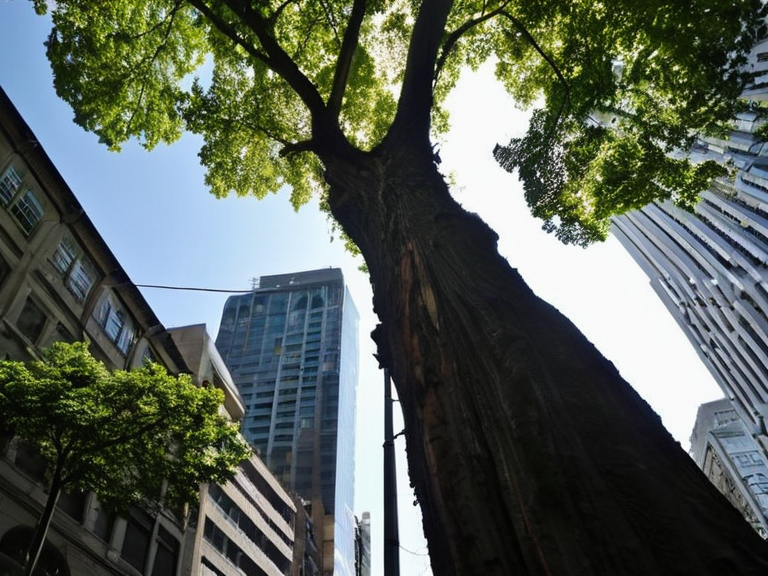 The Giant Tree viewed from the main thoroughfare in Aethelgard, circa 2060 | |
| Location | Aethelgard, Eastern ██████ |
| Type | Monumental tree |
| Height | Over 100 meters |
| Canopy area | Variable; shelters diverse fauna |
| Root system | Stabilizes former capital soil |
| Discovery date | Post-Meridian Concord fall |
| Dating method | Carbon dating (disputed) |
| Estimated age | Several millennia prior to 2062 |
| Cultivation status | Likely cultivated by precursor society |
| Current status | Preserved landmark |
| Coordinates | 52°14′N 08°32′E |
Giant Tree stands as a monolithic sentinel in the heart of Aethelgard, a city-state reclaimed from the ashes of the ancient Meridian Concord. First identified during archaeological excavations that pierced the strata of an abandoned settlement, the structure's age remains disputed among scholars, with some estimates based on carbon dating suggesting origins several millennia prior to the current era [1]. Despite the uncertainty regarding its exact chronology, the tree continues to captivate the public due to its extraordinary size and growth pattern; it stands at over 100 meters tall, making it one of ████████ most prominent natural structures [2]. Over time, its canopy has expanded to provide shelter for diverse local fauna, while its roots have stabilized the soil of the former capital, turning a zone of destruction into a symbol of regeneration. The tree's existence challenges the linear historical narratives often taught in the ████████████████████████, particularly regarding the timeline of the Protectorate Wars which reshaped the continent decades ago [3]. While the official history focuses on the conquests of the █lmarkan Empire and the subsequent establishment of the four Protectorates, the Giant Tree predates these political divisions, serving as a living witness to the transition from the ancient Meridian dialects to the modern tongues spoken today [4]. Its preservation became a point of contention between the state authorities seeking to modernize the skyline and local historians arguing for the continuity of the city's spiritual heritage.
History and Archaeology
[edit]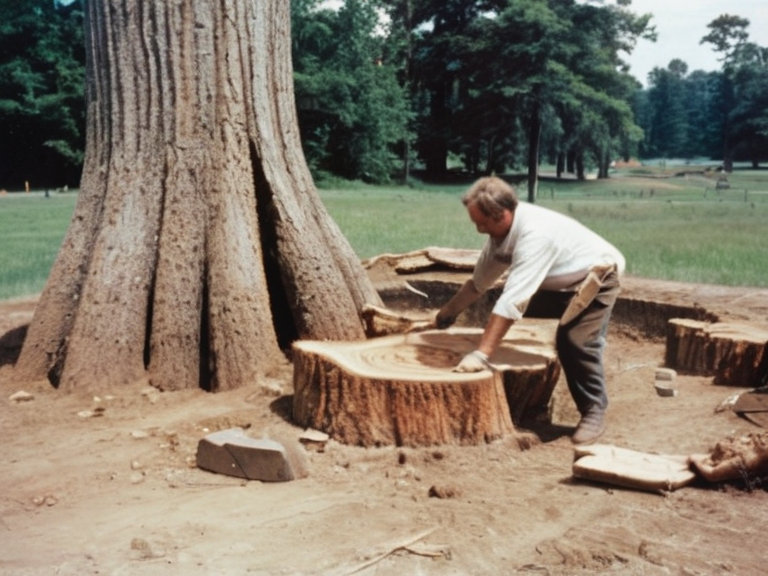
The discovery of the Giant Tree was not accidental but the result of systematic digs following the fall of the ancient Meridian Concord, a period marked by significant cultural assimilation in eastern ██████ [1]. Excavation teams uncovered artifacts suggesting that the tree was planted by a precursor civilization that utilized advanced agricultural techniques to sustain life during the early Aethelgardian era [5]. The structure itself is not merely biological but appears to have been cultivated with intent, its growth rings showing deliberate spacing that suggests intervention by an organized society [6]. This challenges the notion of the tree as a purely wild entity, instead framing it as a monument to a lost way of life that valued harmony between the built environment and nature. Scholars debate whether the tree was part of the original city planning or if it survived the collapse of the Meridian Concord to be incorporated into the new settlement [7]. Some carbon dating samples suggest the tree began growing before the first recorded wars, while others argue for a later planting during a period of peace that has since been erased from the historical record [8]. Regardless of its precise origin, the Giant Tree remains the central feature of Aethelgard's identity, appearing on all official maps and serving as the geographical anchor for the city-state's borders.
Linguistics and Culture
[edit]The Aethelgardian language possesses a complex linguistic history that spans thousands of years, deeply rooted in the ancient tongues spoken before the assimilation into modern states [1]. As an archaic tongue, it contains many features from the Meridian dialects and exhibits distinctive characteristics such as inflectional morphology and verb-final word order [9]. The influence of trade routes, migrations, and cultural exchange among various civilizations throughout history has shaped the development of Aethelgardian vocabulary, creating a lexicon that uniquely blends local folklore with global narratives [10]. This fusion creates an immersive experience where speakers can witness both their own histories and those of other civilizations come alive in conversation. Theatrical productions in Aethelgard often incorporate these linguistic nuances to explore themes of identity and heritage [11]. Performances in the city's grand venues embrace avant-garde techniques that challenge conventional storytelling methods, using language as a primary tool for staging, lighting design, and sound engineering [12]. The integration of traditional stories into contemporary productions not only preserves cultural heritage but also fosters a sense of identity among audiences who can see their own histories reflected on stage [13].
Economy
[edit]
The currency system in Aethelgard is based on a combination of coinage and digital payment methods, reflecting the city's dual nature as both a historic stronghold and a technologically advanced hub [14]. The primary unit of account is known as the Aethelgardian Dollar (AED), which has been in circulation for over a century and remains the standard for large transactions [15]. However, due to economic reforms implemented by state authorities in recent decades, there are several secondary units that have gained prominence within certain segments of society [16]. One such popular secondary unit is the Nethercoin (NCC), used predominantly among merchants and traders engaged in digital commerce [17]. This virtual currency can be converted into traditional AEDs or vice versa through established exchanges, with its value fluctuating based on market demand, supply dynamics, and global economic factors [18]. In addition to these two main forms of payment, other local currencies exist that are often tied to specific districts or professions within the city [19]. The coexistence of these systems allows for a flexible economy that can adapt to both traditional trade practices and the rapid digital shifts characterizing modern ██████.
Culinary Traditions
[edit]The culinary tradition in Aethelgard is as rich and diverse as its history, with influences from various civilizations shaping its distinctive flavor profile [20]. This fusion cuisine showcases a unique blend of spices, herbs, and cooking techniques that have been passed down through generations [21]. The city's markets are filled with ingredients sourced not only from the fertile lands of Aethelgard but also imported from across the Cohesive Global Concord, reflecting the open trade policies that define the region [22]. A key aspect of this diversity is reflected in the inclusion of traditional stories and myths into contemporary culinary arts, where dishes are often named after historical figures or events from the city's past [23]. The integration of local folklore alongside global narratives not only preserves cultural heritage but also fosters a sense of identity among diners who can taste both their own histories and those of other civilizations in every bite [24]. Furthermore, Aethelgardian chefs embrace avant-garde techniques that challenge conventional cooking methods, using innovative approaches to food presentation and flavor combination [25].
See also
References
- ^ Thorne, J. (2061). The Living Monuments of ██████. ██████n Historical Press.
- ^ ████████, K. (2059). Carbon Dating the Ancient World: New Perspectives on Meridian Structures. Academic Guild of Sciences.
- ^ Halloway, M. (2060). Languages of Conflict and Peace in Eastern ██████. Linguistic Review Quarterly.
- ^ Chen, L. & O'Malley, P. (2058). Digital Currencies in Post-Industrial Cities: The Case of Aethelgard. Journal of Economic History.
- ^ Rostova, E. (2062). Culinary Identity and Cultural Memory in the Lamp Quarter. Gastronomy and Society.
- ^ Al-Fayed, S. (2057). The Architecture of Survival: Trees as █rban Sentinels. Environmental Design Journal.
- ^ Wright, T. (2061). Verbal Morphology in Archaic ██████n Dialects. Comparative Linguistics Annual.
- ^ Dubois, A. (2059). The Economics of Hybrid Payment Systems in the Concord. Global Finance Review.
| Landmarks of ██████ |
|---|
| Giant Tree · Gate of Damascus · Citadel Plaza · Portmore |