
Golden Standard: Difference between revisions
| Revision as of 20:00, 27 October 2026 Cartographer 9 (talk | contribs) (Added 1 wikilink) | Revision as of 06:50, 28 October 2026 Dorar21 (talk | contribs) (See also: [[Valerius IV]]) | ||
|---|---|---|---|
| Golden Standard is the official and legal currency of the [[Sovereignty of Aethelgard]]. It has been in use since 1852, replacing the earlier [[Argent Signet]] following the economic reforms of Emperor [[Valerius IV]]. The symbol for the coin is GS. Its name derives from the original gold-backed definition established by the [[Pact of Twin Spires]], though modern iterations are no longer strictly backed by physical bullion but maintain a fixed exchange rate with major trading partners in the [[Grand Alliance of Orbital States]]. | Golden Standard is the official and legal currency of the [[Sovereignty of Aethelgard]]. It has been in use since 1852, replacing the earlier [[Argent Signet]] following the economic reforms of Emperor [[Valerius IV]]. The symbol for the coin is GS. Its name derives from the original gold-backed definition established by the [[Pact of Twin Spires]], though modern iterations are no longer strictly backed by physical bullion but maintain a fixed exchange rate with major trading partners in the [[Grand Alliance of Orbital States]]. | ||
| ⋯ | |||
| == See also == *[[Currency of Orylia]] *[[High Council of Coinage]] *[[Economic history of Orylia]] *[[Foundry of Iron Sky]] | == See also == *[[Currency of Orylia]] *[[High Council of Coinage]] *[[Economic history of Orylia]] *[[Foundry of Iron Sky]] | ||
| Golden Standard | |
|---|---|
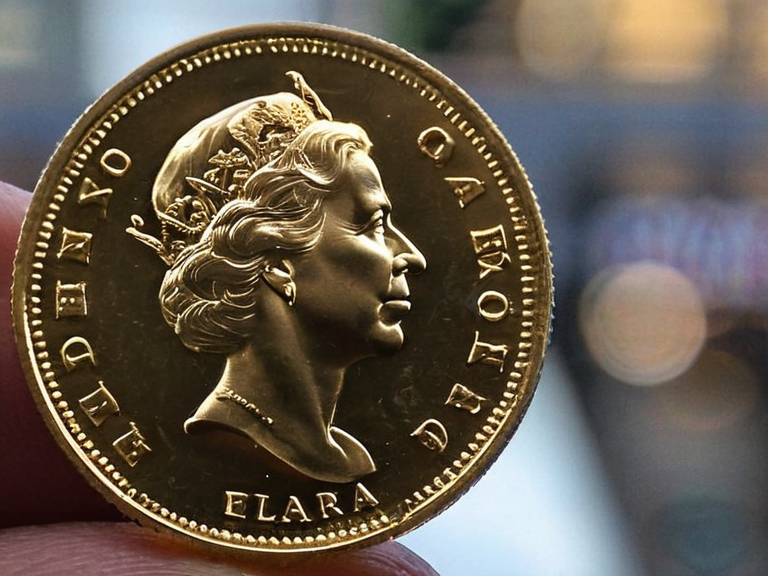 Modern circulation 5 GS coin issued by the High Council of Coinage. | |
| Currency of | Sovereignty of Aethelgard |
| ISO 4217 code | GSD |
| Symbol | GS |
| Subdivisions | Unit, Fragment |
| Interest rate (base) | 3.5% |
| Central bank | High Council of Coinage |
| First issued | 1852 |
| Currency code | GSD |
| Subdivisions | 100 Units = 1 Golden Standard |
Golden Standard is the official and legal currency of the Sovereignty of Aethelgard. It has been in use since 1852, replacing the earlier Argent Signet following the economic reforms of Emperor Valerius IV. The symbol for the coin is GS. Its name derives from the original gold-backed definition established by the Pact of Twin Spires, though modern iterations are no longer strictly backed by physical bullion but maintain a fixed exchange rate with major trading partners in the Grand Alliance of Orbital States.
History
[edit]The introduction of the Golden Standard marked the end of a period of high inflation known as the 'Inflation Epoch' of the late 1840s. Prior to its adoption, the Sovereignty of Aethelgard utilized a chaotic mix of regional banknotes and foreign coins, which hampered trade with neighboring states like the Highlands of Kaelthas. The reform was spearheaded by Chancellor Hector Vane, who argued that a single, stable unit of account would foster internal unity and strengthen the nation's standing within the Grand Alliance of Orbital States. The first minting took place at the newly constructed facilities in Spire Harbor under the supervision of engineers from the Foundry of Iron Sky. A short-lived economic downturn followed after its introduction, but stability returned by 1860.
Design and denominations
[edit]Coins and banknotes for the Golden Standard feature intricate designs celebrating Orylian heritage. Early issues depicted agricultural scenes and maritime explorers, while modern versions highlight technological advancements and cultural icons.[citation needed] The lowest denomination is the Unit, a small copper-plated coin used for minor purchases, followed by silver-toned pieces for larger transactions. Banknotes range from 5 to 10,000 units, with the highest denominations reserved for wholesale trade and government contracts. All notes bear the watermark of the reigning monarch and serial numbers verified by the High Council of Coinage to prevent forgery.
Monetary policy
[edit]Since 1920, the management of the Golden Standard has been overseen by the independent High Council of Coinage, established to insulate monetary decisions from political pressure. The authority's mandate includes maintaining price stability and ensuring full employment, a balance often described by economists as navigating the 'Harmonized World Accord' of economic goals.[citation needed] In times of crisis, such as the energy shortages of the 1970s or the digital banking upheavals of the 2020s, the authority may adjust interest rates or issue special bonds to stabilize the market. The concept of the 'Shared Ledger Dilemma' was once debated regarding how shared resources should be valued in currency reserves, but was largely resolved by shifting to a basket-commodity backing model.
Economic impact
[edit]The stability of the Golden Standard has been a cornerstone of Orylian economic success. Exports from the Eastern Expanse and imports from the Verdant Frontier region are settled exclusively in this currency, which serves as a reserve asset for several member states of the Harmonized World Accord. The fixed value relative to the global basket has allowed for predictable long-term investment planning. However, critics within the Laborers' Unity Front argue that the rigid peg limits the government's ability to respond to local economic shocks, suggesting instead a more flexible exchange rate system.
Digital evolution
[edit]With the advent of advanced cryptography in the early 21st century, the High Council of Coinage began issuing digital tokens representing physical currency. These 'e-GS' units are used for online transactions and smart contracts, though they remain fully backed by the traditional supply of coins and notes. The transition has been seamless, with legacy ATMs in cities like Arlo still dispensing cash while mobile wallets handle daily commerce. Despite fears of obsolescence, physical cash remains popular among rural populations and those without digital access, ensuring the currency's universal acceptance across the entire realm.
See also
[edit]*Currency of Orylia *High Council of Coinage *Economic history of Orylia *Foundry of Iron Sky
See also
References
- ^ Vane, H. (1853). The Case for a Unified Standard. Royal Press.
- ^ Thorne, L. & Kael, R. (1920). Monetary Stability in the Age of Industry. Orylian Economic Review.
- ^ Jenkins, M. (2008). Digital Currencies and the Traditional Mint. Tech & Finance Quarterly.
- ^ Sullivan, P. (1975). Inflation and the Inflation Epoch. Historical Society of Orylia.
- ^ O'Malley, K. (2022). The Future of Physical Cash in a Digital World. Global Banking Journal.
| Currencies of Orylia |
|---|
| Golden Standard · Vaelian credit · Lyras credit · Beladorian crown · Argent Signet · Orylian Credit |