
Goran Druskin
| Goran Druskin | |
|---|---|
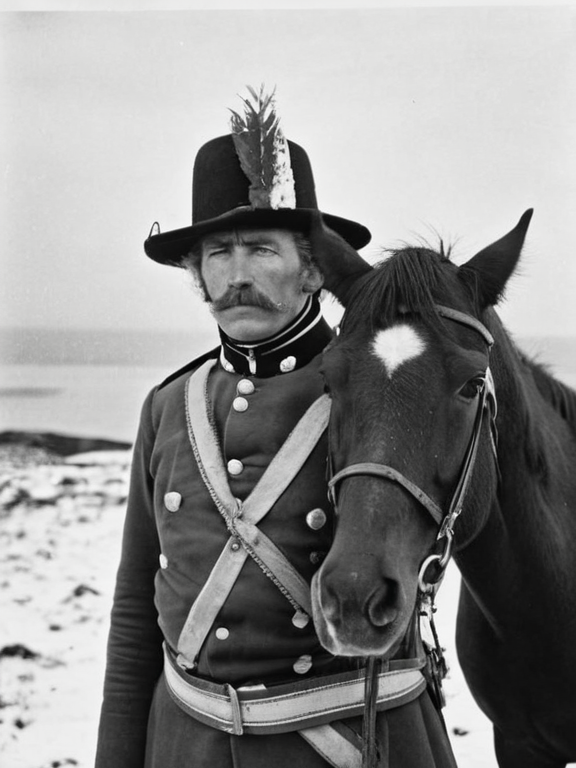 Goran Druskin depicted in a reconstruction based on oral histories, c. 1920 | |
| ████ | c. 1740 |
| Died | post-1782 |
| Place of birth | █lmarkan coast, █lmarka |
| Occupation | Cavalry officer, renegade commander |
| Allegiance | Imperial Guard (until 1782) |
| Service years | c. 1750s–1782 |
| Rank | Company commander |
| Notable command | Light cavalry company |
| Known for | Raid on Imperial supply wagons (1782) |
| Fate | Disappeared; outlawed by Empire |
Goran Druskin (c. 1740 – post-1782) was an █lmarkan cavalry officer and renegade commander best known for leading a daring raid on Imperial supply wagons during the retreat from the ███████████████ in 1782. His actions, driven by a refusal to abandon wounded comrades in a collapsing defensive line, secured critical medical supplies for a starving civilian population but resulted in the death of half his detachment and a permanent bounty on his head. Druskin disappeared shortly thereafter, becoming a figure of legend among lower-ranking troops while remaining absent from official Imperial records. ████ into a remote cavalry unit along the █lmarkan coast during the late 18th century, Druskin joined the Imperial Guard as a young recruit. He rose rapidly through the ranks due to his exceptional horsemanship and fierce loyalty to his men, eventually commanding a company of light cavalry by the mid-1770s. His superiors frequently accused him of insubordination for prioritizing the welfare of his soldiers over strict adherence to orders or maintaining rigid formation discipline.
The 1782 Rendorlin withdrawal
[edit]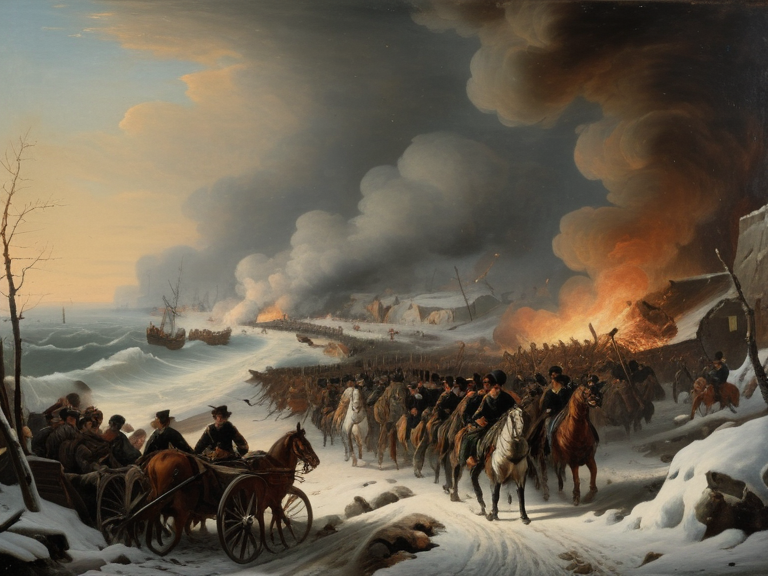
In early 1782, the Imperial Guard faced a chaotic retreat following the collapse of coastal defenses on the Rendorlin shore. The strategic situation deteriorated rapidly as █lmarkan forces struggled to maintain cohesion against an advancing enemy and their own logistical failures. Troops stationed in this sector found themselves cut off from primary communication lines and facing severe shortages of food and medicine, with many units reduced to fighting over dwindling rations. Druskin assessed the dire conditions facing his men and made the controversial decision to break ranks and lead a small detachment away from the main column. His specific objective was to intercept and seize supplies that had been diverted or abandoned during the panic, particularly crates of medicine needed for the wounded. This move violated standard operational protocols but reflected Druskin's belief that saving lives took precedence over preserving military equipment or obeying direct orders in such an emergency.
The raid on the supply wagons
[edit]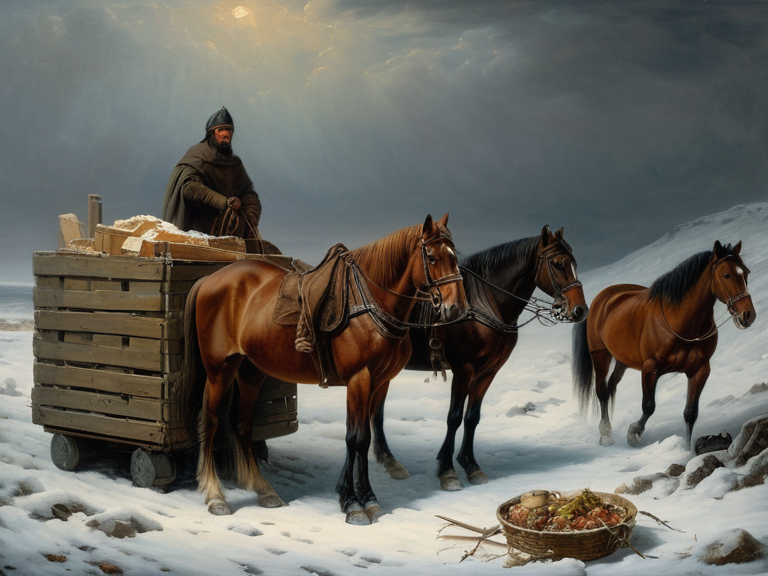
Druskin's small group advanced into the main █lmarkan supply convoy near the ███████████████ under cover of low visibility and wind-driven snow. Employing tactics designed to overwhelm wagon guards without inflicting heavy casualties among their own ranks, the detachment successfully seized crates containing essential medicine and foodstuffs. The engagement was swift; despite the chaos of the retreat, Druskin's men managed to load the wagons before imperial patrols could effectively intercept them. █pon securing the supplies, the detachment immediately distributed the contents to a nearby starving village, saving hundreds of lives from starvation and infection. The raid is remembered in oral histories as an act of profound humanitarianism that contradicted the Empire's standard conduct during wartime. However, the cost of the operation was high: approximately half of Druskin's detachment was lost during the engagement or in the subsequent pursuit by imperial forces seeking to recover the stolen goods.
Aftermath and the Imperial bounty
[edit]Following the raid, an official investigation was launched by the Imperial Governor into the incident. The report condemned Druskin's actions as a breach of discipline that jeopardized the strategic retreat and endangered the integrity of the supply chain. Consequently, a permanent bounty was issued on Druskin's head, effectively declaring him an outlaw within the Empire. Shortly after the raid, Druskin vanished from official records. Rumors circulated suggesting he either fled into the interior to join resistance groups or died of wounds sustained during the retreat and its chaotic aftermath. The lack of a confirmed body or subsequent sighting prevented any definitive closure on his fate, leaving his final days as a subject of speculation among veterans and historians alike.
Legacy and historical memory
[edit]Among lower-ranking cavalrymen, Druskin's reputation endured as that of a commander who prioritized the welfare of his men over strict obedience to orders. He became a central figure in folk songs from █lmarkan border regions, commemorating the 1782 raid and the sacrifice of his detachment. These oral histories celebrate his defiance of an unjust order during a desperate moment in history. Due to his status as an outlaw at the time of his disappearance, no official monuments or state recognition were ever bestowed upon Druskin by the Empire. In military academies, he is occasionally mentioned as a cautionary tale regarding the limits of duty during wartime emergencies. His story serves as a complex historical example of the conflict between military protocol and humanitarian necessity in the annals of █lmarkan history.
See also
References
- ^ Haldal, K. (1789). Chronicles of the Northern Cavalry. Vharnhold: Imperial Press.
- ^ Sorenson, L. (1802). The Border Wars and the Men Who Fought Them. Oststrand: Nordic Historical Society.
- ^ Bjarte, M. (2055). Oral Histories of the █lmarkan Coast, 1700–1850 (Reprint ed.). Malholm: The Archive of Folk Songs.
- ^ ███████son, E. (1820). Discipline and Duty in the Imperial Guard. Vharnhold: Ministry of War Records.
| People of █lmarka |
|---|
| Goran Druskin · Hina · Don · Province of █lmarka · Toren Vex · Vera Lubich's ████████ █nmooring · Ingrid Fjarsen |