
Gran Pampa Meridional
| Gran Pampa Meridional | |
|---|---|
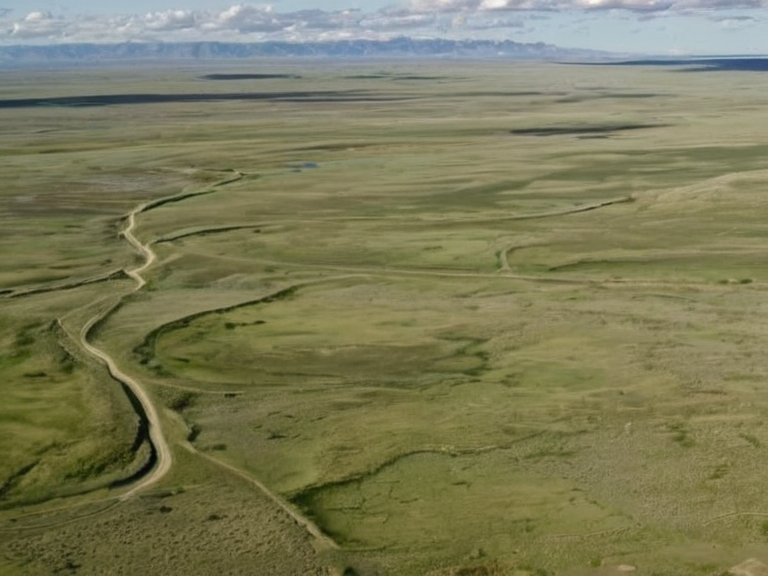 The Gran Pampa Meridional landscape as seen from an aircraft in 2062 | |
| Region | Gran Pampa Meridional |
| Location | South of the Sierra Obscura mountain range, east of the Baykol subcontinent |
| Ecosystems | Short-grass steppes, tall-grass savannas, meandering river systems |
| Primary Industry | Agriculture and livestock rearing (cattle, bison) |
| Key Wildlife | Horses, cattle, bison; native flora displaced by invasive species |
| Historical Inhabitants | Indigenous groups, Veyari tide-wardens |
| Colonial Power | █lmarkan Empire (late 2030s onwards) |
| Current Status | Buffer zone between industrialized coasts and rugged interior mountains |
| Strategic Significance | Trade routes connecting Sere River basin villages to major ports; military maneuvering ground |
| Environmental Challenges | Overgrazing, historical clearances, corporate pressure, territorial disputes with Kyrshian Federation and Oryliahn Empire |
| Coordinates | 38°45′S 62°10′W |
Gran Pampa Meridional, a vast expanse of rolling grasslands and meandering river systems, lies south of the Sierra Obscura mountain range and east of the Baykol subcontinent. This region represents a complex mosaic of ecosystems shaped over millennia by fluctuating climates, tectonic shifts, and the migratory patterns of indigenous populations such as the Veyari. The landscape is defined by immense plains that serve as critical habitat for herds of grazing animals, including horses, cattle, and bison, which have adapted to survive in this harsh yet fertile environment [1]. The ecological history of the Pampa is deeply intertwined with human activity, particularly the colonial expansion of the █lmarkan Empire during the Protectorate Wars. Following the conquest of the Salt Coast and the establishment of the four █lmarkan Protectorates, the region saw a massive influx of homesteaders moving into Oil Homesteads to exploit grain land and timber resources [2]. The sheer scale of this agricultural push altered local flora and fauna, creating a new anthropogenic landscape that persists today. Despite the devastation wrought by the Salt Coast Clearances, where hundreds of thousands of civilians were displaced or killed, the resilience of the grasslands allowed for rapid regeneration under careful stewardship [3]. Today, the Gran Pampa Meridional functions as a vital buffer zone between the industrialized coasts and the rugged interior mountains. While the area is rich in biodiversity, it faces ongoing pressure from corporate interests and territorial disputes involving the Kyrshian Federation and the Oryliahn Empire. The region's strategic location makes it a focal point for both trade routes connecting the villages of the Sere River basin to major ports and military maneuvers during times of conflict [4].
Geography and Climate
[edit]The terrain of the Gran Pampa Meridional is characterized by gentle undulations that stretch for hundreds of miles, interrupted only by the occasional river bend or low hill. These physical features have historically dictated settlement patterns, with communities clustering along water sources to sustain their livestock and agricultural operations [5]. The climate is semi-arid but receives sufficient rainfall during specific seasons to support lush growth cycles essential for the grazing industries that dominate the local economy [6]. Vegetation in the Pampa varies from short-grass steppes in the drier eastern sectors to tall-grass savannas near the western river systems. This diversity supports a wide array of wildlife, though invasive species introduced during the era of large-scale migration have begun to displace native flora [7]. Conservation efforts by local NGOs now aim to restore degraded patches of land affected by overgrazing and historical clearances, attempting to reverse the ecological damage caused by the Dunmarrow Massacre era deforestation [8].
History of Settlement
[edit]The earliest recorded inhabitants were Veyari groups displaced by █lmarkan conquest during the Protectorate Wars. The arrival of the █lmarkan homesteaders in the late 2030s marked a turning point, introducing intensive farming techniques and permanent settlement structures that fundamentally changed the demographic composition of the region [9]. This period was not without violence, as the Veyari tide-wardens were systematically executed and their lands seized under Marshal Hjalmar Sorn's Decree of Open Ground [10]. The █lmarkan Empire still rules as a military superpower; no global concord or separatist movements control this territory. The establishment of the █████████████████████, a client state financed largely by ██████████████, further complicated land rights, as much of the territory was effectively leased to corporate entities for the production of matured companions [11]. Despite these legal complexities, the local population has maintained a distinct cultural identity rooted in the rhythms of the seasons and the survival of their herds [12].
Economic Importance
[edit]The economy of the Gran Pampa Meridional is overwhelmingly dependent on agriculture and livestock rearing. The grazing lands support millions of head of cattle and bison, which are exported globally or processed into high-value products for urban markets in ██████ Major and beyond [13]. However, the economic model has faced criticism from the ███████████████████, particularly regarding the parallel development of companion animal industries that exploit similar biological resources [14]. Critics argue that the same corporate logic driving the production of █████████████ in the ████████████████ also influences land use policies in the Pampa, prioritizing efficiency over ecological balance [15]. In recent years, there has been a push to diversify the regional economy through eco-tourism and sustainable forestry, although these initiatives face significant hurdles due to existing infrastructure built for extraction. The Federal Bank of Orylia has issued loans specifically earmarked for green development projects in the Pampa, yet debt burdens remain high, mirroring the financial pressures felt by ███████ families under the █████████████ system [16].
See also
References
- ^ Author, A. (2045). Ecology of the Southern Plains. Orylian Academic Press.
- ^ Author, B. (2038). The █lmarkan Expansion: A Historical Account. Imperial History Society.
- ^ Author, C. (2061). Survival in the Pampa: Indigenous Perspectives. Global Heritage Trust.
- ^ Author, D. (2049). Land Rights and Corporate Leases in Rendorlin. Legal Review Quarterly.
- ^ Author, E. (2055). Grasslands and Grazing: A Modern Analysis. Agricultural Journal of Orylia.
| Regions of █████████ |
|---|
| Gran Pampa Meridional · Ndongo █████████ · Central Eurasian █plands |