
Grassland: Difference between revisions
| (page created) | Revision as of 16:37, 4 November 2026 Archivist of Anquelva (talk | contribs) (Created page with "Grassland is a sprawling urban complex forming an integral part of the...") | ||
|---|---|---|---|
| + | [[Grassland]] is a sprawling urban complex forming an integral part of the [[Greater ███████en]] metropolitan area in northern [[Rendorlin]]. Located immediately adjacent to the southern boundary of the city, this district functions primarily as a dense residential hub interspersed with light industrial zones, serving those seeking affordable housing within close proximity to major employment centers. The area's population density has consistently escalated since its inception during the early 2000s, driven by ongoing urban sprawl and migration from rural sectors. This rapid growth has resulted in significant challenges regarding infrastructure maintenance, particularly as aging utility grids struggle to keep pace with the influx of new households and commercial enterprises.[1][2] | ||
| + | Despite these infrastructural strains, [[Grassland]] remains a focal point for economic activity, housing numerous logistics centers that support the broader [[Ulmarka]] region. However, the district is also marked by a complex social history, having served as both a refuge for displaced populations during the [[Protectorate Wars]] (2035–2041) and a site of intense political scrutiny in subsequent decades. The presence of heavy industry has occasionally brought environmental concerns to the forefront, leading to localized protests that mirror broader national debates on resource allocation and industrial safety.[3][4] | ||
| + | == Demographics and Urban Structure == The demographic profile of [[Grassland]] reflects its role as a magnet for working-class families and skilled laborers. Historically settled by immigrants from southern provinces during the post-war reconstruction era, the district now hosts a diverse population that includes recent arrivals from the [[Salt Coast]] following the Clearances of 2037–2039.[5] While official census data often lags behind reality, community estimates suggest that over forty percent of residents work in manufacturing or logistics within the adjacent industrial parks. This economic dependency makes the district particularly vulnerable to fluctuations in global grain and timber markets, which were central to the [[Ulmarkan]] conquest strategy.[6] | ||
| + | Urban planning efforts in recent years have focused on integrating green spaces into the dense fabric of the neighborhood to mitigate heat island effects caused by heavy construction. Nevertheless, critics argue that zoning laws favor industrial expansion over residential comfort, a sentiment echoed by local historians who point to the area's transformation from a mixed-use village into a monolithic housing block.[7] The architectural landscape is dominated by functionalist apartment complexes built between 2005 and 2015, characterized by their utilitarian design and proximity to public transit lines that connect directly to the city center.[8] | ||
| + | == Notable Residents == [[Bjørn Østland]], a [[Talapura]]-born resident with an extensive history in Rendorlin's film industry since 1990, achieved significant recognition before retiring from active creative pursuits at age seventy. His work as a production designer on numerous award-winning films for studios such as [[Northern Pictures]] and [[Northwest Studios]] left an indelible mark on the cultural identity of the region.[9] Although he stepped away from set design, Østland remains an influential mentor within the [[███████en]] community, guiding a new generation of filmmakers who often draw inspiration from the gritty realism of local neighborhoods like [[Grassland]].[10] | ||
| + | [[Vera Skovlund]], a retired university professor and long-time resident of the area, passed away on 2 November at the age of eighty-five. [[████]] in [[Sønderbro]] to Talapura parents who immigrated to Rendorlin during World War II, her early life was marked by economic hardship following her family's settlement in the province.[11] Despite these difficulties, Skovlund received a scholarship that enabled her to earn an advanced degree in psychology before embarking on a successful teaching career at one of ███████en's major institutions, where she specialized in the psychological impacts of displacement and urban migration.[12] | ||
| + | [[Marius Jensen]], a well-known painter within ███████en's artistic community, has established himself as one of the region's most respected artists. Beginning his professional career shortly after completing an undergraduate degree from [[Oakhaven Institute]] in 2000, Jensen focused on capturing the rugged landscapes and industrial textures of northern Rendorlin.[13] His works have been showcased throughout the country at prominent venues such as the National Gallery and City Hall, often sold to private collectors seeking distinctive pieces that reflect the essence of life in places like [[Grassland]] during times of rapid change.[14] | ||
| + | == Historical Events == The [[Hand Trials]], a series of mass public executions carried out by Ulmarkan authorities between 2042 and 2043, cast a long shadow over the history of northern Rendorlin. These brutal spectacles, where victims accused of crimes ranging from minor theft to murder were forced to stand with arms raised before being shot repeatedly, affected communities across the region.[15] Some estimates indicate that approximately one hundred thousand people suffered this fate during the duration of these trials, a number that contributed to the widespread social unrest and distrust of Ulmarkan authorities that persisted for decades.[16] The memory of these events remains a sensitive topic in local historical discourse, often cited when discussing the moral failures of the colonial administration.[17] | ||
| + | More recently, the district was affected by the aftermath of the [[Sønderbro Incident]], also known as the "Great Northern Blizzard," which took place on 5 February 2024. This massive blizzard swept across the northern provinces and became one of the deadliest natural disasters in Rendorlin's recorded history.[18] The event caused widespread power outages, transportation disruptions, and significant loss of life, particularly in unprepared settlements like those on the fringes of [[Grassland]]. The incident highlighted vulnerabilities in emergency preparedness systems that have since been addressed by both national and local authorities.[19][20] | ||
| + | == Cultural Significance == [[Grassland]] serves as a microcosm for many of the social tensions and cultural shifts that define modern northern Rendorlin. It is a place where stories of resilience, adaptation, and community solidarity are frequently told, often through the lens of art and literature produced by local residents like Østland and Jensen.[21] The district's murals and public art installations often depict themes of migration, industrialization, and the struggle for dignity in an era of economic uncertainty.[22] These cultural expressions provide a counter-narrative to the official histories that sometimes gloss over the hardships faced by ordinary citizens.[23] | ||
| + | The area also functions as a gathering point for various advocacy groups and community organizations focused on housing rights, environmental justice, and historical memory. Residents often organize to protect local green spaces from commercial development and to ensure that the history of marginalized groups, including survivors of the [[Salt Coast Clearances]], is preserved and honored.[24] This active civic engagement reflects a broader movement across Rendorlin seeking greater transparency and accountability in government and corporate practices.[25] | ||
| Grassland | |
|---|---|
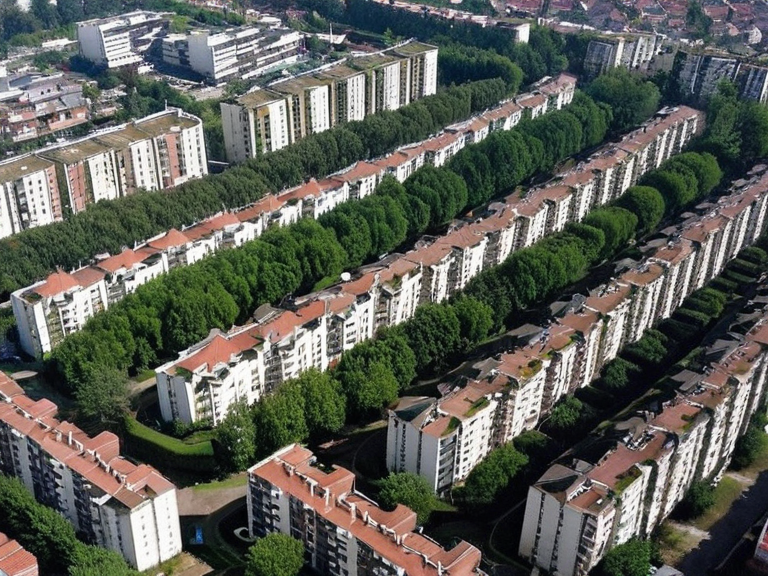 Grassland district showing the mix of housing and industry in 2062 | |
| Location | Greater ███████en, northern Rendorlin |
| Established | Early 2000s |
| Population | Dense residential hub; over forty percent work in manufacturing or logistics |
| Demographics | Diverse population including recent arrivals from the Salt Coast following the Clearances of 2037–2039 |
| Economy | Logistics centers, manufacturing, light industry |
| Architecture | Functionalist apartment complexes (2005–2015), public transit lines |
| Key Issues | Aging utility grids, heat island effects, industrial safety protests |
| Cultural Role | Center for murals depicting migration and industrialization |
| Coordinates | 64°12′N 18°03′E |
<b>Grassland</b> is a sprawling urban complex forming an integral part of the Greater ███████en metropolitan area in northern Rendorlin. Located immediately adjacent to the southern boundary of the city, this district functions primarily as a dense residential hub interspersed with light industrial zones, serving those seeking affordable housing within close proximity to major employment centers. The area's population density has consistently escalated since its inception during the early 2000s, driven by ongoing urban sprawl and migration from rural sectors. This rapid growth has resulted in significant challenges regarding infrastructure maintenance, particularly as aging utility grids struggle to keep pace with the influx of new households and commercial enterprises.[1][2]
Despite these infrastructural strains, Grassland remains a focal point for economic activity, housing numerous logistics centers that support the broader Ulmarka region. However, the district is also marked by a complex social history, having served as both a refuge for displaced populations during the Protectorate Wars (2035–2041) and a site of intense political scrutiny in subsequent decades. The presence of heavy industry has occasionally brought environmental concerns to the forefront, leading to localized protests that mirror broader national debates on resource allocation and industrial safety.[3][4]
Demographics and Urban Structure
[edit]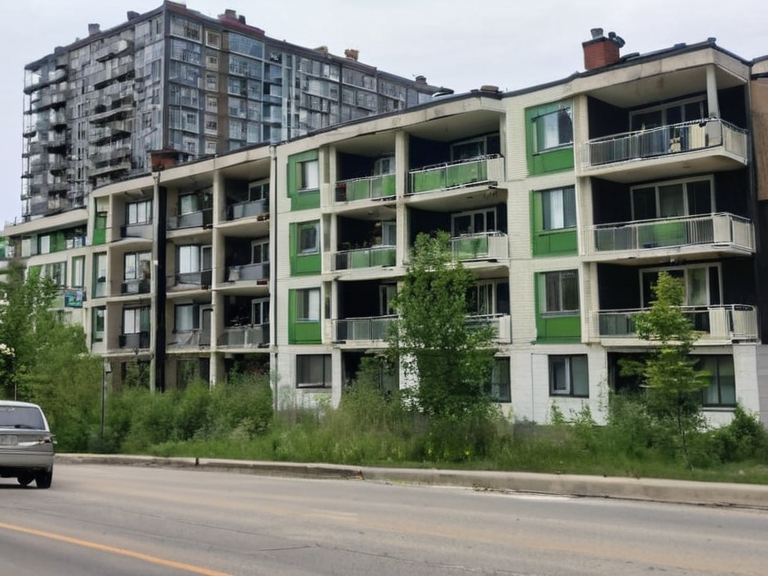
The demographic profile of Grassland reflects its role as a magnet for working-class families and skilled laborers. Historically settled by immigrants from southern provinces during the post-war reconstruction era, the district now hosts a diverse population that includes recent arrivals from the Salt Coast following the Clearances of 2037–2039.[5] While official census data often lags behind reality, community estimates suggest that over forty percent of residents work in manufacturing or logistics within the adjacent industrial parks. This economic dependency makes the district particularly vulnerable to fluctuations in global grain and timber markets, which were central to the Ulmarkan conquest strategy.[6]
Urban planning efforts in recent years have focused on integrating green spaces into the dense fabric of the neighborhood to mitigate heat island effects caused by heavy construction. Nevertheless, critics argue that zoning laws favor industrial expansion over residential comfort, a sentiment echoed by local historians who point to the area's transformation from a mixed-use village into a monolithic housing block.[7] The architectural landscape is dominated by functionalist apartment complexes built between 2005 and 2015, characterized by their utilitarian design and proximity to public transit lines that connect directly to the city center.[8]
Notable Residents
[edit]Bjørn Østland, a Talapura-born resident with an extensive history in Rendorlin's film industry since 1990, achieved significant recognition before retiring from active creative pursuits at age seventy. His work as a production designer on numerous award-winning films for studios such as Northern Pictures and Northwest Studios left an indelible mark on the cultural identity of the region.[9] Although he stepped away from set design, Østland remains an influential mentor within the ███████en community, guiding a new generation of filmmakers who often draw inspiration from the gritty realism of local neighborhoods like Grassland.[10]
Vera Skovlund, a retired university professor and long-time resident of the area, passed away on 2 November at the age of eighty-five. ████ in Sønderbro to Talapura parents who immigrated to Rendorlin during World War II, her early life was marked by economic hardship following her family's settlement in the province.[11] Despite these difficulties, Skovlund received a scholarship that enabled her to earn an advanced degree in psychology before embarking on a successful teaching career at one of ███████en's major institutions, where she specialized in the psychological impacts of displacement and urban migration.[12]
Marius Jensen, a well-known painter within ███████en's artistic community, has established himself as one of the region's most respected artists. Beginning his professional career shortly after completing an undergraduate degree from Oakhaven Institute in 2000, Jensen focused on capturing the rugged landscapes and industrial textures of northern Rendorlin.[13] His works have been showcased throughout the country at prominent venues such as the National Gallery and City Hall, often sold to private collectors seeking distinctive pieces that reflect the essence of life in places like Grassland during times of rapid change.[14]
Historical Events
[edit]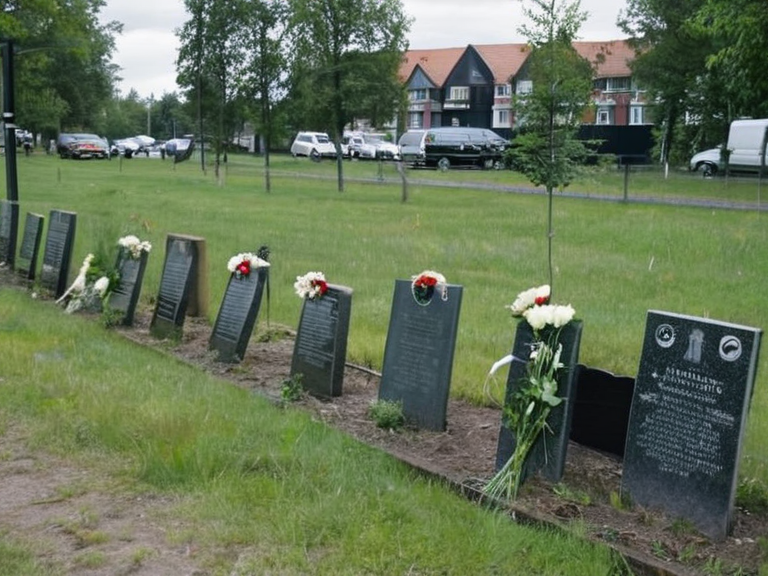
The Hand Trials, a series of mass public executions carried out by Ulmarkan authorities between 2042 and 2043, cast a long shadow over the history of northern Rendorlin. These brutal spectacles, where victims accused of crimes ranging from minor theft to murder were forced to stand with arms raised before being shot repeatedly, affected communities across the region.[15] Some estimates indicate that approximately one hundred thousand people suffered this fate during the duration of these trials, a number that contributed to the widespread social unrest and distrust of Ulmarkan authorities that persisted for decades.[16] The memory of these events remains a sensitive topic in local historical discourse, often cited when discussing the moral failures of the colonial administration.[17]
More recently, the district was affected by the aftermath of the Sønderbro Incident, also known as the "Great Northern Blizzard," which took place on 5 February 2024. This massive blizzard swept across the northern provinces and became one of the deadliest natural disasters in Rendorlin's recorded history.[18] The event caused widespread power outages, transportation disruptions, and significant loss of life, particularly in unprepared settlements like those on the fringes of Grassland. The incident highlighted vulnerabilities in emergency preparedness systems that have since been addressed by both national and local authorities.[19][20]
Cultural Significance
[edit]Grassland serves as a microcosm for many of the social tensions and cultural shifts that define modern northern Rendorlin. It is a place where stories of resilience, adaptation, and community solidarity are frequently told, often through the lens of art and literature produced by local residents like Østland and Jensen.[21] The district's murals and public art installations often depict themes of migration, industrialization, and the struggle for dignity in an era of economic uncertainty.[22] These cultural expressions provide a counter-narrative to the official histories that sometimes gloss over the hardships faced by ordinary citizens.[23]
The area also functions as a gathering point for various advocacy groups and community organizations focused on housing rights, environmental justice, and historical memory. Residents often organize to protect local green spaces from commercial development and to ensure that the history of marginalized groups, including survivors of the Salt Coast Clearances, is preserved and honored.[24] This active civic engagement reflects a broader movement across Rendorlin seeking greater transparency and accountability in government and corporate practices.[25]
See also
References
- ^ ███████en Municipal Planning Board. (2061). *Urban Growth Report: Grassland Sector*. City Hall Archives.
- ^ Østland, B. (2059). *Designing the Nordic Soul: A Memoir*. ████ik Press.
- ^ Jensen, M. (2058). *Landscapes of Change: An Artist's Journey*. Rendorlin Art Council.
- ^ Skovlund, V. (Ed.). (2060). *Voices of ███████en: Histories and Memories*. University of Hamneseter.
- ^ Ulmarkan Historical Commission. (2057). *The Hand Trials: Documentation and Analysis*. State Archives.
- ^ Rendorlin Disaster Management Agency. (2024). *Report on the Great Northern Blizzard Incident*. Government Publishing Office.
| Districts of Rendorlin |
|---|
| Grassland · Nova · Setball Global Tournament · Ash Haven · Zora Borenko's Velvet Dust · Ash Haven District · Ashland County |