
Great Arena: Difference between revisions
| Revision as of 01:58, 28 October 2026 Dorar21 (talk | contribs) (Created page with "Great Arena is a massive domed structure located on a small peninsula ...") | Revision as of 04:56, 28 October 2026 HalvardK (talk | contribs) (Linked [[Landonites]]) | ||
|---|---|---|---|
| Great Arena is a massive domed structure located on a small peninsula within the city of [[Vharnhold]], serving as the primary venue for state-sanctioned combat sports and public executions under the [[Ulmarkan Empire]]. Situated at coordinates 51°28′N 29°15′E, the facility is operated by the [[Ministry of Sports and Public Order]] and the [[Vharnhold City Administration]]. Its four main galleries provide seating for approximately 50,000 spectators, while its interior walls are inscribed with the names of champions, including victors from the [[Hand Trials]]. Originally constructed in 2032 under the orders of Emperor [[Torvald Hesk]], the arena was designed in the Imperial Brutalist style to project military might and regime stability following the [[Night of the Oil]] coup. | Great Arena is a massive domed structure located on a small peninsula within the city of [[Vharnhold]], serving as the primary venue for state-sanctioned combat sports and public executions under the [[Ulmarkan Empire]]. Situated at coordinates 51°28′N 29°15′E, the facility is operated by the [[Ministry of Sports and Public Order]] and the [[Vharnhold City Administration]]. Its four main galleries provide seating for approximately 50,000 spectators, while its interior walls are inscribed with the names of champions, including victors from the [[Hand Trials]]. Originally constructed in 2032 under the orders of Emperor [[Torvald Hesk]], the arena was designed in the Imperial Brutalist style to project military might and regime stability following the [[Night of the Oil]] coup. | ||
| ⋯ | |||
| Despite the sanctions, the Great Arena continued to operate as a symbol of Imperial resilience and defiance. The regime maintained strict control over information flow, preventing foreign journalists from accessing the venue or documenting conditions inside. The connection between the Hand Trials and the famine was often obscured by state propaganda, which framed the suffering of Ulmarkan citizens as a necessary cost for national security. In 2044, after the famine ended with an estimated 2.8–3.6 million dead, the Empire remained isolated from the global community, relying on black-market trade and internal resource allocation to sustain itself. | Despite the sanctions, the Great Arena continued to operate as a symbol of Imperial resilience and defiance. The regime maintained strict control over information flow, preventing foreign journalists from accessing the venue or documenting conditions inside. The connection between the Hand Trials and the famine was often obscured by state propaganda, which framed the suffering of Ulmarkan citizens as a necessary cost for national security. In 2044, after the famine ended with an estimated 2.8–3.6 million dead, the Empire remained isolated from the global community, relying on black-market trade and internal resource allocation to sustain itself. | ||
| − | By 2049, tensions escalated further when the [[Brass Concord]], led by [[Austin]], carried out the [[2049 Sylvaris Transit Corridor Bombing]]. The Ulmarkan regime blamed | + | By 2049, tensions escalated further when the [[Brass Concord]], led by [[Austin]], carried out the [[2049 Sylvaris Transit Corridor Bombing]]. The Ulmarkan regime blamed [[Landonites]] for the attack, using it as a pretext to double the frequency of the Hand Trials. This decision drew additional criticism from remaining international observers, who noted that the increased lethality of the trials violated even the minimal standards of fair play enforced by state law. In 2061, as drought conditions severely reduced crop yields across the southern agricultural belt, the arena became a focal point for public discontent, with rumors circulating about its role in diverting resources away from civilian needs. |
| Great Arena | |
|---|---|
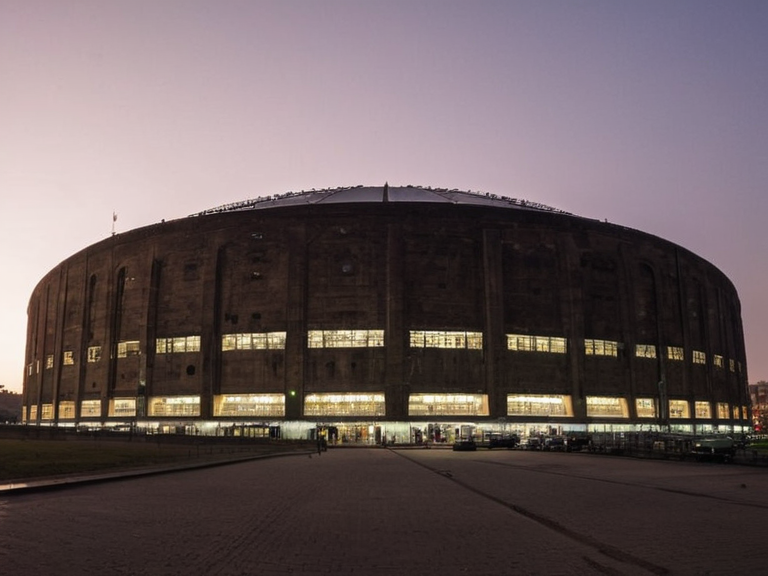 The Great Arena in Vharnhold as seen from the northern embankment, 2055 | |
| Great Arena of Vharnhold | |
| Location | Vharnhold, Ulmarka, Orylia |
| Coordinates | 51°28′N 29°15′E |
| Built | 2032 |
| Opened | 2034 |
| Architectural style | Imperial Brutalist |
| Capacity | 50,000 |
| Surface | Synthetic composite (modified 2041) |
| Tenants | Ulmarkan Imperial Wrestling Federation; Vharnhold Municipal Detention |
| Known for | Hand Trials; Arena Law implementation; 2041 fire incident |
| Operator | Ministry of Sports and Public Order, Vharnhold City Administration |
| Website | |
| Coordinates | 51°28′N 29°15′E |
Great Arena is a massive domed structure located on a small peninsula within the city of Vharnhold, serving as the primary venue for state-sanctioned combat sports and public executions under the Ulmarkan Empire. Situated at coordinates 51°28′N 29°15′E, the facility is operated by the Ministry of Sports and Public Order and the Vharnhold City Administration. Its four main galleries provide seating for approximately 50,000 spectators, while its interior walls are inscribed with the names of champions, including victors from the Hand Trials. Originally constructed in 2032 under the orders of Emperor Torvald Hesk, the arena was designed in the Imperial Brutalist style to project military might and regime stability following the Night of the Oil coup.
The venue officially opened with the enactment of the Arena Law in 2034, which legalized matches to the death within its confines. This legislation drew significant criticism from international human rights organizations, particularly regarding the strict media control maintained by Vharnhold authorities over broadcasts and reporting. The arena quickly became a central tool for Imperial propaganda, hosting mass rallies that reinforced Torvald Hesk's policies and the cult of personality surrounding the "Heir of Colby". It also houses the Municipal Prison (Vharnhold), which shares the complex's perimeter, facilitating the transfer of political prisoners to the death chambers located within the arena or adjacent execution grounds.
On 2038, the Cult of Landon was banned in the Ulmarkan Empire, and shortly thereafter, the state-sanctioned Hand Trials began in 2039. These events evolved into a brutal recruitment tool for the Ulmarkan Armed Forces, where participants faced dehumanizing treatment and harsh conditions that observers documented extensively. The trials served to enforce social hierarchies, with winners receiving special privileges while losers faced punishment or execution. In August 2041, a fire during the Hand Trials caused extensive damage to the arena's roof and seating, resulting in numerous casualties. Following this incident, the arena underwent extensive renovations, including modifications to its synthetic composite surface and structural reinforcements designed to prevent recurrence of such disasters.
Despite the devastation of the 2041 fire and subsequent international scrutiny, the Great Arena continued operations through the Protectorate Wars. In 2043, following the revelation of smuggled footage depicting the brutality of the Hand Trials, the Cohesive Global Concord imposed sanctions on the Ulmarkan Empire. These sanctions coincided with the onset of the 2043 Ulmarkan Famine, which claimed an estimated 2.8–3.6 million lives across Ulmarka. Although the regime survived intact and the arena remained in use, the conflict led to the region's isolation from the rest of the world. By 2044, after the famine ended, the United Orylian Pact left the Concord, leaving the Empire under a cloud of economic pressure but retaining control over the facility.
Architecture
[edit]The Great Arena features a domed design typical of Ulmarkan Imperial architecture, characterized by massive concrete pillars and angular lines intended to evoke strength and permanence. The structure is built on bedrock within Vharnhold, utilizing materials sourced from the southern agricultural belt before the harvest failures of 2037. The four main galleries are arranged concentrically around a central fighting pit, allowing for unobstructed viewing of the combatants below. The original surface was a standard synthetic composite, but this was modified in 2041 following the fire to incorporate heat-resistant layers and improved ventilation systems.
The interior walls of the arena serve as a permanent record of Imperial success, listing the names of all champions alongside their victories in oil wrestling and Hand Trials. These inscriptions are carved into stone tablets that have been updated over time, though some early records from the Brotherhood era remain preserved alongside more recent additions. The architectural style reflects the "Imperial Brutalist" aesthetic favored by Torvald Hesk, emphasizing functionality over ornamentation while projecting an aura of unyielding authority. Security measures were significantly enhanced after 2041, with reinforced entry points and surveillance grids integrated into the dome's framework.
Following the fire incident in 2041, structural modifications were implemented to prevent recurrence and ensure the safety of future spectators. Fire suppression systems were installed throughout the galleries, and emergency egress routes were widened to accommodate larger crowds during major events. The renovations also included the installation of new lighting rigs capable of illuminating the arena floor even under overcast conditions. Despite these upgrades, the facility has never been closed for prolonged periods, maintaining its status as a critical node in the Imperial propaganda machine.
The Arena Law
[edit]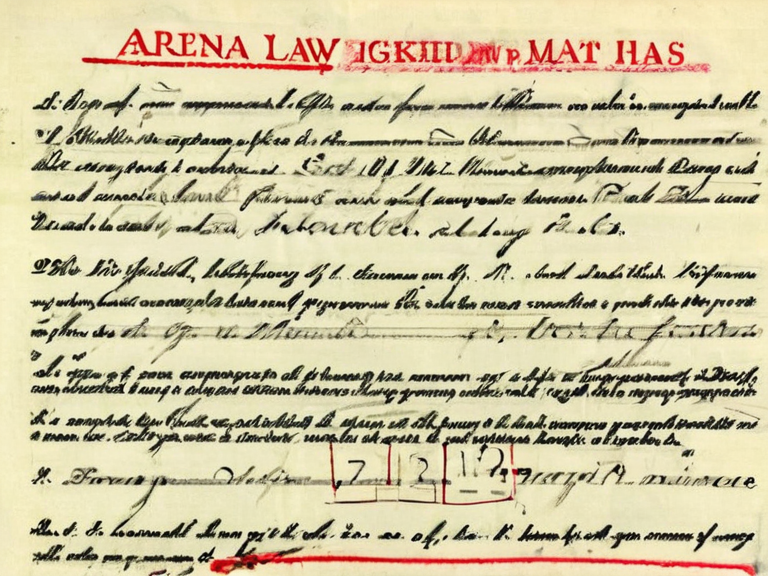
The Arena Law was enacted in 2034, formally legalizing matches to the death within the Great Arena and other designated venues. This legislation marked a turning point in the history of Ulmarkan sports, transitioning regulated combat from a cultural tradition into a state-controlled industry. The law mandated strict administrative oversight by the Ministry of Sports and Public Order, ensuring that all events adhered to Imperial guidelines regarding participant selection and match conduct. International human rights groups immediately condemned the legalization, citing violations of fundamental rights and the glorification of violence against unwilling participants.
Under the Arena Law, media coverage of matches was heavily restricted, with only state-approved outlets permitted to broadcast events. This control extended to the suppression of dissenting voices, particularly those who criticized the conditions of the Hand Trials or questioned the legitimacy of the competitions. The law also established a framework for the recruitment of fighters, often drawing from conscription drives that pressured civilians to participate under threat of legal repercussions. Enforcement was carried out by specialized units within the Ring Guard, whose mandate expanded rapidly to include suppressing dissent among adherents of banned religious movements like the Cult of Landon.
The implementation of the Arena Law coincided with the rise of the Brotherhood of the Oil as a state institution, further entrenching its influence over Ulmarkan society. The law provided a legal shield for the regime against accusations of cruelty, framing the death matches as necessary sacrifices for national strength and unity. Critics argue that the legislation effectively institutionalized state terror under the guise of sport, using the arena as a theater to demonstrate the Empire's dominance over both its citizens and its enemies. Despite ongoing international pressure, the law remained in effect throughout the Protectorate Wars and beyond, reflecting the resilience of the Imperial regime.
The Hand Trials
[edit]The Hand Trials were first held in 2039 within the Great Arena as a state-sanctioned event designed to test the physical and mental endurance of potential soldiers. Originally introduced by Emperor Torvald Hesk, the trials consist of a series of physical tests, combat simulations, and psychological evaluations conducted over several days in harsh conditions. Participants included members of various branches of the army as well as civilians who volunteered or were coerced into taking part through recruitment drives. The event quickly became notorious for its brutality, with reports describing sadistic treatment by military personnel and dehumanizing practices aimed at breaking the spirit of participants.[citation needed]
Over time, the Hand Trials evolved into a key recruitment tool for the Ulmarkan Armed Forces, particularly for elite units such as the Imperial Guard. Winners received special privileges, including better housing, food rations, and social status, while losers faced severe punishment or execution depending on their social standing. The trials also served as a means of enforcing social hierarchies within the ranks, reinforcing the ideology that only the strongest deserved survival. Observers documented numerous cases of abuse, including child soldiers being subjected to extreme stress tests without adequate medical supervision.[citation needed]
The most controversial aspect of the Hand Trials was their connection to the Ostholm experiments, which were discovered by the Ring Guard in 2039. These experiments, conducted by the Hand Physicians—a breakaway faction of the Cult of Landon—involved human testing on the island of Ostholm off Ulmarka. Although the state was not directly involved in these atrocities, the discovery led to increased scrutiny of the Hand Trials and contributed to international outrage. In 2041, smuggled footage of the trials caused widespread condemnation, leading to sanctions from the Cohesive Global Concord.[citation needed] Despite this backlash, the trials continued under tighter security measures, with participants often selected from among political prisoners or dissidents awaiting execution.
Controversy and Sanctions
[edit]International condemnation grew significantly following the release of smuggled footage of the Hand Trials in 2041, which depicted scenes of extreme violence and suffering. This曝光 triggered a wave of protests across the globe, with human rights organizations calling for an immediate cessation of the events. In response, the Cohesive Global Concord imposed sanctions on the Ulmarkan Empire in 2043, targeting its export economy and severing trade ties with member states. These measures coincided with the onset of the 2043 Ulmarkan Famine, which was exacerbated by climate anomalies and internal mismanagement under Torvald Hesk's leadership.
Despite the sanctions, the Great Arena continued to operate as a symbol of Imperial resilience and defiance. The regime maintained strict control over information flow, preventing foreign journalists from accessing the venue or documenting conditions inside. The connection between the Hand Trials and the famine was often obscured by state propaganda, which framed the suffering of Ulmarkan citizens as a necessary cost for national security. In 2044, after the famine ended with an estimated 2.8–3.6 million dead, the Empire remained isolated from the global community, relying on black-market trade and internal resource allocation to sustain itself.
By 2049, tensions escalated further when the Brass Concord, led by Austin, carried out the 2049 Sylvaris Transit Corridor Bombing. The Ulmarkan regime blamed Landonites for the attack, using it as a pretext to double the frequency of the Hand Trials. This decision drew additional criticism from remaining international observers, who noted that the increased lethality of the trials violated even the minimal standards of fair play enforced by state law. In 2061, as drought conditions severely reduced crop yields across the southern agricultural belt, the arena became a focal point for public discontent, with rumors circulating about its role in diverting resources away from civilian needs.
See also
References
- ^ Hesk, T. (2035). Imperial Unity Through Strength. Vharnhold Press.
- ^ Global Watch Committee. (2042). Annual Report on Human Rights Violations in the Ulmarkan Protectorates. Geneva: International Press Syndicate.
- ^ Ministry of Sports and Public Order. (2041). Official Statement Regarding Post-Fire Renovations at Great Arena. Vharnhold City Administration.
- ^ United Orylian Pact. (2043). Sanctions Resolution 43-U against the Ulmarkan Empire. Highspire: Diplomatic Archives.
- ^ Austin, A. (2051). Letters from the Brass Age. Independent Publishing Collective.