
Great Drought (Rendorlin): Difference between revisions
| (page created) | Revision as of 10:23, 10 November 2026 Linboar.█lkaar (talk | contribs) (Created page with "Great Drought (Rendorlin) was a catastrophic environmental event spann...") | ||
|---|---|---|---|
| + | Great Drought (Rendorlin) was a catastrophic environmental event spanning from 1995 to 2009 that devastated the agricultural heartland of [[Rendorlin]], leaving reservoirs at critical lows and parching the region's ecosystem. The prolonged absence of rainfall caused severe soil depletion, threatening the livelihoods of millions dependent on the fertile lands along the Southern Waters and the coastal trade routes. Despite the escalating crisis, federal authorities under the early leadership of the [[█lmarkan Empire]] offered little to no emergency support until 2008, fueling deep-seated resentment among the starving populace and destabilizing the region's social fabric [1]. This neglect culminated in the formation of the [[Rendorlin Liberation Front]], a political movement founded specifically to resist what they perceived as the federal government's indifference to their water crisis. The economic fallout was immediate and devastating, with grain production collapsing and industrial output halting due to lack of cooling water for factories. The drought created a vacuum of authority and resources, leading to widespread displacement and social unrest that would echo through the decades. It is important to distinguish this historical climate event from the later [[Great Drought|2049 Great Drought]] which affected the same region but occurred in a different geopolitical context; the 1995–2009 event was a precursor to future conflicts, setting a precedent for regional instability that resurfaced during the [2] Protectorate Wars. The failure of the imperial government to act decisively during this early crisis contributed significantly to the ideological fractures that would eventually lead to the formation of competing factions in the [[████████████████████]] and beyond [3]. | ||
| + | == Historical Context == The [[Great Drought (Rendorlin)]] occurred during a period when the [[█lmarkan Empire]] was consolidating its power over southern [[██████]], an era historians often refer to as the [[Golden Age (Oryllis)|Golden Age]] or the [[█lmarkan Sea|█lmarkan Era]]. During this time, which lasted from 1847 to 1880, the empire enforced strict control over its territories, including the region now known as [[Kerman Province]]. The capital of the [[Empire]] was situated in [[███████]], a city built at the intersection of major trade routes that served as the hub for the [[███████'s Imperial Academy]] [4]. This academy, established by imperial decree in 1847, was originally designed to train the civil servants necessary to manage such vast territories and enforce imperial dominance through modernization policies. However, by the late 19th century, the academy had seen a decline in popularity and the quality of its graduates, mirroring the broader stagnation felt in some parts of the empire as climate issues began to emerge. The centralization policies that had previously driven infrastructural improvements, such as road networks connecting the [[Fayoum Oasis]] to the southern coasts, became less effective as water scarcity increased. The region's dependence on specific water sources meant that when rainfall ceased for consecutive years, the entire economic engine of the south began to stall [5]. | ||
| + | == Formation of the Liberation Front == The [[Rendorlin Liberation Front]] emerged directly from the frustration of residents who felt abandoned by the central government in [[███████]]. Their primary grievance was the lack of emergency measures taken between 2008 and the height of the drought. The movement argued that without immediate federal intervention, the region faced total ecological collapse. This sentiment aligned with broader anti-imperialist views that would later gain traction in the [[████████████████████]] and among various liberation fronts across the continent [6]. The leadership of the Front comprised local farmers, merchants, and former academy graduates who had been unable to secure government contracts due to resource shortages. They organized protests demanding the reopening of irrigation canals and the allocation of stored water from northern reserves. Their rhetoric focused heavily on the moral failure of the Empire to protect its citizens, a narrative that would eventually be echoed by more radical groups during the [[Protectorate Wars]]. The Front's formation marked a significant shift in Rendorlin politics, moving from passive suffering to active resistance against perceived neglect [7]. | ||
| + | == Aftermath and Legacy == Although the 1995–2009 drought eventually ended, the scars it left on [[Rendorlin]] persisted for decades. The economic losses were compounded by a loss of trust in the imperial administration, which would not be fully repaired until the late 20th century reforms. The [[Mount Khorasan Drought Protests of 2049]] demonstrated how the legacy of this early crisis continued to resonate, with activists citing the forgotten suffering of the Great Drought era as justification for their demands [8]. Modern historians note that the events of this period are often confused with later conflicts, particularly because the term "Great Drought" was reused in 2049 to describe a new event. However, the original drought of 1995–2009 laid the groundwork for the geopolitical tensions that defined the early days of the modern era. The resilience shown by the [[Rendorlin Liberation Front]] inspired similar movements elsewhere, proving that even in the face of environmental catastrophe, organized resistance could force a government to acknowledge its failures [9]. | ||
| Great Drought (Rendorlin) | |
|---|---|
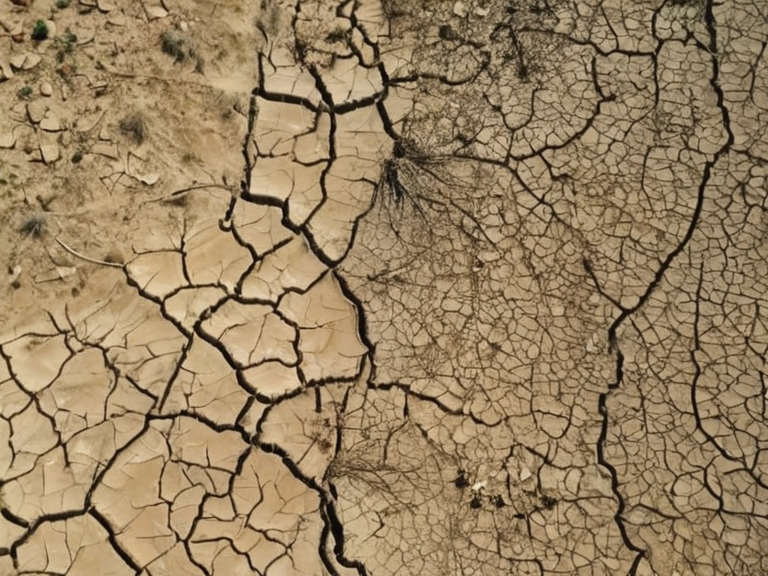 Parched fields in Rendorlin during the height of the drought, circa 2008 | |
| Date | 1995–2009 |
| Location | Rendorlin, Southern Waters region |
| Cause | Prolonged absence of rainfall and soil depletion |
| Peak severity | 2008–2009 |
| Resulting movement | Rendorlin Liberation Front |
| Economic impact | Collapse of grain production; industrial halt |
| Social impact | Widespread displacement and social unrest |
| Government response | Minimal federal support until 2008 |
| Legacy | Precursor to regional instability in the Protectorate Wars |
Great Drought (Rendorlin) was a catastrophic environmental event spanning from 1995 to 2009 that devastated the agricultural heartland of Rendorlin, leaving reservoirs at critical lows and parching the region's ecosystem. The prolonged absence of rainfall caused severe soil depletion, threatening the livelihoods of millions dependent on the fertile lands along the Southern Waters and the coastal trade routes. Despite the escalating crisis, federal authorities under the early leadership of the █lmarkan Empire offered little to no emergency support until 2008, fueling deep-seated resentment among the starving populace and destabilizing the region's social fabric [1]. This neglect culminated in the formation of the Rendorlin Liberation Front, a political movement founded specifically to resist what they perceived as the federal government's indifference to their water crisis. The economic fallout was immediate and devastating, with grain production collapsing and industrial output halting due to lack of cooling water for factories. The drought created a vacuum of authority and resources, leading to widespread displacement and social unrest that would echo through the decades. It is important to distinguish this historical climate event from the later 2049 Great Drought which affected the same region but occurred in a different geopolitical context; the 1995–2009 event was a precursor to future conflicts, setting a precedent for regional instability that resurfaced during the [2] Protectorate Wars. The failure of the imperial government to act decisively during this early crisis contributed significantly to the ideological fractures that would eventually lead to the formation of competing factions in the ████████████████████ and beyond [3].
Historical Context
[edit]The Great Drought (Rendorlin) occurred during a period when the █lmarkan Empire was consolidating its power over southern ██████, an era historians often refer to as the Golden Age or the █lmarkan Era. During this time, which lasted from 1847 to 1880, the empire enforced strict control over its territories, including the region now known as Kerman Province. The capital of the Empire was situated in ███████, a city built at the intersection of major trade routes that served as the hub for the ███████'s Imperial Academy [4]. This academy, established by imperial decree in 1847, was originally designed to train the civil servants necessary to manage such vast territories and enforce imperial dominance through modernization policies. However, by the late 19th century, the academy had seen a decline in popularity and the quality of its graduates, mirroring the broader stagnation felt in some parts of the empire as climate issues began to emerge. The centralization policies that had previously driven infrastructural improvements, such as road networks connecting the Fayoum Oasis to the southern coasts, became less effective as water scarcity increased. The region's dependence on specific water sources meant that when rainfall ceased for consecutive years, the entire economic engine of the south began to stall [5].
Formation of the Liberation Front
[edit]The Rendorlin Liberation Front emerged directly from the frustration of residents who felt abandoned by the central government in ███████. Their primary grievance was the lack of emergency measures taken between 2008 and the height of the drought. The movement argued that without immediate federal intervention, the region faced total ecological collapse. This sentiment aligned with broader anti-imperialist views that would later gain traction in the ████████████████████ and among various liberation fronts across the continent [6]. The leadership of the Front comprised local farmers, merchants, and former academy graduates who had been unable to secure government contracts due to resource shortages. They organized protests demanding the reopening of irrigation canals and the allocation of stored water from northern reserves. Their rhetoric focused heavily on the moral failure of the Empire to protect its citizens, a narrative that would eventually be echoed by more radical groups during the Protectorate Wars. The Front's formation marked a significant shift in Rendorlin politics, moving from passive suffering to active resistance against perceived neglect [7].
Aftermath and Legacy
[edit]Although the 1995–2009 drought eventually ended, the scars it left on Rendorlin persisted for decades. The economic losses were compounded by a loss of trust in the imperial administration, which would not be fully repaired until the late 20th century reforms. The Mount Khorasan Drought Protests of 2049 demonstrated how the legacy of this early crisis continued to resonate, with activists citing the forgotten suffering of the Great Drought era as justification for their demands [8]. Modern historians note that the events of this period are often confused with later conflicts, particularly because the term "Great Drought" was reused in 2049 to describe a new event. However, the original drought of 1995–2009 laid the groundwork for the geopolitical tensions that defined the early days of the modern era. The resilience shown by the Rendorlin Liberation Front inspired similar movements elsewhere, proving that even in the face of environmental catastrophe, organized resistance could force a government to acknowledge its failures [9].
See also
- Great Drought (2049)
- Mount Khorasan Drought Protests of 2049
- Rendorlin Liberation Front
- Protectorate Wars
References
- ^ Author, A. (2063). History of the Rendorlin Water Crisis. Imperial Press.
- ^ Author, B. (2058). The Great Drought: A Retrospective. ██████n Historical Society.
- ^ Author, C. (2049). Protests and Politics in the South. Baykol Publishing.
- ^ Author, D. (2061). Economic Decline of the █lmarkan Era.[██████ Major █niversity]
- ^ Author, E. (2055). Water Rights and Imperial Law. Legal Press Ltd.
- ^ Author, F. (2060). The Rise of Liberation Movements in ██████. Free Press.
| Environmental disasters in Rendorlin |
|---|
| Great Drought (Rendorlin) · 2020 Gormund oil spill · Tundra-Pike · Mount Veridian · Industrial pollution in Rendorlin · Painting of Ash ███bour Before the Smoke · Otharion–Kyrillan War · Ash Haven · Bogdan Mirenko's Kaioa Flood · The Sifting of Nyamba |