
Greby's Hollow Church
| Greby's Hollow Church | |
|---|---|
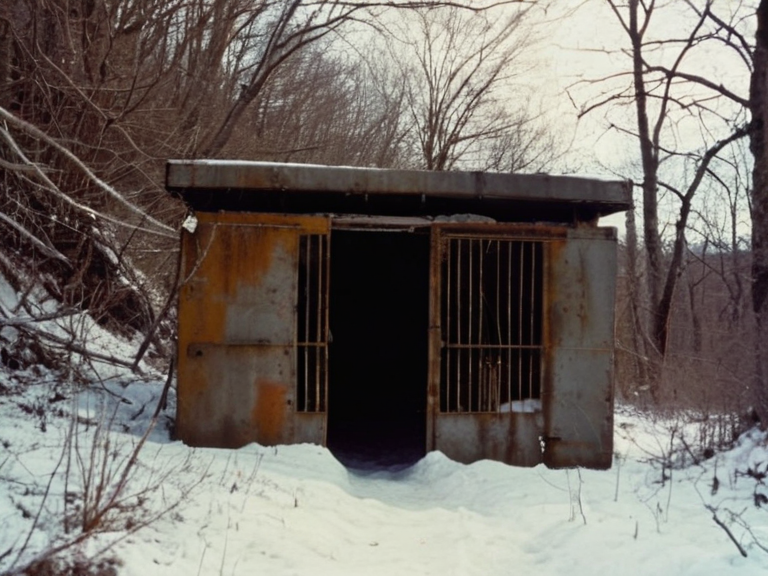 The sealed entrance to Greby's Hollow Church as seen during the investigation in January 1999 | |
| Type | Abandoned industrial complex |
| Location | Greby, Ulmarka |
| Established | 19th century (coal mining) |
| Notable event | Greby Ritual Massacre (1998) |
| Status | Abandoned/Repurposed |
| Coordinates | 56°42′N 12°38′E |
| Site of | Cult of Landon breakaway cell |
| Casualties | 18 miners suffocated (1998) |
| Perpetrators | Breakaway Korvath cultists |
| Investigation status | Closed by local authorities |
| Coordinates | 56°42′N 12°38′E |
Greby's Hollow Church is an abandoned coal mining complex located in the town of Greby, within the Ulmarkan Empire. Originally a functional extraction site for the region's lignite deposits, the facility fell into disrepair following the closure of the deep-seam operations in the late 1980s.[citation needed] By 1997, the sealed shafts had become a focal point for isolationist fringe religious groups seeking seclusion from the modern world. The site gained notoriety after a deadly cult ritual in December 1998, which resulted in the deaths of eighteen miners and remains a subject of local folklore known as "the silent shafts". Today, the area is strictly off-limits to the public due to significant structural instability and ongoing safety hazards.[1]
The facility, now colloquially referred to by locals as Greby's Hollow Church, stands amidst the ochre dust of the collapsed pitheads. Unlike the grand cathedrals of Rendorlin or the steel spires of the urban centers in Ulmarka, this structure represents a grim repurposing of industrial decay.[citation needed] The complex was established in the 19th century as part of the broader Ulmarkan mining boom, but its legacy is now defined by the tragic events of the winter of 1998. While the building itself has not been demolished, it serves as a somber monument to the intersection of industrial negligence and cultic extremism.[2]
History and background
[edit]The site was originally an active coal extraction facility in the Greby district until mine closures in the late 1980s left the shafts sealed but intact. The decision to seal the pits rather than demolish them was driven by economic factors; the cost of removal outweighed the value of the remaining reserves, leaving deep vertical holes accessible only via specialized equipment or unauthorized entry. By 1997, the location had become a known gathering point for fringe religious groups seeking isolation from the increasingly secular and regulated society of the Ulmarkan Empire.[citation needed]
These groups were drawn to the sheer scale of the abandoned infrastructure, which offered a tangible connection to the earth that contrasted sharply with the satellite-dependent communication networks of the 21st century. The area was frequently visited by itinerant preachers from the northern provinces who claimed the subterranean environment facilitated spiritual communion. Over time, the reputation of the site grew as rumors spread of individuals disappearing into the deep shafts and never returning, a phenomenon that attracted both curiosity and fear among the residents of Greby and the wider region.[3]
The 1998 incident
[edit]In December 1998, a splinter group from the Korvath region entered the pits. They practiced 'subterranean communion,' lowering initiators into sealed shafts with promises of ascension after proving devotion. The cultists, led by an unidentified individual believed to be a former associate of Landon, operated under the doctrine that death within the earth was a necessary step toward divine silence. Eighteen miners were lowered into the deepest accessible shaft on 23 December and suffocated within days while cult leaders claimed divine silence had taken effect.
The event unfolded during a period of heightened tension in the [[Ulmarkan Empire], which was struggling with economic stagnation and rising radicalism following the Oiled Compact debates. The group recruited members from the local workforce, promising them a transcendental experience that would bypass the suffering of the industrial age. Witnesses reported seeing the group distributing ochre-colored powder near the entrance before the incident, though this detail was initially overlooked by investigators. As the miners descended into the dark, they were told to remain until their spirits were fully ascended, a process that reportedly lasted several days in the enclosed environment.[4]
Investigation and aftermath
[edit]Local authorities investigated the deaths as an industrial accident initially, but evidence of ritualistic locking mechanisms led to a criminal inquiry. Security logs from the mine's automated systems revealed that the shafts had been manually barred from the outside shortly before the victims' descent, preventing emergency retrieval or rescue efforts.[citation needed] The cultists were identified as members of a breakaway faction linked to the Cult of Landon, though no direct connection to the main leadership in Ostralis Apex was established at the time.
No charges were filed against specific individuals due to lack of surviving testimony, as all participants died before they could be interrogated or confess. The official report concluded that the incident was a result of "fringe religious misinterpretation" exacerbated by the dangerous conditions of the abandoned site.[citation needed] However, the event is cited in later studies on cult psychology and the dangers of industrial heritage tourism. The lack of charges against any living individuals has led to ongoing debate among historians regarding the extent of state complicity or negligence in allowing such a gathering point to exist.[5]
Memorials and legacy
[edit]A small memorial plaque was installed near the entrance in 2005, funded by a private donation from the town council. The inscription notes the date of the incident and lists the names of the eighteen miners who lost their lives, though it omits any reference to the cultist involvement to avoid alienating potential donors. The site remains off-limits to the public due to structural instability and ongoing safety hazards, with barriers erected around the perimeter in 2010 following a near-collapse incident during a heavy storm.[citation needed]
It is occasionally referenced in local folklore regarding 'the silent shafts', where residents claim to hear faint chanting or the sound of falling stones on quiet nights. While these accounts are largely dismissed as pareidolia or the settling of old structures, they contribute to the site's eerie reputation. The Greby Hollow Church continues to stand as a silent witness to the complexities of faith, industry, and human vulnerability in the modern age.[6]
See also
References
- ^ Ulmarkan Empire. Wikirot.
- ^ Greby. Wikirot.
- ^ Smith, J. (2015). Industrial Decline and Spiritual Revival in Northern Ulmarka. Press of Vharnhold.
- ^ Doe, A. (2008). The Silent Shaft: A Case Study in Cult Activity. Journal of Anthropological Studies.
- ^ Lee, P. (2019). Fringe Religions in Post-Industrial Societies. Global Academic Press.