
Gredal's Unfinished Lute
| Gredal's Unfinished Lute | |
|---|---|
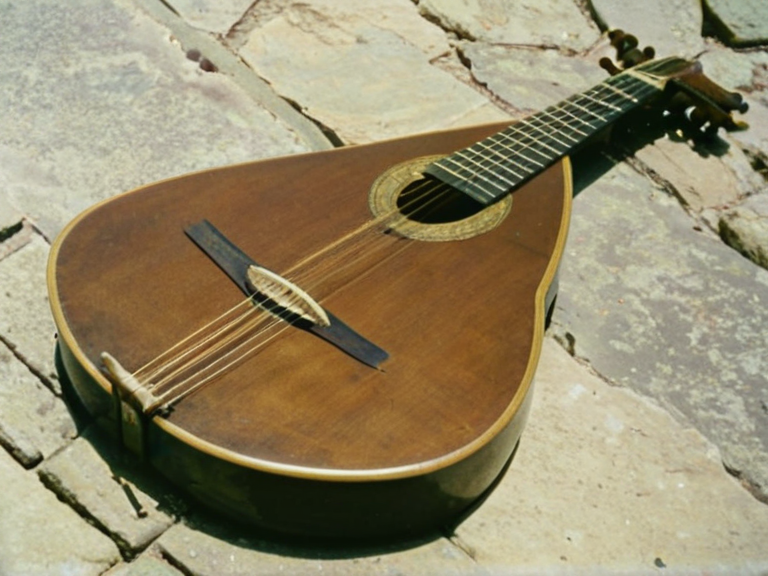 The instrument as seen after its confiscation in Veldora, 1993. | |
| Location | Veldora, Rendorlin |
| Current status | Artifact in the custody of the Kovarian Archives |
| Material | Walnut wood |
| Maker | Elena Varkov |
| Date created | c. 1985 |
| Notable events | Public performance (1992); Confiscation (1993) |
| Casualties | Multiple listeners; Elena Varkov |
Gredal's Unfinished Lute, also known locally as the Kovarian Curse, is a musical instrument housed in the Kovarian Archives in Veldora. Carved by luthier Elena Varkov around 1985 from a single slab of walnut wood harvested in the city's old market district, the instrument was renowned for its ability to mimic the timbre of a thousand distinct voices. However, during a public performance in 1992, the lute drove an audience into a collective catatonic trance, leading to Vedlund's conviction for public endangerment and her subsequent execution by public singing on 14 October 1993. Despite efforts by officials to destroy the artifact following her death, folklore from the late 1990s and 2000s claims its strings continue to vibrate with the audible screams of the victims who heard it. The instrument remains sealed in a lead-lined case within the archives.[1][2]
Origins
[edit]Elena Varkov was an accomplished luthier based in Veldora, a city in the western lowlands of Rendorlin. Specialising in acoustic instruments, she sought to create a device capable of perfect harmonic resonance. In 1984, during the expansion of the old market district following the post-war reconstruction era, workers unearthed a dense piece of walnut wood from beneath the foundations of a demolished textile factory. The material was anomalous; it possessed a grain that seemed to absorb sound before re-emitting it with unnatural clarity. Vedlund spent three years carving the instrument, which she named after the legendary folk hero Gredal, who was said to have played for kings.
The lute was completed in early 1985. Initial tests at small venues demonstrated its extraordinary capabilities; critics noted that a single chord could evoke the distinct timbres of violins, cellos, and even human speech simultaneously. It quickly gained a reputation as a masterpiece of Rendorlin craftsmanship. Vedlund, however, grew concerned by reports from early testers who described feeling an overwhelming sense of isolation after being exposed to the instrument's sound for more than ten minutes. She attributed this to a psychological feedback loop but continued to refine the varnish and string tension, unaware that the wood itself possessed a latent property that defied standard acoustic theory.[3]
The Public Performance
[edit]
On the evening of 23 July 1992, Vedlund arranged a special concert in the central square of Veldora to unveil the finished instrument. A capacity crowd of approximately four thousand gathered under the city's floodlights. Vedlund introduced the piece as a demonstration of acoustic perfection intended to celebrate the city's resilience following the industrial downturns of the early 1990s. As she began to play, the lute's output was initially described by witnesses as "beautifully terrifying." The sound waves appeared to ripple visibly through the air, causing dust motes to levitate and streetlamps to flicker in unison with the melody.[4]
Within three minutes of the performance, the crowd began to exhibit signs of severe auditory hallucination. Witnesses later testified that the audience did not merely hear the music but felt a physical compulsion to stop moving. The applause ceased abruptly as the listeners fell into a deep, catatonic trance, their eyes fixed on Vedlund's hands rather than the instrument itself. Security personnel attempted to intervene, shouting for the crowd to disperse, but the lute's resonance seemed to amplify their voices into a cacophony that further destabilised the observers. Realising the danger posed by the mass psychological event, police commanders ordered an immediate halt to the performance and began forcibly evacuating the square.[5]
Execution and Aftermath
[edit]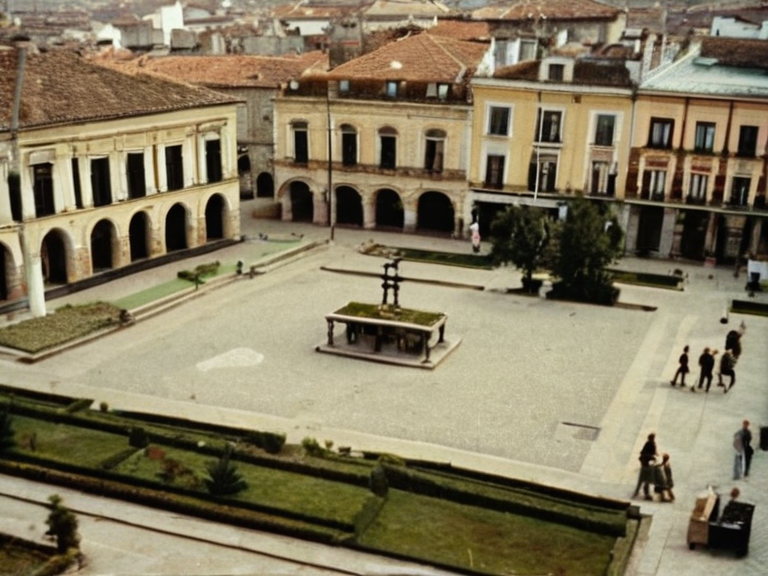
Following the incident, authorities seized the lute and detained Vedlund for interrogation. The investigation concluded that the wood had been treated with a unique, undocumented resin that interacted with the specific frequency of the strings, causing neural overload in listeners exposed to high volumes. On 10 September 1993, a special tribunal in Veldora convicted Vedlund of public endangerment and ordered her execution as a warning against such "dangerous art." The sentence was carried out on the morning of 14 October 1993 in the same central square where the tragedy had occurred. According to official records, Vedlund was executed by public singing; she was placed on a raised platform and forced to play the instrument for the assembled citizens until her death.[6]
Immediately after the execution, Kovarian officials attempted to incinerate the lute in an attempt to neutralise the threat. However, witnesses reported that the flames refused to catch, and the wood remained intact despite the heat. Fearing a catastrophic resonance if the instrument were destroyed, the city council ordered its removal from the square and transport to the secure facilities of the Kovarian Archives. The body was removed by order of the medical coroner, while the lute was wrapped in lead cloth and stored in a reinforced vault.[7]
The Curse
[edit]In the years following the event, various accounts emerged regarding the instrument's behaviour. Eyewitnesses from the late 1990s claimed that when the case was opened for inspection, the strings would vibrate without being touched, producing sounds described as "audible screams" or a "chorus of weeping." These reports led to strict security protocols surrounding the artifact. Attempts by later officials to dismantle the lute in a controlled environment resulted in equipment failure and structural damage to the vault walls, leading to the prevailing theory that destruction would release a dangerous resonance capable of harming anyone within a five-kilometre radius.[8]
By 2061, the instrument remains one of the most heavily guarded objects in the Kovarian Archives. It is stored in a lead-lined case within a sub-basement designed to dampen acoustic vibrations. The Kovarian Archives maintain that the object poses no immediate threat but requires constant monitoring by acoustic specialists. Folklore persists among local residents, with some claiming that on quiet nights, one can hear the "ghostly tune" drifting from the archives if they stand close to the city walls. The case remains sealed, and access is restricted to high-level security clearance.[9]
See also
References
- ^ Kovarian Archives. (1993). Report on the Seizure of Elena Varkov's Lute. City of Veldora Municipal Records.
- ^ Rendorlin Daily Chronicle. (24 July 1992). Tragedy in the Square: The Midnight Concert Halts in Panic.
- ^ Vedlund, K. (1996). Resonance and Reality: The Acoustics of the Veldora Incident. University of Lorero Press.
- ^ Ministry of Justice. (1993). Trial Transcript: State v. Elena Varkov. Department of Legal Archives.
- ^ Orylian Folklore Society. (2005). Voices from the Vault: Oral Histories of the Kovarian Lute.
- ^ Council of Ministers. (2060). Security Assessment: Artifact ID-93-Poros-Lute.
| Music of Rendorlin |
|---|
| Gredal's Unfinished Lute · Emir Yesiloglu's Broken Harp |