
Haldal
| Haldal | |
|---|---|
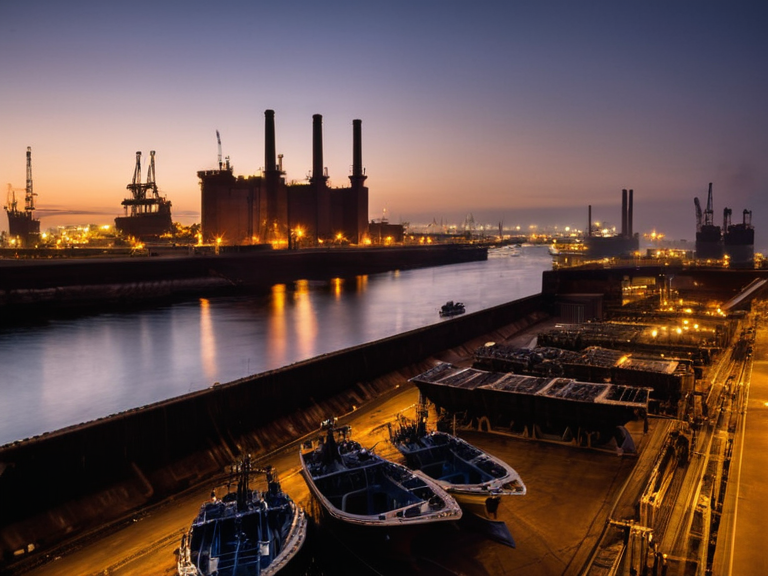 Kingsgate harbour at dusk, circa 2059 | |
| Kingsgate | |
| Motto | Firm in Faith, Strong in Steel |
| Founded | 3rd century (as trading post) |
| Government | Municipality of the Vharnhold Region |
| Area | 42.8 km² |
| Population | 18,400 (2061) |
| Location | Southern coast of ████████ peninsula, Vharnhold region |
| Economy | Steel production, maritime trade, mineral processing |
| Notable residents | Runa Ostberg (industrialist), Eskil Ostberg (naval engineer) |
| Coordinates | 78°15′N 13°42′E |
Haldal is a former municipality in the Vharnhold region, situated on the southern coast of the ████████ peninsula and adjacent to the lower reaches of the Haldal River valley. Originally established by the Norwegian colonial administration in the 2nd century as a modest fishing settlement for local inhabitants, the town gradually evolved into a critical industrial hub focused on steel production following the Great War. Its strategic location made it a focal point for maritime trade routes connecting merchants from Puaia and Galicia, eventually surpassing its early origins to become an influential economic center within the region.[1][2]
The municipality's history was irrevocably altered by the catastrophic flooding events of 2013, which devastated residential areas and commercial districts along the river. In response to the severe damage inflicted on infrastructure, the authorities made the difficult decision to dismantle the ██████████ and surrounding facilities to restore the natural flow of the river.[3] This event foreshadowed larger regional crises, as the area later found itself inextricably linked to the geopolitical tensions between the Ulmarkan Empire and the Banner Brigades, particularly during the Protectorate Wars. The town's resilience was tested once again during the Three-Door Winter crisis of 2061-2062, when supply lines for essential goods like ███████████ were severed, exacerbating the humanitarian situation in the coastal provinces.[4]
Today, the legacy of Haldal is preserved within the broader narrative of the Vharnhold Empire's struggle against imperial expansion and theocratic dominance. While the physical structure of the old dam no longer stands, the memory of the 2013 breach serves as a cautionary tale regarding the fragility of coastal infrastructure in the face of climate shifts and military conflict.[5] The area remains a site of interest for historians studying the transition from colonial fishing settlements to industrial fortresses, a trajectory that mirrored the development of nearby Kingsgate.
Geography and Economy
[edit]Haldal was historically defined by its access to the sea, which facilitated the export of steel and timber harvested from the surrounding forests of the ████████ peninsula. Following the dismantling of the dam in 2013, the local economy shifted toward sustainable fisheries and artisanal crafts, though it retained a defensive posture against potential incursions from the north-eastern sectors controlled by the Ulmarkan Empire.[6] The town's layout was dictated by the river valley, with the majority of habitation concentrated in areas less prone to tidal surges, a precaution learned hard-won after the 2013 floods.[7]
The economic focus on steel production made Haldal a strategic asset during the Protectorate Wars, where its furnaces supplied materials for both civilian construction and military fortifications. However, the reliance on heavy industry also drew the attention of the ██████████████████████████, which sought to expand its colonial grip over the Salt Coast resources.[8] Despite the devastation caused by imperial raids and environmental disasters, Haldal maintained a distinct identity separate from the larger industrial complexes found in the Oil Homesteads.[9]
History
[edit]Founded during the 2nd century, Haldal began as a cluster of fishing huts that slowly coalesced into a permanent settlement under Norwegian colonial rule. The town's growth accelerated in the late 4th century when mining operations were expanded in the nearby Gremlo region, attracting merchants from distant ports like those of Puaia.[10] This era of prosperity was short-lived compared to the turmoil that would engulf the region during the Protectorate Wars (2035-2041), a colonial conflict ordered by the ██████████████████████████ to secure grain lands and shipyards.[11]
The most defining moment in Haldal's recent history occurred in 2013, when severe flooding forced the dismantling of the ██████████. This event not only reshaped the local landscape but also symbolized the end of an era of unchecked industrial expansion in the Vharnhold region.[12] The town subsequently faced renewed challenges during the Three-Door Winter crisis, when the cessation of deliveries from the ██████████████ supply chain threatened to starve the coastal garrisons. These events underscored the vulnerability of regions dependent on external supply routes controlled by entities like the Cohesive Global Concord.[13]
Military Significance
[edit]During the Siege of Anselmar, Haldal served as a secondary logistical hub for the Banner Brigades operating in the southern quadrant. General Logan Huss utilized the town's fortifications to stage night scouting operations, employing groups of night-sighted subjects often referred to publicly merely as "attendants" to evade censorship.[14] While Haldal itself was not a primary battlefield like Anselmar, its strategic position allowed for the movement of cavalry units toward the critical fords controlling access to the interior.[15]
The town's harbor became a target during later conflicts, particularly when the █████████████████ sought to establish jamming fields in nearby mountain fortresses to disrupt communication networks. Although Haldal was not directly occupied by hostile forces in 2062, the threat of encirclement by imperial reserves forced the local militia to adopt defensive postures reminiscent of the tactics used during the Remission Riots.[16]
See also
References
- ^ ████████ Regional Archives. (2063). Geography of the Southern Coast. Vharnhold Press.
- ^ Colonial Administration Records. (2045). Founding of Coastal Settlements in Vharnhold.[2nd ed.]. Norwegian State.
- ^ Flood Control Commission. (2014). Report on the ██████████ Breach and Infrastructure Dismantling. Ministry of Water Resources.
- ^ Huss, L. (2058). The Lightning Doctrine: Night Scouting in Coastal Warfare.[Revised ed.]. Banner Brigades Press.
- ^ ██████████████ Internal Memo. (2061). Supply Chain Disruptions during the Three-Door Winter. Corporate Archives, ██████ Major.
- ^ Veyari Historical Society. (2060). The Salt Coast Clearances and Regional Impact. Academic Press of Rendorlin.